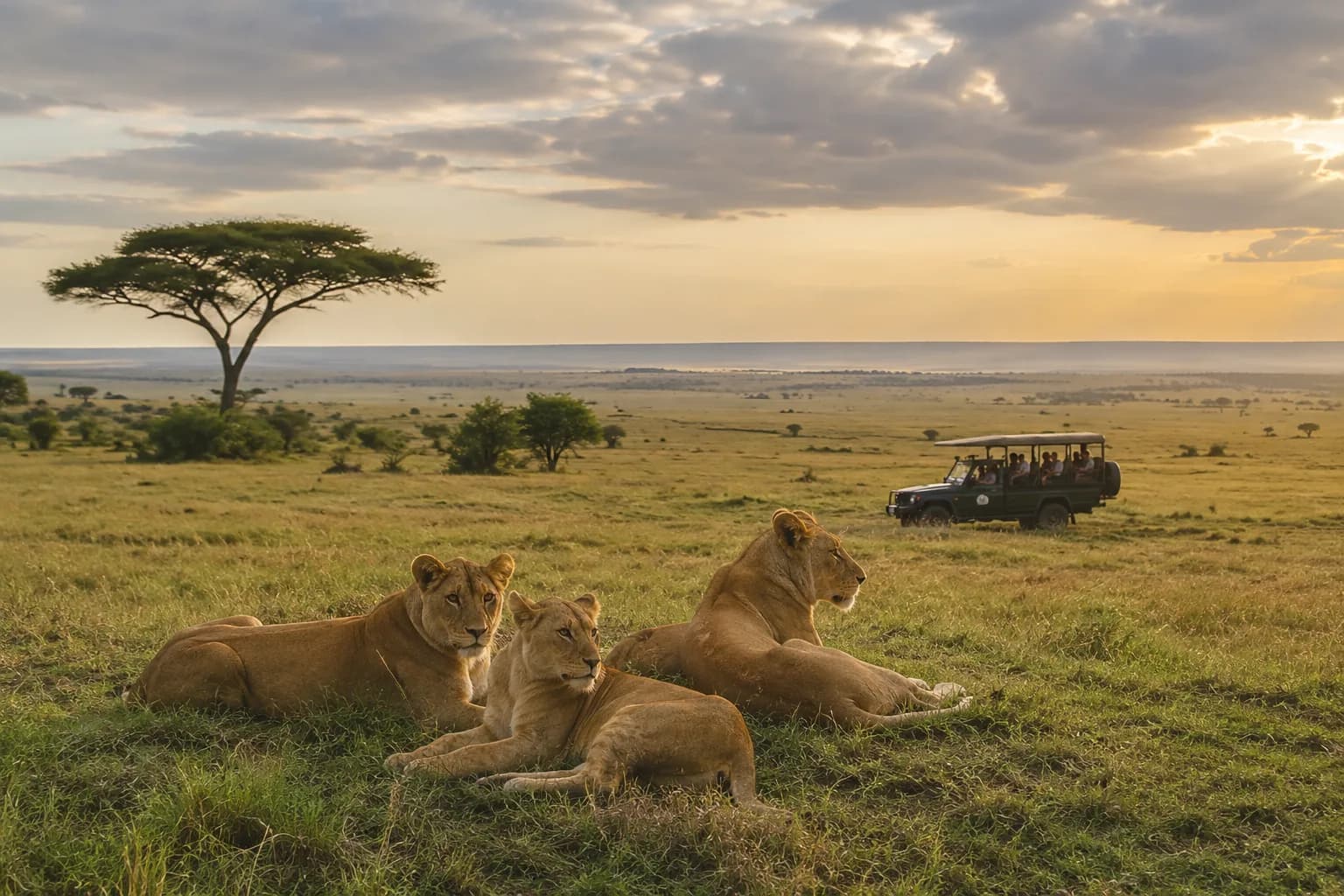
Masai Mara National Reserve
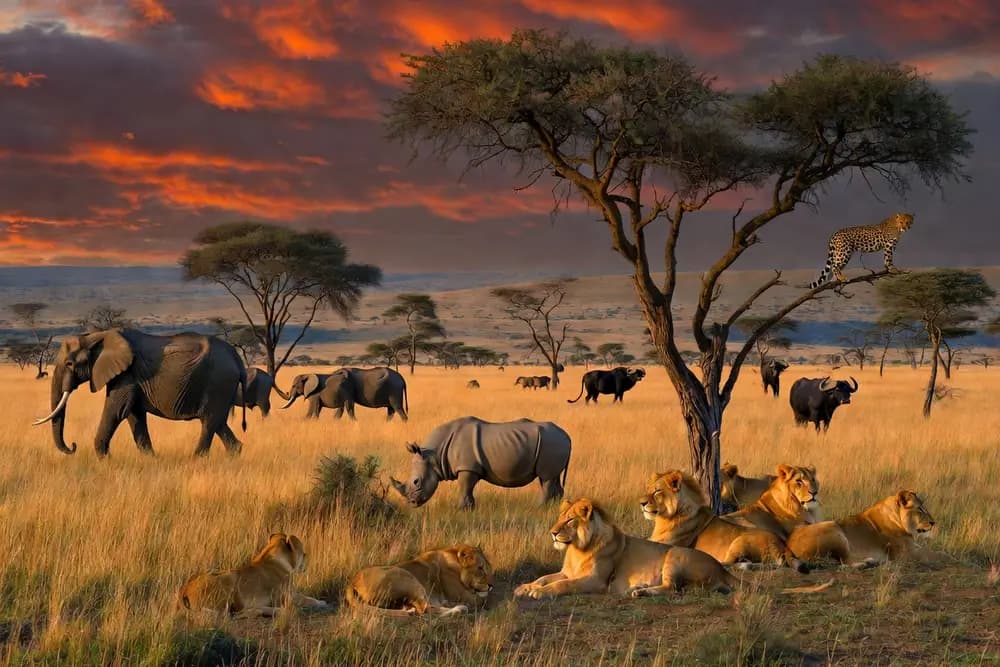
The Masai Mara National Reserve is 1,510 km² of open savanna at the northern end of the Serengeti-Mara ecosystem, and it's the single most photographed landscape in African safari travel. It holds strong Big Five sightings in every month of the year, and from roughly July to October it becomes the stage for the most dramatic phase of the Great Wildebeest Migration: the Mara River crossings.
The reserve itself is bordered by the Tanzania–Kenya line to the south and by the Mara and Talek rivers cutting through open plains, acacia woodland, and the forested Oloololo Escarpment to the west. Its grass — kept short by grazing herds — is what makes the Mara so good for photography: predators are visible from far away, in a way that denser bush elsewhere in Kenya doesn't allow.
What most people don't realise before visiting is that 'the Mara' is really two different places. The national reserve itself carries the highest visitor density and the strictest rules — vehicles stay on marked roads, no off-road driving, no night drives. Bordering it are around sixteen private conservancies (Mara North, Naboisho, Olare Motorogi, and others), community-owned land leased by camps that cap guest numbers and, in exchange, permit off-road driving, night game drives, and walking safaris. The wildlife doesn't recognise the boundary; the experience on either side of it is genuinely different.
Outside migration season, the Mara's resident wildlife is what draws people back. Several of Kenya's most-followed lion prides live here year-round, cheetah are unusually easy to find on the open plains, and the conservancies in particular have built a reputation for reliable leopard sightings on night drives — something the reserve itself, with its no-night-drive rule, can't offer.
Timing matters more here than almost anywhere else in Kenya. The Mara River crossings are not scheduled — they follow rainfall and the herds' own instinct — so no operator can promise you'll see one on a given day. What we can do is put you in a camp with guides who track the herds daily and reposition accordingly, which meaningfully changes your odds.
Highlights
- ◆Mara River crossings (roughly Jul–Oct) — the year's single most dramatic wildlife event
- ◆Year-round resident Big Five, with especially strong lion and cheetah sightings
- ◆~16 private conservancies bordering the reserve — off-road driving, night drives, walking safaris
- ◆Hot-air balloon safaris at dawn over the open plains
- ◆Sundowners on the Oloololo Escarpment with views across the whole ecosystem
- ◆Cultural Maasai village visits, run on community terms rather than as a drive-by stop
Where to Stay
Exclusive-Use Conservancy Camps
Small, owner-run camps inside the private conservancies bordering the reserve — typically under a dozen tents, private vehicles, and the off-road and night-drive access the national reserve itself doesn't permit. This is where the best wildlife-viewing flexibility in the Mara sits.
National Reserve Lodges & Camps
Larger properties inside or on the edge of the reserve itself, closer to the river-crossing points during migration season. Good value and prime positioning for the crossings, at the cost of shared game drives and reserve traffic in peak months.
Mobile & Seasonal Camps
Camps that physically relocate to follow the herds through the season — waking up genuinely close to where the action is, rather than driving to reach it. A distinctive Mara-specific option not really available elsewhere in Kenya.
Frequently Asked Questions
How do I get to the Masai Mara?
+
By light aircraft (about 45 minutes from Nairobi's Wilson Airport, landing on one of several airstrips inside or near the reserve) or by road (five to six hours, usually via the Great Rift Valley escarpment). Flying costs more but gives you an extra half-day of game viewing; the drive is a genuinely scenic journey in its own right.
Should I stay in the national reserve or a private conservancy?
+
If the Mara River crossings are your priority, staying in or near the reserve puts you closest to the action during migration season. If flexibility, off-road driving, and lower visitor density matter more to you, a conservancy camp is usually the better choice — and outside migration season, we lean conservancy for most guests.
How many days should I spend in the Mara specifically?
+
Two full days is the practical minimum for a proper visit; three to four gives noticeably better odds if you're chasing a specific sighting, like a river crossing or a particular predator. One-night stopovers rarely do the Mara justice.
Is the Masai Mara safe?
+
Yes — it's one of Africa's most established and well-run safari destinations, with experienced guides, ranger presence, and millions of safe visits over decades. Ordinary safari precautions (staying in the vehicle during game drives, following your guide's instructions) are all that's needed.
Itineraries Featuring Masai Mara National Reserve
Experiences Here
The Great Wildebeest Migration
Follow 1.5 million wildebeest across the Serengeti-Mara ecosystem. Witness dramatic river crossings, predator action, and the raw theatre of the African plains.
Big Five Safaris
Track lion, leopard, elephant, buffalo, and rhino in private conservancies.
Cultural Journeys
Walk with Maasai warriors, explore Stone Town, and meet the people who make East Africa unforgettable.
Family Safaris
Family-vehicle exclusivity, junior ranger programmes, and camps built for children — a safari the whole family actually enjoys, not endures.
Other Places in Kenya
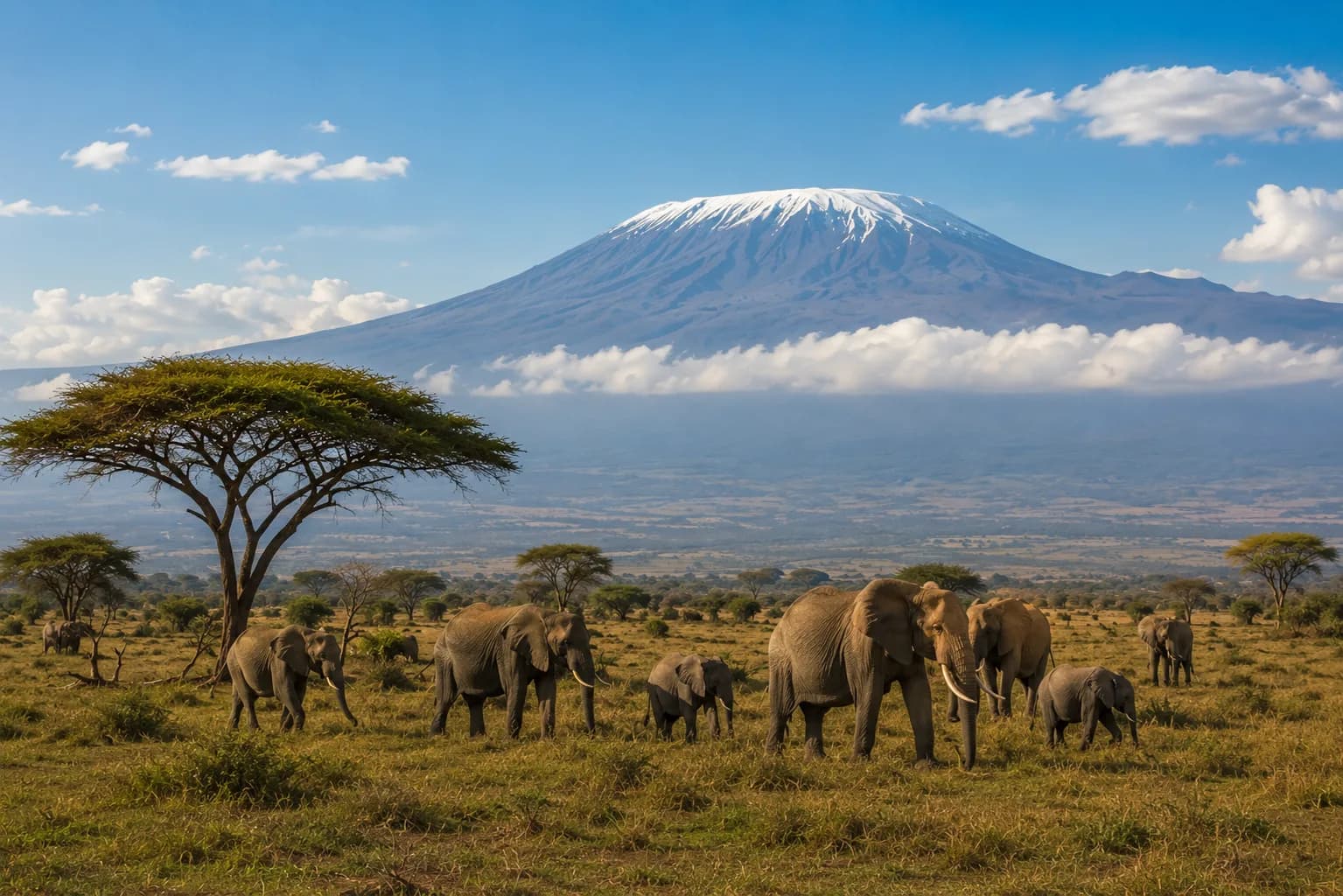
Amboseli National Park
Africa's Most Photographed Backdrop, and Its Gentlest Elephant Herds
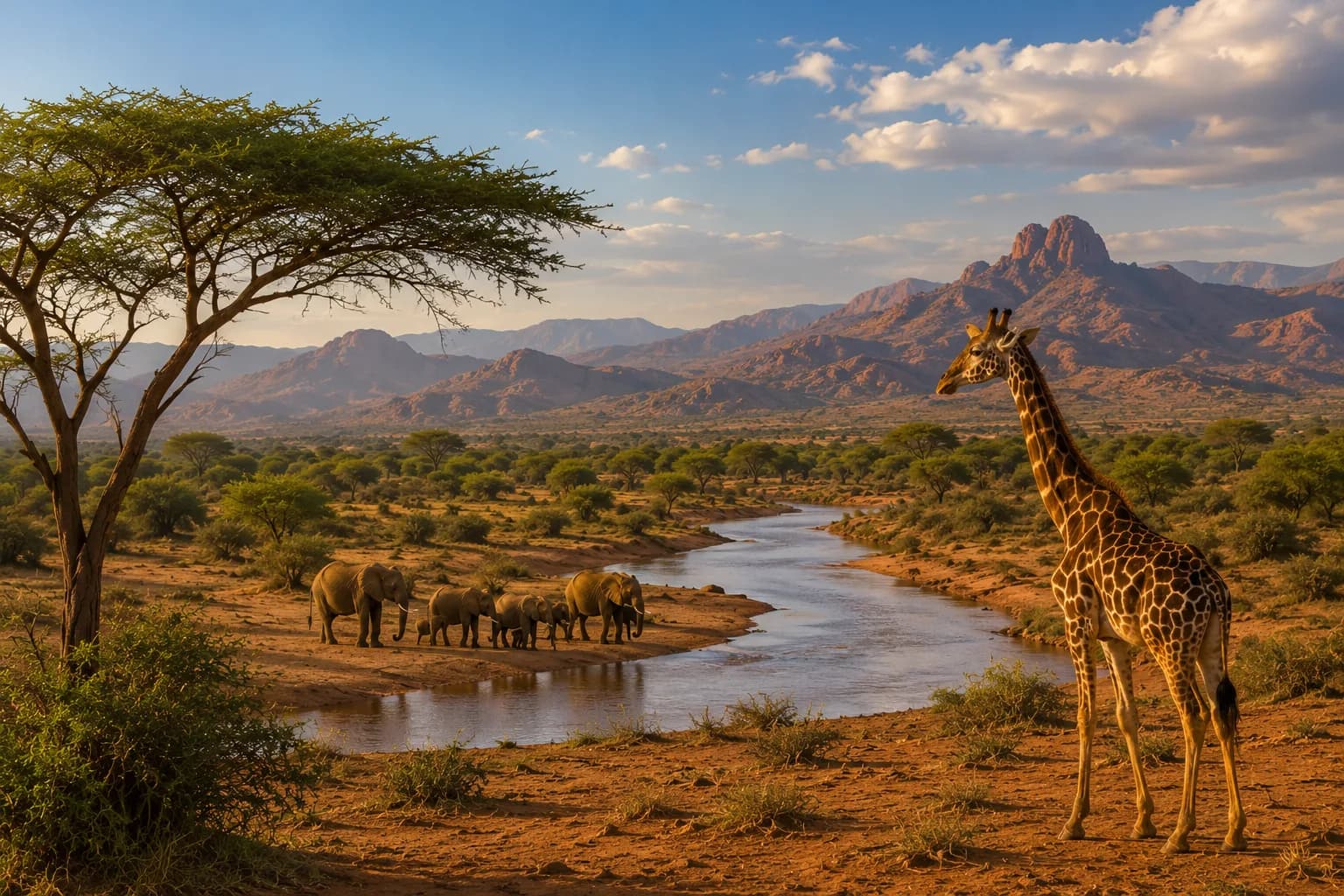
Samburu National Reserve
Northern Kenya's Wilder, Rarer Safari — Species You Won't See in the Mara
Tsavo West National Park
Kenya's Volcanic Safari — Underwater Hippos and Black Lava Fields
Tsavo East National Park
Kenya's Largest Park — Red Elephants and the Galana River