Egypt — Cradle of Civilisation
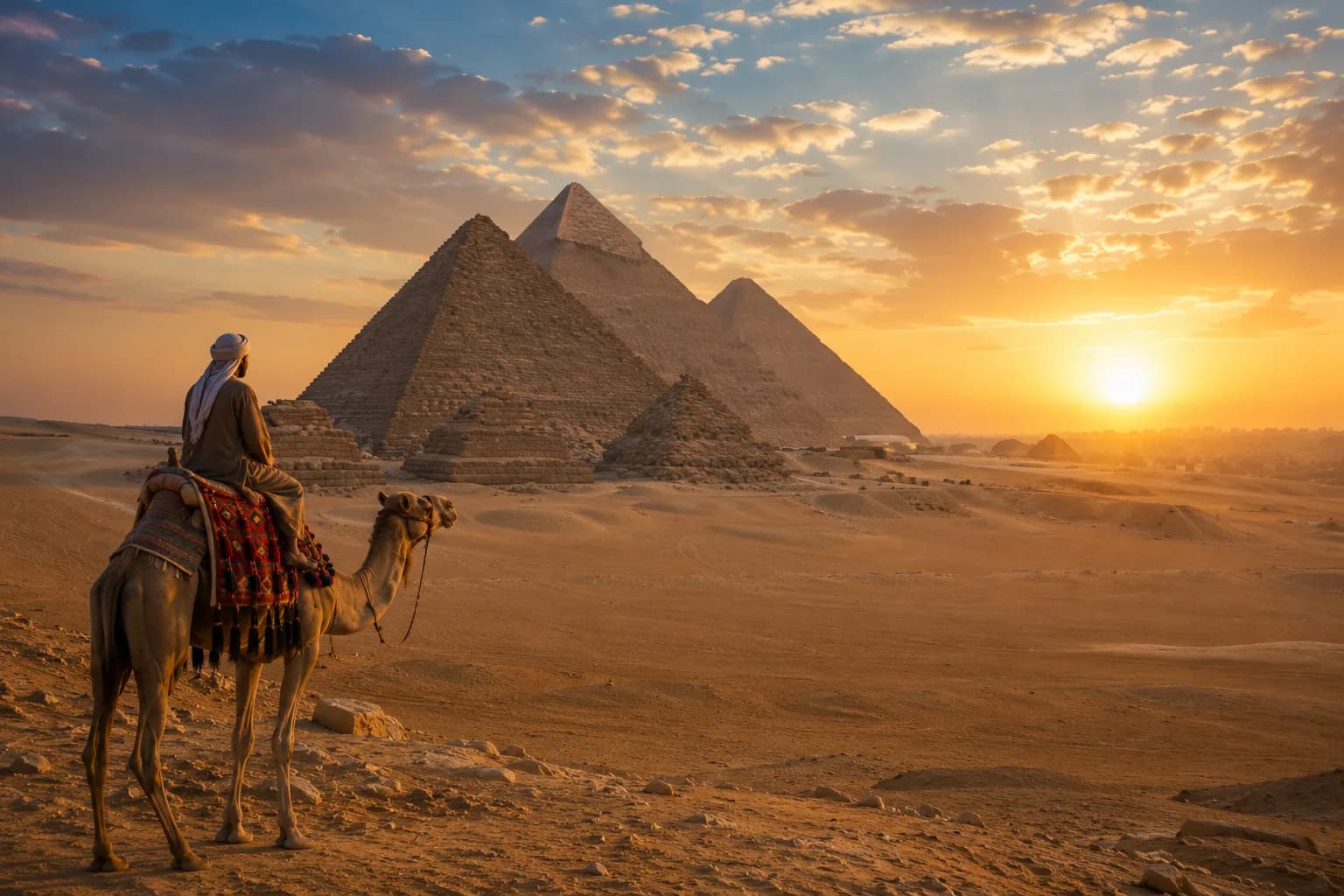
Egypt is synonymous with the Pyramids of Giza, the last surviving wonder of the ancient world. It also offers the Karnak Temple complex, the Valley of the Kings, and world-class Red Sea diving.
Egypt is history made visible and touchable. The Pyramids of Giza, built over 4,500 years ago, are the last surviving wonder of the ancient world. The Egyptian Museum in Cairo holds the most extraordinary collection of ancient artefacts ever assembled.
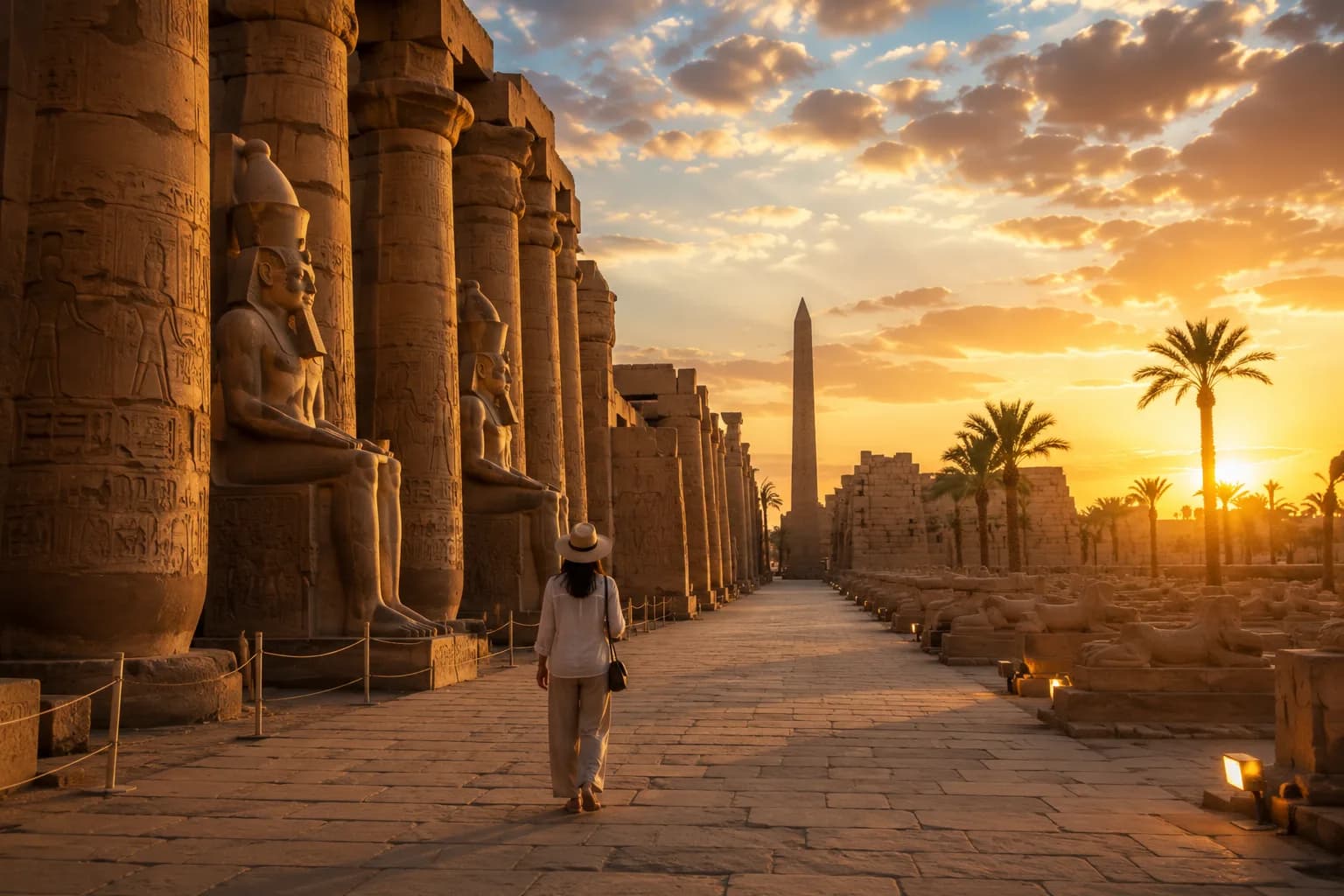
Beyond Cairo, the Nile Valley holds temple after extraordinary temple: Karnak at Luxor, the Valley of the Kings, and the colossal Abu Simbel temples of Ramesses II.
Highlights
- 01Pyramids of Giza & Great Sphinx — Last surviving wonder of the ancient world
- 02Egyptian Museum Cairo — Tutankhamun treasures, royal mummies, 5,000 years of artefacts
- 03Karnak Temple Complex — World's largest ancient religious structure; 100 hectares of columns
- 04Valley of the Kings — Luxor: royal tombs including Tutankhamun and Ramesses II
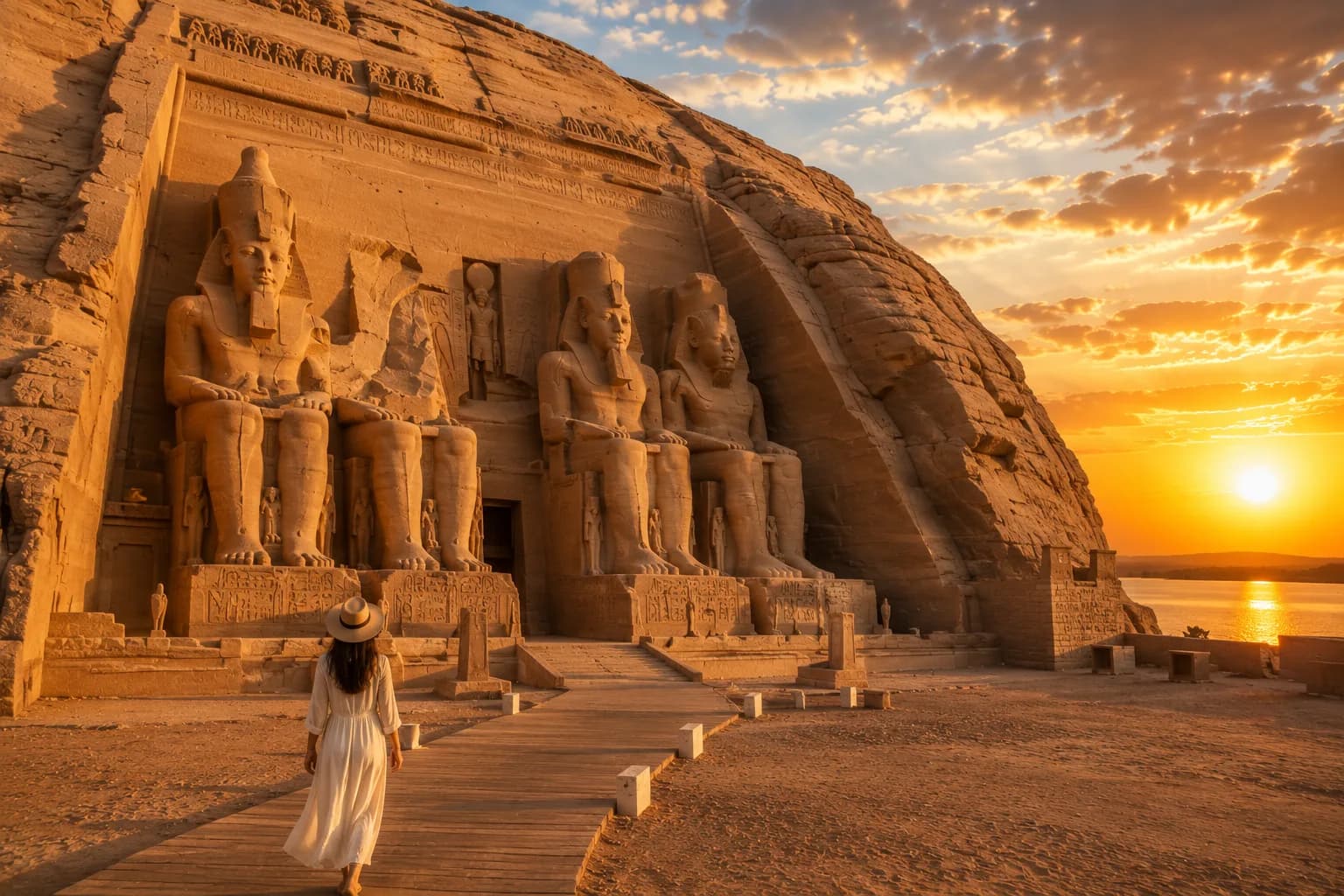
- 05Abu Simbel — Four 20m statues of Ramesses II; engineering marvel of relocation
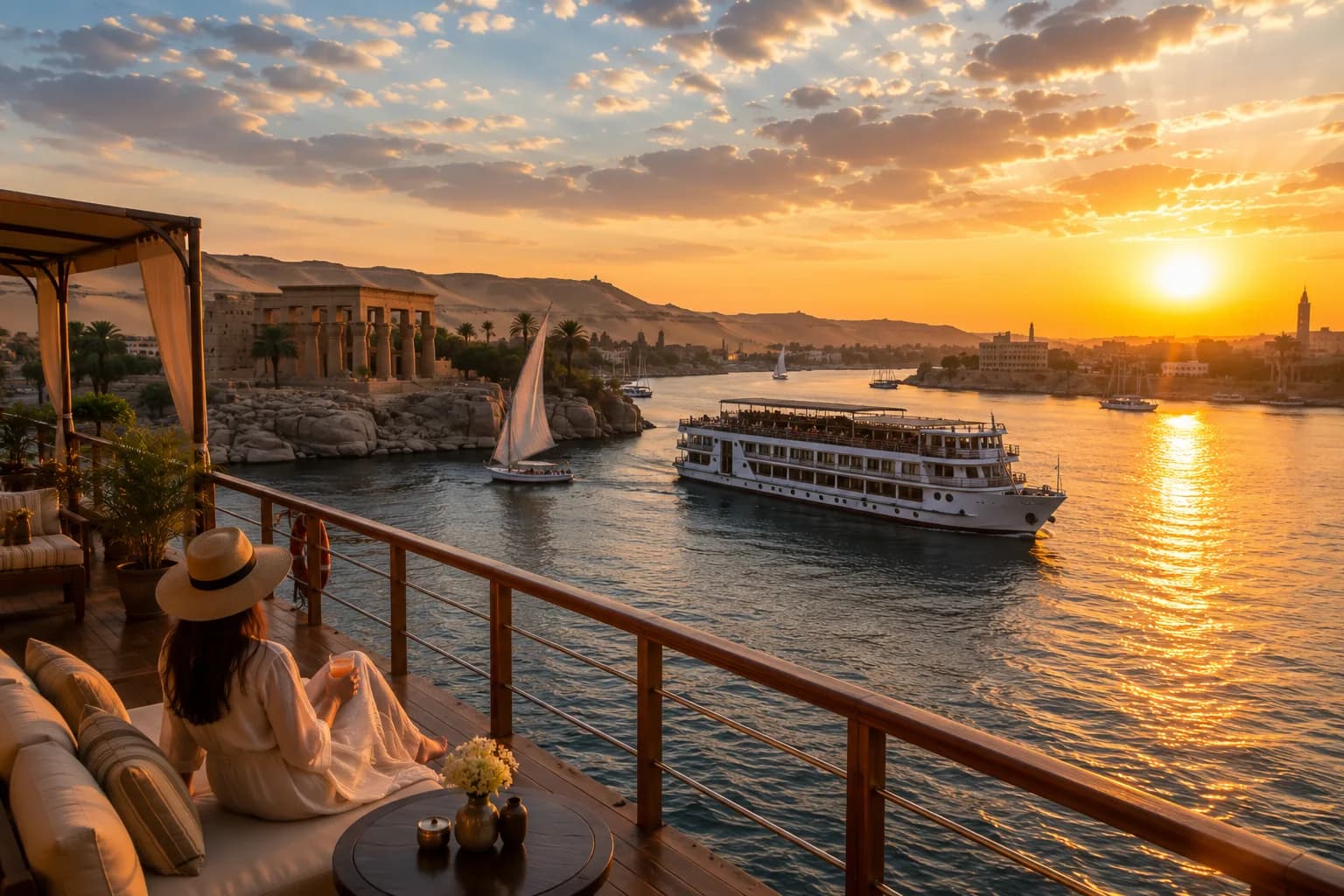
- 06Nile Cruise — Felucca or luxury cruiser: temples glide past over three to four days
- 07Red Sea Riviera — Hurghada, Marsa Alam: world-class coral reef diving and snorkelling
When to Visit
The best time to visit Egypt is from October to April, when temperatures are cooler (20–28°C) and perfect for sightseeing.
Why choose Egypt
Egypt offers an unmatched journey through 5,000 years of civilization, from the pyramids and pharaohs to vibrant medieval bazaars and modern Red Sea resorts.
Key Destinations in Egypt
Pyramids of Giza & Cairo
The three Pyramids of Giza were built between 2580 and 2510 BCE. The Great Pyramid of Khufu stood as the world's tallest man-made structure for 3,800 years.
Luxor — Thebes of the Pharaohs
Ancient Thebes — modern Luxor — was Egypt's capital for over 1,000 years and holds an estimated 30% of the world's ancient monuments.
Abu Simbel
Two rock-cut temples built by Ramesses II. In 1968, the entire complex was cut into 1,036 sandstone blocks and relocated 65 metres higher.
Aswan & a Nile Cruise
Aswan is Egypt's southernmost city — Nubian culture, riverside markets, and the islands of Elephantine and Kitchener's.
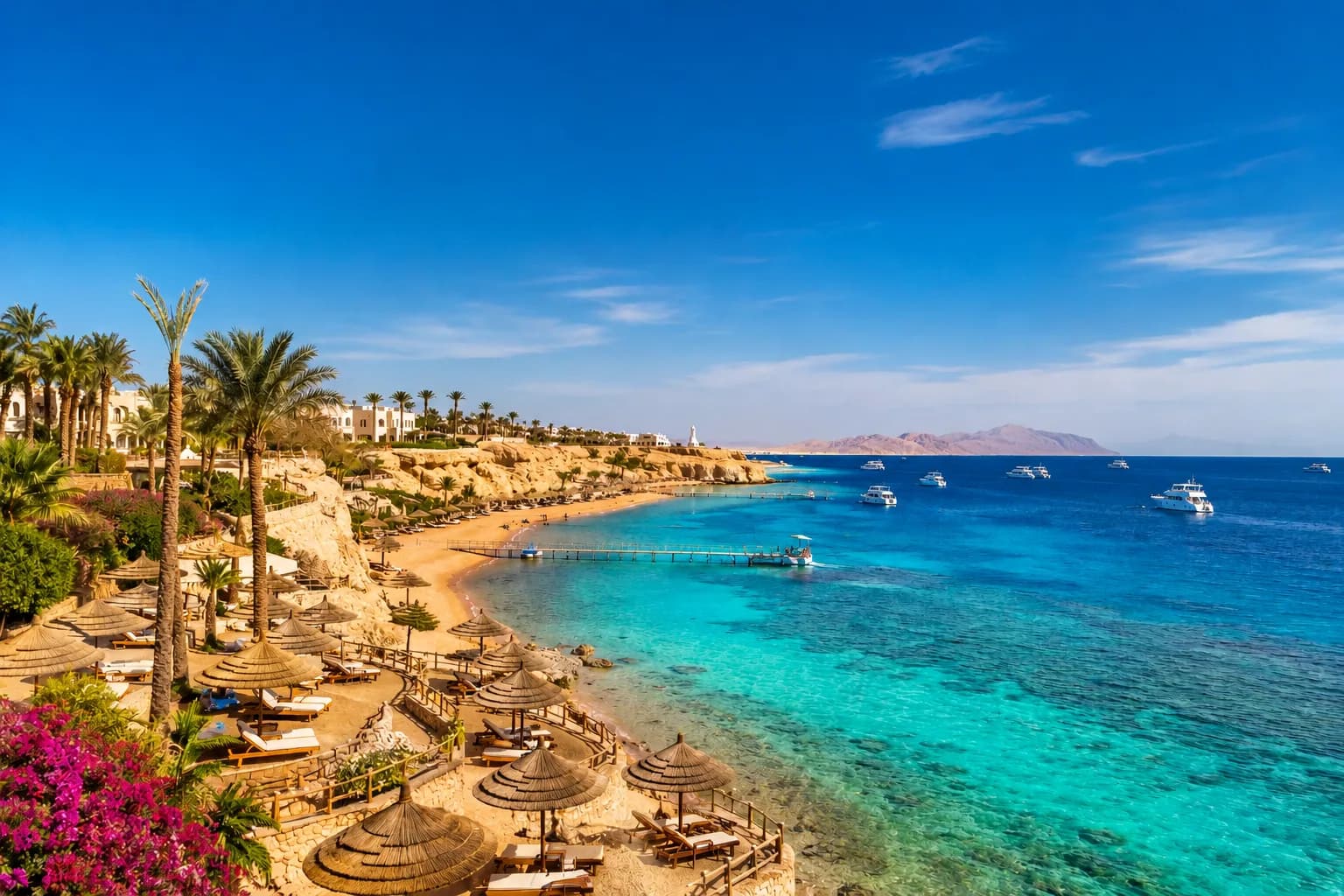
Red Sea Riviera
Hurghada, El Gouna, and Marsa Alam line Egypt's Red Sea coast — one of the planet's premier diving destinations.
Frequently Asked Questions
Is it safe to travel to Egypt?
+
Yes, the main tourist areas — Cairo, Luxor, Aswan, and the Red Sea — are safe and heavily policed.
What is the best Nile cruise route?
+
The classic route is between Luxor and Aswan over 3–4 nights, stopping at temples like Karnak, Edfu, and Kom Ombo.