The Great Wildebeest Migration: The Ultimate Month-by-Month Guide (2025–2026)
Every year, 1.5 million wildebeest, 400,000 zebra, and 200,000 Thomson's gazelle complete a 1,800 km circuit across the Serengeti-Mara ecosystem — the largest terrestrial mammal migration on Earth. This is your complete, month-by-month blueprint for witnessing the greatest wildlife spectacle our planet produces.
Quick Answer: The best time to see the Mara River crossings is August–September. For calving (predator action), visit in February. Budget 7–10 nights for the best experience. The Migration follows a roughly clockwise path; use the monthly table below to pinpoint where the herds will be.
The Great Wildebeest Migration is the most misunderstood event in wildlife travel. Most people think it is a single annual event — a moment in time you either catch or you do not. The reality is far more extraordinary: the Migration is a continuous, unending, circular journey driven entirely by rainfall, grass, and the ancient instinct of 1.5 million wildebeest, 400,000 zebra, and 200,000 gazelle to follow the short-grass plains in an endless loop of birth, survival, and death.
Understanding this circuit — knowing not just where the herds are, but what they are doing there and why — is what separates a good safari from an extraordinary one. This guide is built on 12 years of on-the-ground experience tracking the Migration across Kenya and Tanzania. It will tell you exactly where to position yourself, when to book, which camps to choose, and what to realistically expect.
The Annual Circuit: Where the Herds Are Each Month
The Migration follows a roughly clockwise path around the Serengeti-Mara ecosystem — a UNESCO World Heritage landscape covering approximately 40,000 square kilometres across northern Tanzania and southwestern Kenya. The herds do not move on a rigid schedule. The circuit is driven by rainfall and grass availability, which means timings shift by 2–4 weeks from year to year. The broad seasonal pattern, however, is reliable enough to plan around.
| Month | Primary Location | Key Event | Best For |
|---|---|---|---|
| January | Southern Serengeti / Ndutu | Herds on short-grass plains; late calving begins | Predator density, photography |
| February | Southern Serengeti / Ndutu | Peak calving — 500,000 calves born in ~3 weeks | Calving, predator action, cheetah hunts |
| March | Central Serengeti | Rut season; herds consolidating; rains begin | Dramatic skies, fewer tourists |
| April | Central & Western Serengeti | Long rains; herds moving northwest | Photography — not for first-timers |
| May | Western Serengeti / Grumeti | Herds approaching Grumeti River | Grumeti crossings, exclusivity |
| June | Western Serengeti / Grumeti | Grumeti River crossings; massive crocs | Grumeti crossings, private access |
| July | Northern Serengeti / Masai Mara | First Mara River crossings begin | First crossings, better camp availability |
| August | Masai Mara, Kenya | Peak river crossings; maximum herd density | Best crossings — book 12 months ahead |
| September | Masai Mara, Kenya | Continued peak crossings | Crossings — book 12 months ahead |
| October | Masai Mara / Northern Serengeti | Herds beginning to return south | Crossings still possible; better rates |
| November | Southern Serengeti | Short rains begin; herds moving south | Dramatic skies, low season rates |
| December | Southern Serengeti / Ndutu | Herds on plains; heavily pregnant wildebeest | Early calving, lush landscapes |
How to Get to the Migration: Your Travel Options
| Route | Details | Best For |
|---|---|---|
| Nairobi → Masai Mara (Fly) | 45‑min flight from Wilson Airport to Mara airstrips (Keekorok, Serena, Musiara). | Speed and convenience; ideal for luxury travellers. |
| Nairobi → Masai Mara (Drive) | 5–6 hours via Narok (good road). Scenic but long. | Budget travellers, groups wanting to see the Rift Valley. |
| Arusha → Serengeti (Fly) | 1.5 hours via Kilimanjaro International (JRO) to Seronera or Kogatende. | Tanzania safari start; excellent for northern Serengeti. |
| Arusha → Serengeti (Drive) | 8–9 hours via Ngorongoro Crater – combine with a crater visit. | Adventurous; allows you to see Ngorongoro en route. |
Migration Safari Costs: What to Budget (2025)
| Item | Budget | Mid‑Range | Luxury |
|---|---|---|---|
| Accommodation (per night, p.p.) | USD 100–200 | USD 300–600 | USD 800–2,000+ |
| Park / Conservancy Fees (per day) | USD 80–100 | USD 80–100 | USD 80–100 |
| Private Vehicle & Guide (per day) | USD 200–300 | USD 350–500 | USD 600–1,000 |
| Light Aircraft Transfers (return) | USD 300–500 | USD 300–500 | USD 300–500 |
| 7‑Night Total (2 people, all‑inclusive) | USD 3,500–5,000 | USD 7,000–10,000 | USD 15,000–25,000 |
The Mara River Crossings: The Full Reality
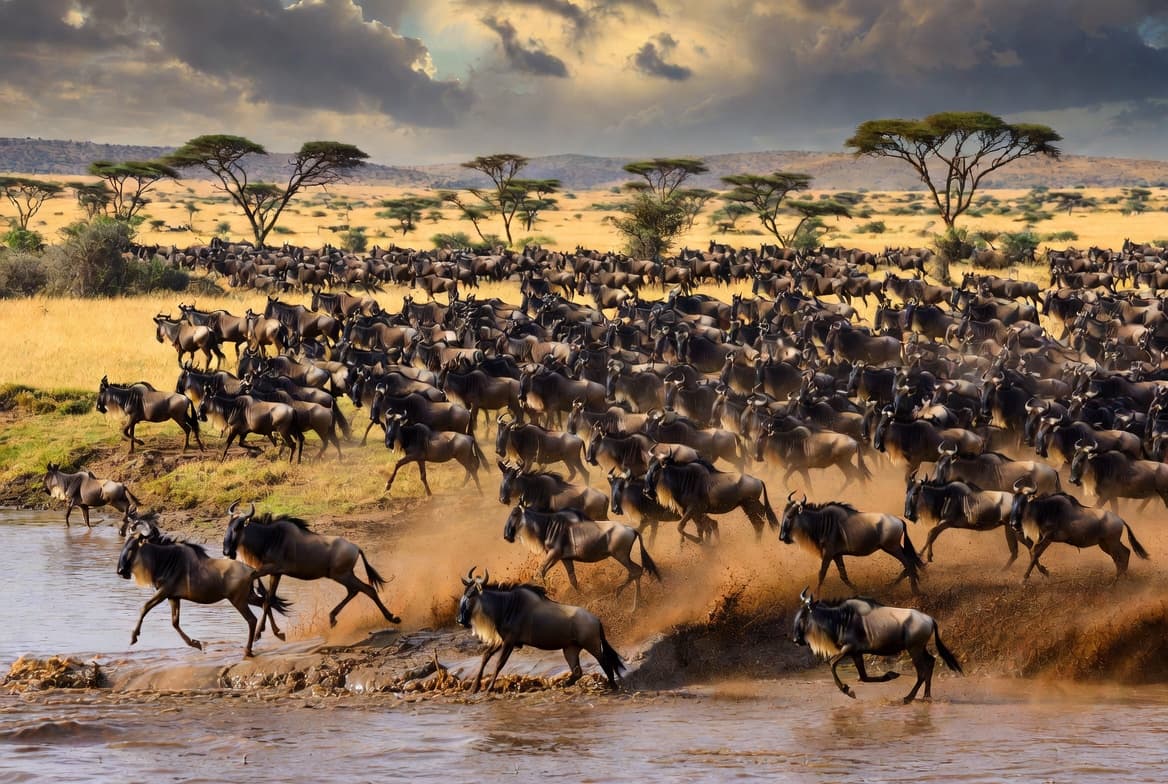
The Mara River crossing is the most dramatic wildlife event on Earth. A herd of up to 10,000 wildebeest stands at the riverbank — agitated, bellowing, pressing forward then pulling back — while Nile crocodiles up to 5 metres long hold position in the brown water below. Then, for reasons no researcher has ever fully explained, a single animal leaps. Within seconds, thousands follow. The noise is like thunder. The water turns to chaos. Crocodiles roll. Calves struggle. And then, in 20 minutes, it is over — and the survivors emerge, shake themselves off, and begin to graze as if nothing happened.
What the brochures fail to communicate is how unpredictable the crossings are. Herds can gather at a crossing point at dawn and turn back entirely — sometimes for four consecutive days. We have seen clients wait six days and see nothing. We have also seen clients arrive at Wilson Airport, drive straight to the Mara, and witness a crossing within two hours of arrival. The only variable you can genuinely control is how many nights you give yourself.
The Three Main Crossing Points on the Mara River
| Crossing Point | Location | Character | Typical Month |
|---|---|---|---|
| Mara Triangle crossings | Western bank, between Triangle and Reserve | Largest crossings; widest river; most dramatic | August–September |
| Lookout Hill / Serena crossings | Central Mara | Frequent; accessible; moderate drama | July–October |
| Sand River crossings | Southern Mara / Tanzania border | Smaller herds; shallower river; less crowded | July–November |
Tactical Advice: Positioning Yourself for a Crossing
- Stay in the ecosystem for a minimum of 4 nights — 6 nights is the sweet spot. Every additional day significantly increases your odds.
- Stay inside a private conservancy bordering the Reserve (Olare Motorogi, Naboisho, Mara North). Off-road driving to the river is only permitted in conservancies — not inside the National Reserve.
- Ask your guide to monitor radio contact from 05:30. Crossings peak between 09:00 and 14:00 when the sun warms the animals into movement.
- Do not chase crossings by radio. The best guides identify a crossing point with the right bank conditions, park there, and wait. Vehicles that race from point to point almost always arrive after the event.
- Understand that a "false start" — where the herd masses, panics, and retreats — is itself extraordinary to witness. Many first-time visitors find it more moving than the crossing itself.
Calving Season: Africa's Most Underrated Wildlife Event (January–February)
Ask any experienced safari guide where they would go if they had one week in the Serengeti-Mara ecosystem, and the majority will say: Ndutu, in February, during calving season. Between late January and mid-February, approximately 500,000 wildebeest calves are born in the short-grass plains around Ndutu and the southern Serengeti. They are born in a compressed window because safety is in numbers — flooding the environment with calves reduces the statistical chance of any individual being taken. The result is the highest concentration of predators anywhere on the continent during any time of year.
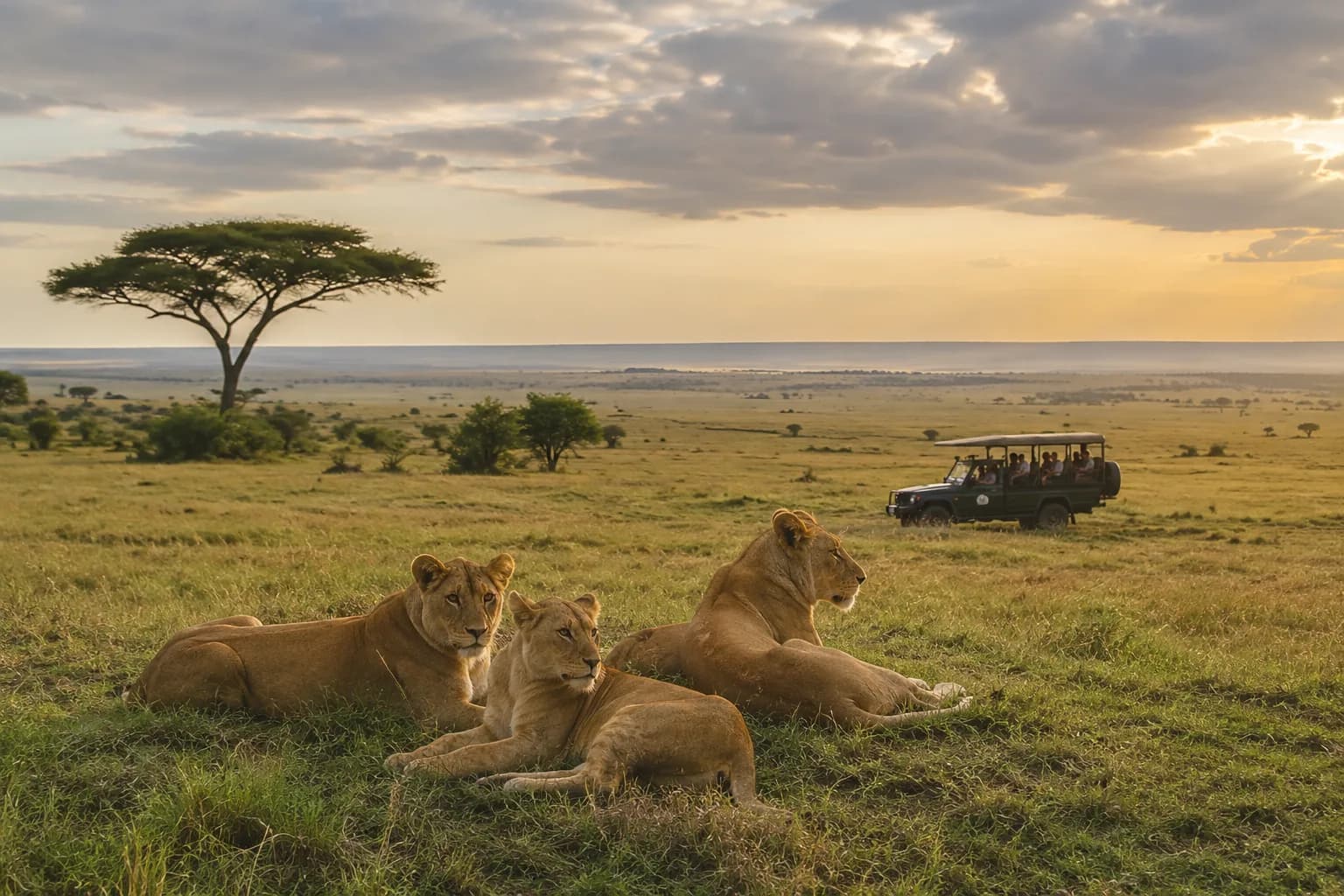
Cheetah mothers bring cubs to learn. Lion prides of 30 animals move together feasting. Wild dog packs, hyena clans, and jackals fill every corner of the landscape. Calving season is also low season — rates are 20–40% lower than July–October, there are far fewer vehicles, and the photography light across the southern Serengeti in January–February is exceptional: golden, open plains, and extraordinary predator action available from first light to last.
The Grumeti Crossings: June–July (Tanzania's Secret)
The Grumeti River in the western Serengeti sees the Migration's first major river crossings as herds push north in May and June. The Grumeti crossings are smaller in scale than the Mara crossings but arguably more visceral in one respect: the Grumeti is home to some of the largest Nile crocodiles in Africa — ancient reptiles that can exceed 5 metres and weigh over 700 kilograms. A single Grumeti crossing with large crocs is a genuinely confronting spectacle that even veteran photographers describe as uniquely powerful.
The Grumeti is also significantly less visited. Singita Grumeti's camps (Faru Faru Lodge, Sabora Tented Camp) operate within a 340,000-acre private wildlife concession where vehicle numbers are strictly controlled. If you want the Migration experience with near-private access, Grumeti in June offers some of the best value in African safari.
Kenya vs Tanzania for the Great Migration: An Honest Comparison
| Factor | Kenya (Masai Mara) | Tanzania (Serengeti) |
|---|---|---|
| Best season | July–October (Mara River crossings) | Year-round; Jan–Feb calving; May–July Grumeti |
| River crossings | Mara River — dramatic, famous, large herds | Grumeti (June–July); Mara crossings in north Serengeti (July) |
| Vehicle rules | Off-road allowed in private conservancies | No off-road in national parks; mobile camps vary |
| Infrastructure | Excellent light aircraft network from Wilson Airport | Good flights; some camps require longer road transfers |
| Visitor numbers | High in peak; conservancies provide relief | Lower overall density; vast park reduces crowding |
| Cost | USD 700–2,000pp/night (conservancy luxury) | Similar range; value options in western Serengeti |
| Best combined with | Amboseli, Laikipia, Lamu, Zanzibar | Ngorongoro, Tarangire, Zanzibar, Pemba |
| Verdict | Best for river crossings July–October | Best for calving (Feb), Grumeti (Jun), year-round |
The Best Migration Camps: An Honest Assessment
| Camp | Location | Category | Why We Recommend It |
|---|---|---|---|
| Angama Mara | Mara Triangle escarpment | Ultra-luxury (USD 1,800+pp/night) | Unmatched cliff-edge view; extraordinary guiding; breakfast overlooking the valley |
| Mahali Mzuri (Virgin) | Mara North Conservancy | Ultra-luxury (USD 1,400+pp/night) | Richard Branson's camp; 12 tents only; private conservancy; sundowners on the plains |
| Sanctuary Olonana | Mara North (river bank) | Luxury (USD 800–1,200pp/night) | On the Mara River; crossing views from camp possible in peak season |
| Governors' Camp | National Reserve (river bank) | Luxury (USD 700–900pp/night) | Historic; river location; consistent wildlife year-round |
| Ol Seki Hemingways | Naboisho Conservancy | Luxury (USD 700–1,100pp/night) | Excellent walking programme; night drives; exceptional leopard sightings |
| Singita Grumeti | Grumeti Wildlife Concession | Ultra-luxury (USD 1,500+pp/night) | 340,000-acre private concession; exclusive Grumeti crossing access |
| Ndutu Safari Lodge | Ndutu, Southern Serengeti | Mid-range (USD 300–500pp/night) | The original calving-season camp; authentic; extraordinary February access |
Photography at the Migration: What Actually Helps
- Lens: A 100–400mm or 200–600mm zoom gives flexibility for wide crossing scenes and tight portrait shots. Bring a zoom over a prime if you can only bring one.
- Settings: Crossings require minimum 1/1600s shutter speed to freeze movement. Use burst mode at 10fps+. Animals move faster than you expect.
- Bean bag: The single most important accessory. A car-door bean bag provides a stable lens rest that a tripod cannot match in a moving or idling vehicle.
- Timing: Dawn light (06:30–09:00) and dusk light (15:30–18:30) are exceptional. If a crossing is happening at noon in August, photograph it — content over light. For predator portraits, early and late is everything.
- Memory: A full day at a crossing point can consume 1,000+ frames. Bring 128GB of high-speed cards minimum and three fully charged batteries.
Booking Timeline: When to Reserve
- AUGUST–SEPTEMBER: Book 10–12 months in advance. Premium conservancy camps are typically fully reserved by October of the previous year.
- JULY: 8–10 months in advance. Better availability than August but the best camps still fill early. Excellent crossings with marginally fewer vehicles.
- OCTOBER: 6–8 months ahead. Crossings possible but tapering. Better camp rates; good availability.
- CALVING (January–February): 4–6 months ahead. Low season means better availability and rates. Best Ndutu camps still fill for this specific season.
- GRUMETI (May–June): 4–6 months ahead. Singita fills early given its exclusivity. Other Grumeti options available with less notice.
Frequently Asked Questions
When is the absolute best time to see the Mara River crossings?
+
August and September offer the highest probability of witnessing multiple crossings. The herds are fully in Kenya by late July, and crossings are most frequent and dramatic in August. If you want the crossings with fewer fellow tourists, July (first crossings, excellent probability) or October (final crossings, better rates) are smart alternatives.
How many nights do I need for a realistic chance of seeing a crossing?
+
A minimum of 4 nights gives a reasonable probability. Six to seven nights is our recommended minimum when seeing a crossing is a priority. With 7 nights during August–September, the probability of witnessing at least one crossing is above 85% based on 12 years of client data. With 4 nights it is closer to 55–60%.
Can you guarantee I will see a river crossing?
+
No — and be very suspicious of any operator who claims they can. The crossings are dictated entirely by the wildebeest, responding to wind, water levels, scent, and animal psychology that no human can predict. What we can guarantee is the right camp, the right guide, and the right number of nights to maximise your probability. In 12 years, fewer than 5% of our clients in the Mara during August–September have not seen a crossing.
Is the Migration worth seeing outside the river crossing months?
+
Absolutely. Many of our most experienced travellers consider calving season (January–February, southern Serengeti) the Migration's most spectacular phase. The concentration of predators, the birth scenes, and the sustained predator-prey action rival or exceed the crossings in emotional impact. The Grumeti crossings in June are equally compelling.
How much does a Migration safari cost?
+
A quality 7-night Migration safari in a Masai Mara conservancy (private vehicle, all-inclusive, return light aircraft from Nairobi) ranges from USD 6,000–12,000 per person depending on camp tier. Ultra-luxury (Angama Mara, Mahali Mzuri) can exceed USD 15,000 per person for 7 nights. Mid-range options inside the National Reserve start from approximately USD 3,500 per person.