Signature Experiences

The Experiences That Define East Africa

Six journeys we have spent more than a decade perfecting — each one an anchor for a complete itinerary, each one available independently or woven together into a longer trip.

Best Time to Visit
July – October

for the Mara River crossings. January–February for calving. June for the Grumeti. No bad month exists — every phase of the cycle is extraordinary.

Wildlife Spectacle

The Great Wildebeest Migration

The Greatest Wildlife Show on Earth — 365 Days of Drama

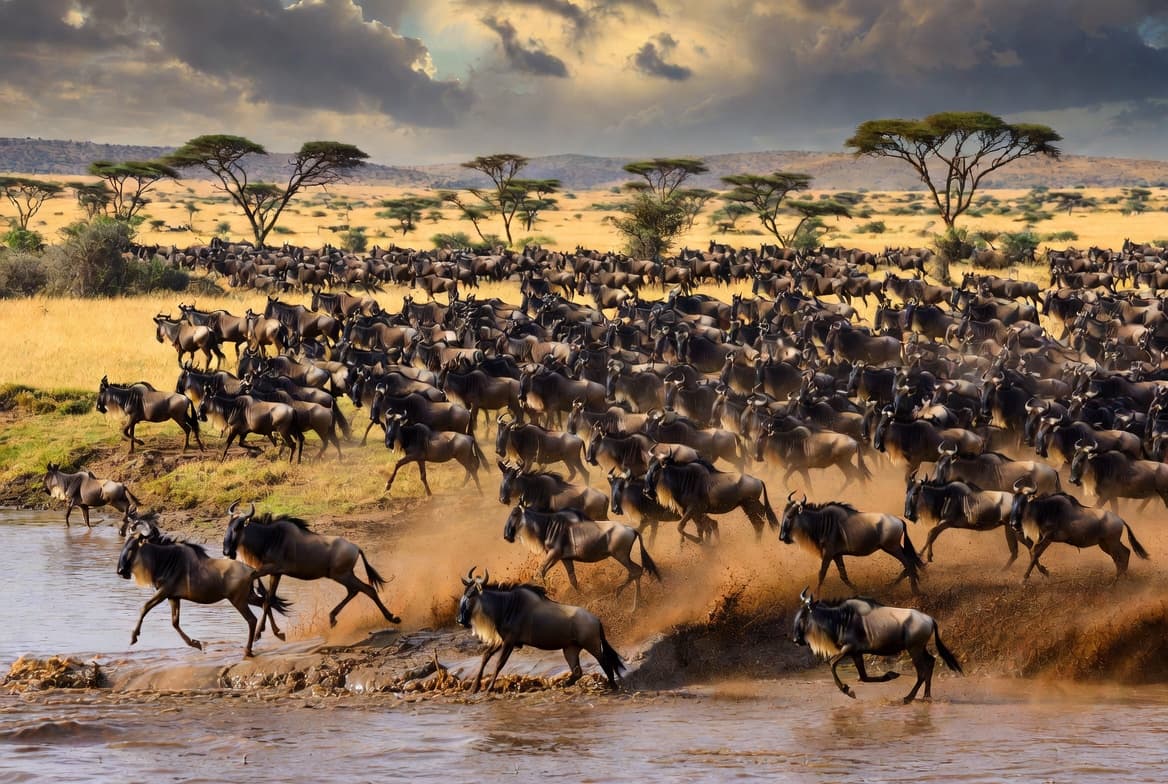
Over 1.5 million wildebeest, 250,000 zebra, and 500,000 gazelle move in a perpetual clockwise circuit across the Serengeti-Mara ecosystem — the largest overland migration of mammals on Earth. This is not a single event: it is a year-round cycle of birth, movement, crossing, and survival that rewards visitors in every month of the year.

Kenya (Masai Mara)Tanzania (Serengeti, Ndutu)

The migration is driven by rainfall and grass. The herds follow a predictable seasonal circuit: calving season in the southern Serengeti's Ndutu region (January–March) produces approximately 500,000 calves in a six-week window — the greatest concentration of newborn mammals anywhere on Earth. Predators converge from all directions. Lion prides, cheetah mothers, and spotted hyenas make January and February among the most dramatic wildlife months in Africa.

By April and May the herds move north through the central Serengeti's long-grass plains. The Grumeti River crossing in June and July is the first of the famous river crossings — smaller than the Mara crossings but equally dramatic, with the Grumeti's resident crocodiles among the largest and most aggressive on the continent.

The Mara River crossings (July–October) are what most people picture when they imagine the Migration. Vast columns of wildebeest pile up on the Tanzania-Kenya border, working up the courage to enter water patrolled by Nile crocodiles. A crossing can last thirty seconds or three hours. Some days nothing happens; other days tens of thousands cross at once. It is profoundly unpredictable and profoundly compelling.

By November the short rains arrive and the herds begin moving south again through the eastern Serengeti — completing the circuit. We position guests strategically based on the actual movement of the herds in real time, using our network of guides and camp managers across the ecosystem to give you the best possible sighting, whatever the month.

Highlights
  • Calving season (Jan–Feb): 500,000 newborns and wall-to-wall predator action in Ndutu
  • Grumeti River crossings (Jun–Jul): first river crossing; enormous resident crocodiles
  • Mara River crossings (Jul–Oct): the iconic moment; 1.5M animals crossing from Tanzania to Kenya
  • Private conservancy access: off-road driving and night drives permitted (not in national parks)
  • Mobile camps that follow the herds — waking up in the middle of the action every morning
  • Hot-air balloon over the Mara plains at dawn — the herds spread across the savanna below you
Quick Facts
Animals
1.5M wildebeest · 250,000 zebra · 500,000 gazelle
Ecosystem
Serengeti (Tanzania) + Masai Mara (Kenya) — 30,000 km²
River crossings
Grumeti (Jun–Jul) · Mara River (Jul–Oct)
Year-round?
Yes — every month offers a different phase of the cycle
Permit required?
No permit — national park entry fees apply
Minimum stay
4 nights minimum to maximise crossing chances
Plan This Experience →
Best Time to Visit
June – August · December – February

during the dry seasons when trails are drier and forest visibility is better. Gorilla trekking runs year-round — the wet seasons (March–May, September–November) still deliver excellent sightings but trails are muddier.

Primate Encounters

Mountain Gorilla Trekking

One Hour That Changes Everything — Bwindi & the Virungas

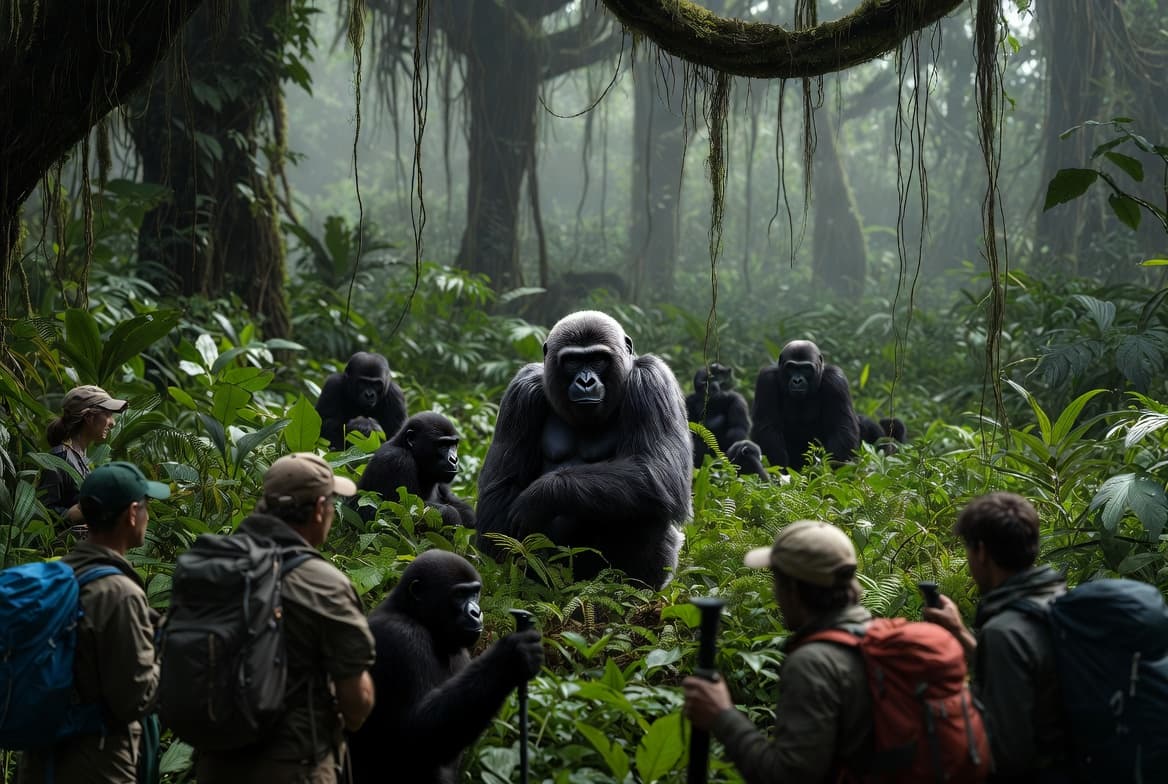
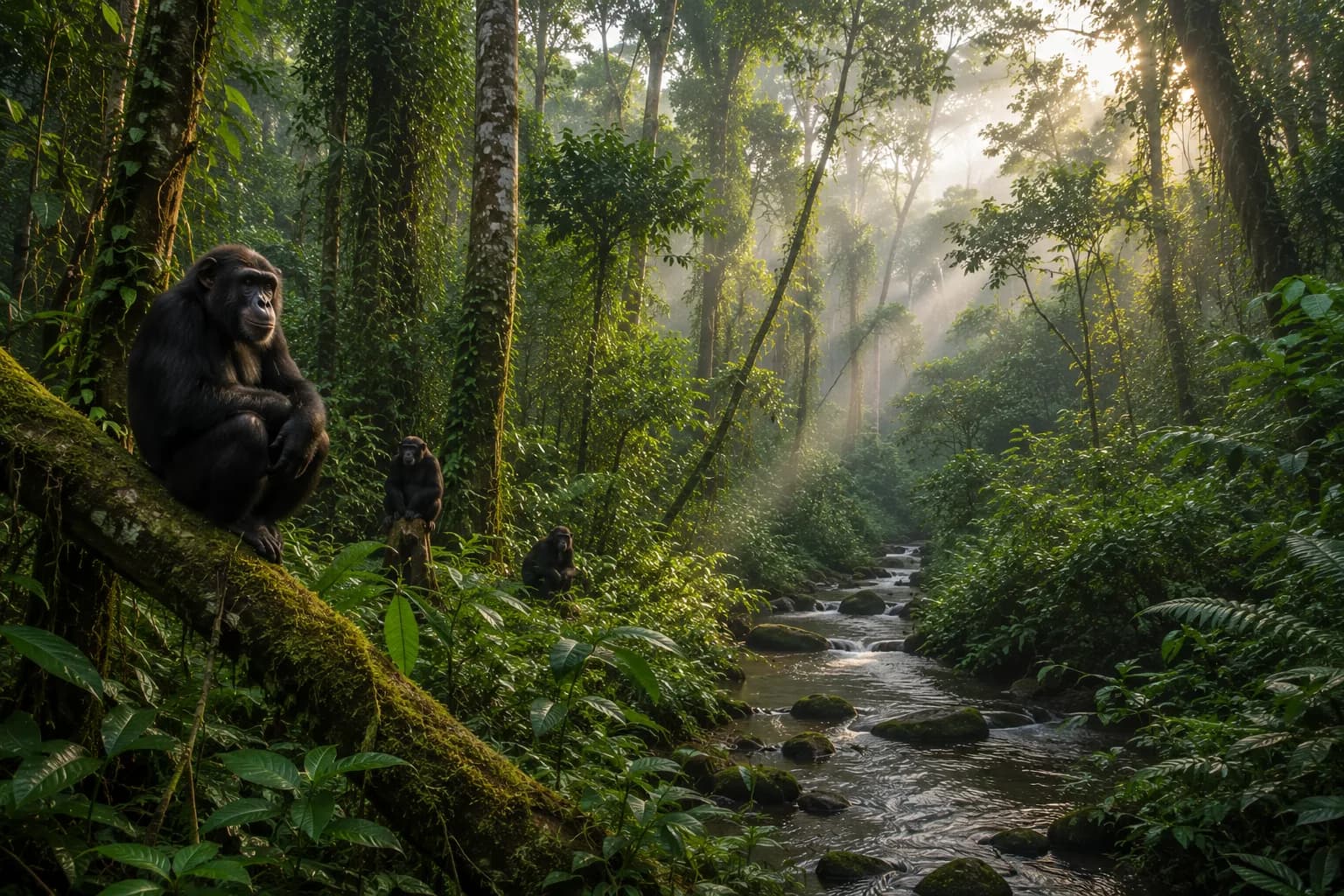
There are approximately 1,063 mountain gorillas left on Earth. All of them live in one of three contiguous forests straddling the borders of Uganda, Rwanda, and the Democratic Republic of Congo. Trekking to spend one hour in the presence of a wild gorilla family — making eye contact with an 180kg silverback at three metres — is described by virtually every traveller who has done it as one of the most affecting experiences of their life.

Uganda (Bwindi, Kibale, Mgahinga)Rwanda (Volcanoes National Park)

Mountain gorillas (Gorilla beringei beringei) are the largest primates on Earth and our closest relatives after chimpanzees, sharing 98.3% of human DNA. Unlike their lowland cousins, mountain gorillas cannot survive in captivity — every individual you will see is entirely wild. This makes the trekking experience categorically different from any zoo or sanctuary encounter.

Uganda's Bwindi Impenetrable National Park shelters approximately 459 mountain gorillas across 19 habituated families — the largest population of any single site. Bwindi's ancient montane rainforest is extraordinarily biodiverse: 120 mammal species, 350 bird species, and 200 species of butterfly in a UNESCO World Heritage site that has remained forested since the last Ice Age.

Rwanda's Volcanoes National Park offers a different but equally remarkable experience. The Virunga volcanoes rise from 2,400m to 4,507m (Karisimbi), and the gorilla families range across bamboo forest, hagenia woodland, and high-altitude moorland. The Rwandan trekking infrastructure is the most polished in the region, with excellent lodges and very well-trained guides. Gorilla permits cost USD 1,500 per person — the highest in the region — but the experience quality and conservation impact are exceptional.

Gorilla trekking permits are strictly limited to eight people per family group per day. We book permits 3–6 months in advance and design complete itineraries around your permit dates — combining gorilla trekking with chimpanzee tracking in Kibale (Uganda), golden monkey tracking in the Virungas (Rwanda), or classic Kenya safari before or after.

Highlights
  • One habituated gorilla family visited per trek — maximum 8 permits per family per day
  • Bwindi Impenetrable Forest, Uganda — 459 gorillas; 19 habituated families; 4 trekking sectors
  • Volcanoes National Park, Rwanda — most polished infrastructure; USD 1,500 permits
  • Trek duration: 30 minutes to 6 hours depending on where the family has moved overnight
  • One hour maximum with the gorillas — enforced to protect the animals from human-borne disease
  • Combine with chimpanzee tracking in Kibale (Uganda) or golden monkey tracking (Rwanda/Uganda)
Quick Facts
Population
~1,063 mountain gorillas worldwide — all wild
Locations
Bwindi (Uganda) · Volcanoes NP (Rwanda) · Mgahinga (Uganda)
Permit cost
USD 700 (Uganda) · USD 1,500 (Rwanda)
Group size
8 people maximum per gorilla family per day
Time with gorillas
1 hour — strictly enforced
Book ahead
3–6 months minimum; peak season up to 12 months
Plan This Experience →
Best Time to Visit
Year-round

The East African coast is warm year-round (26–28°C). Pair the July–October migration with Zanzibar in June–October (dry season). January–February safari combines with the warmest, calmest coast weather.

Combination Journey

Bush to Beach

Africa's Most Loved Itinerary Shape — Safari Then Sea

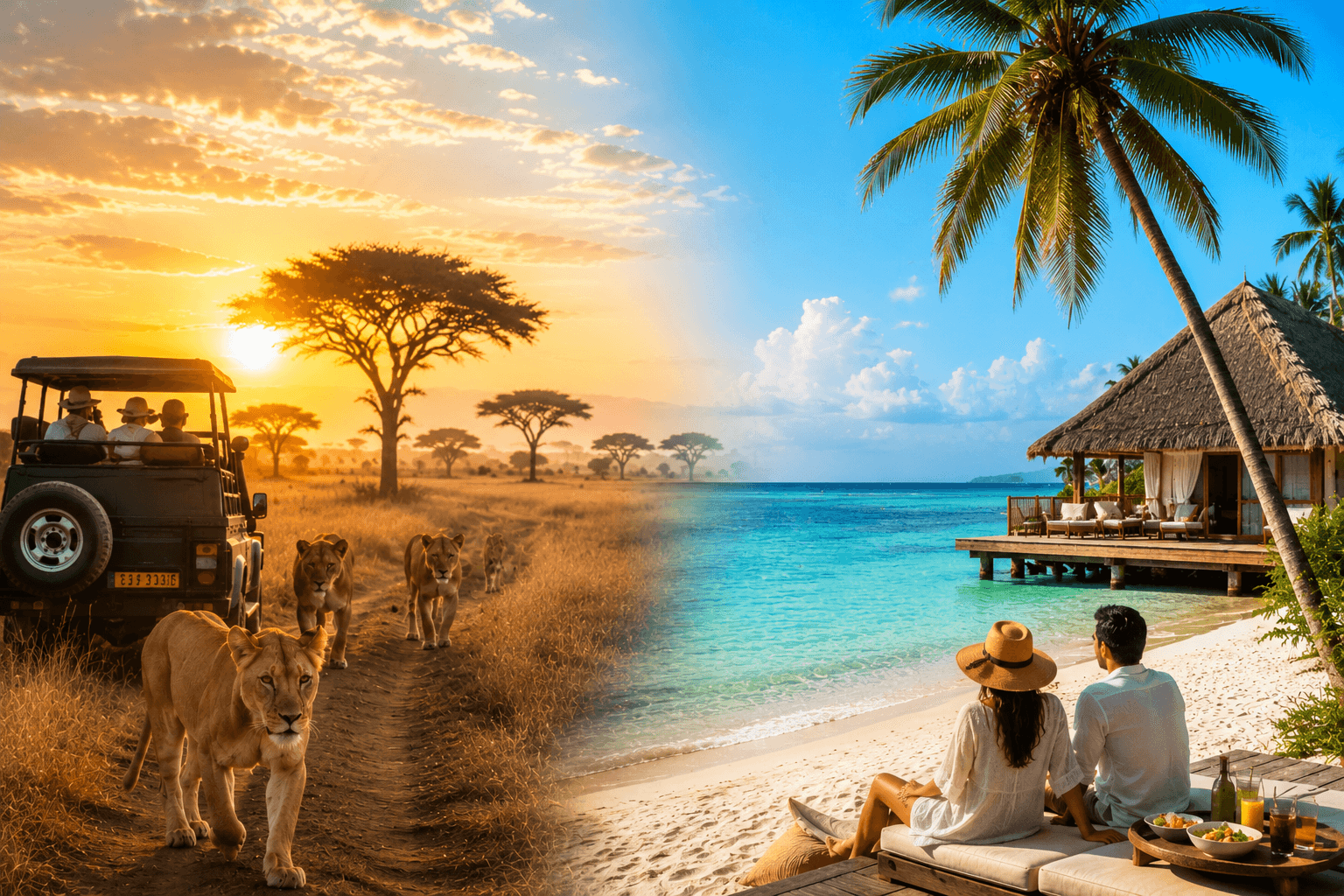
The bush-to-beach combination is East Africa's signature travel experience — and for good reason. The contrast between a dawn game drive watching lions hunt and a barefoot walk on a white-sand Indian Ocean beach three days later is one of the most satisfying transitions in travel. We have been crafting these journeys for over a decade and have refined every detail of the handover.

Kenya coast (Diani, Watamu, Lamu)ZanzibarSeychellesMozambique

The classic Kenya bush-to-beach itinerary opens with Amboseli (Kilimanjaro views, vast elephant herds) or the Masai Mara (migration and Big Five), then transitions south to the Kenya coast — Diani Beach south of Mombasa, Watamu north of Mombasa, or Lamu for the full Swahili culture experience. The drive or short flight from the safari parks to the coast is seamless when planned correctly.

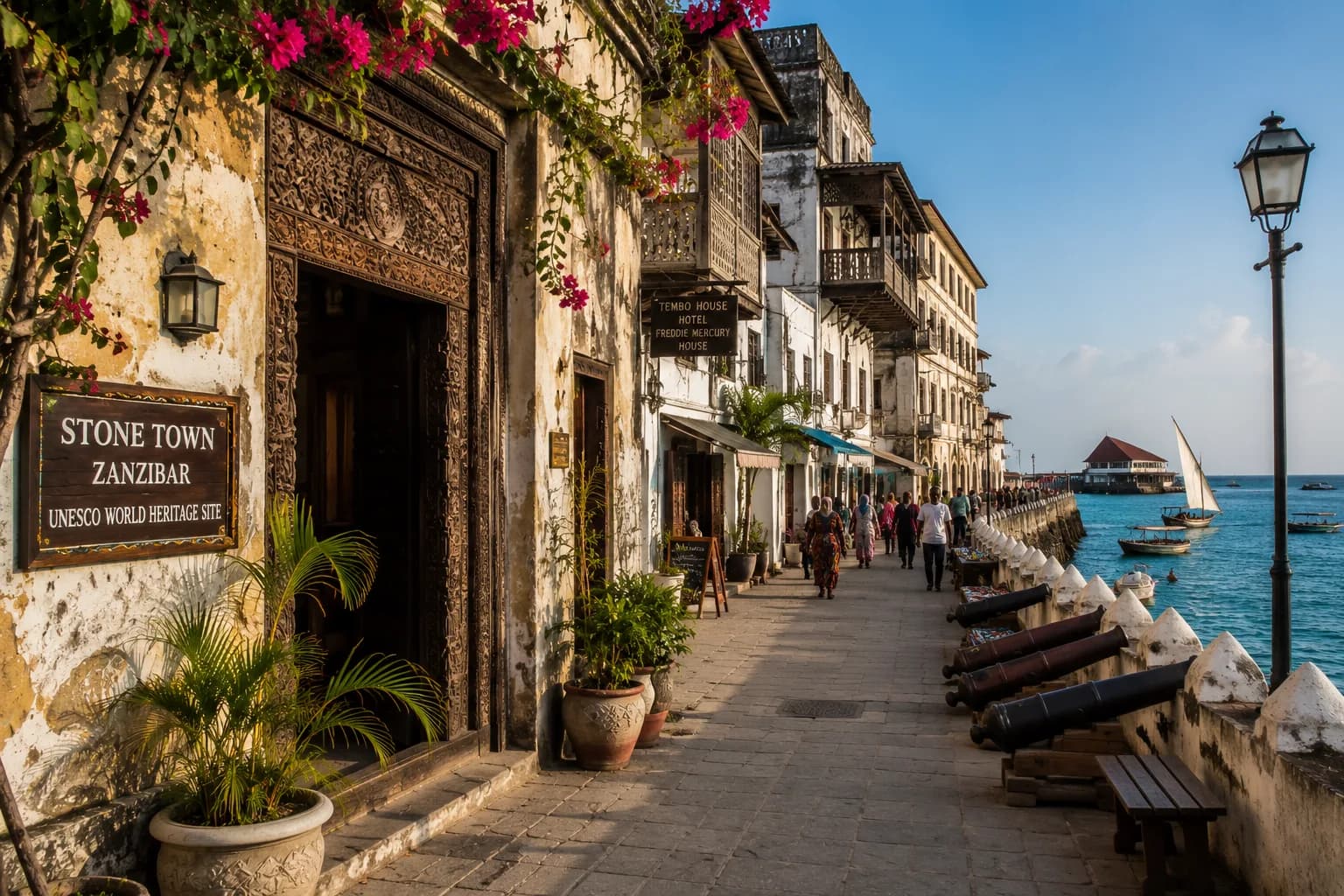
Tanzania's version pairs the Serengeti and Ngorongoro with Zanzibar — one of the world's great island destinations. Stone Town's UNESCO-listed medina, the calm beaches of Nungwi on the north coast, and the turquoise east-coast lagoons of Paje and Jambiani offer a week of Indian Ocean luxury after the intensity of a Serengeti safari. The ferry from Dar es Salaam to Zanzibar takes two hours; the flight takes 20 minutes.

Southern Africa's answer is Botswana (Okavango Delta and Chobe) combined with the Mozambique coast or the Seychelles — a longer, more luxurious trip that typically requires 12–16 days. The Mozambique coast around Bazaruto Archipelago and Quirimbas Archipelago offers some of the least-crowded, most pristine Indian Ocean beaches anywhere in Africa.

Our rule is simple: three to five nights of intensive safari, then a minimum of three nights at the coast (we recommend five to seven). The transition should happen mid-week to avoid weekend price premiums at the coast. We handle every transfer — from the airstrip to the beach resort — so you arrive relaxed rather than frazzled.

Highlights
  • Kenya: Amboseli or Mara → Diani, Watamu, or Lamu — the definitive combination
  • Tanzania: Serengeti + Ngorongoro → Zanzibar (Stone Town, Nungwi, Paje)
  • Southern Africa: Botswana (Okavango + Chobe) → Mozambique or Seychelles
  • Seamless transfers — we plan every handover so you never stand at a wrong terminal
  • Beach selection based on your priorities: seclusion, snorkelling, kite-surfing, or culture
  • Ideal for honeymooners, families, and first-time Africa travellers — Africa's most complete experience
Quick Facts
Ideal duration
8–14 days total (3–5 safari + 4–7 beach)
Safari options
Kenya · Tanzania · Botswana · Zimbabwe
Beach options
Diani · Zanzibar · Seychelles · Mozambique · Lamu · Watamu
Best for
Honeymooners · Families · First-time Africa visitors
Ocean temperature
26–28°C year-round on the East African coast
Internal transfers
Short flight or road — all arranged by us
Plan This Experience →
Best Time to Visit
June – October

The dry season concentrates animals at water sources, grass is short (easier to spot predators), and conditions are pleasant. However, year-round safaris deliver excellent Big Five sightings in the right parks.

Wildlife Safari

Big Five Safaris

Lion, Leopard, Elephant, Buffalo & Rhino — Where to See Them All

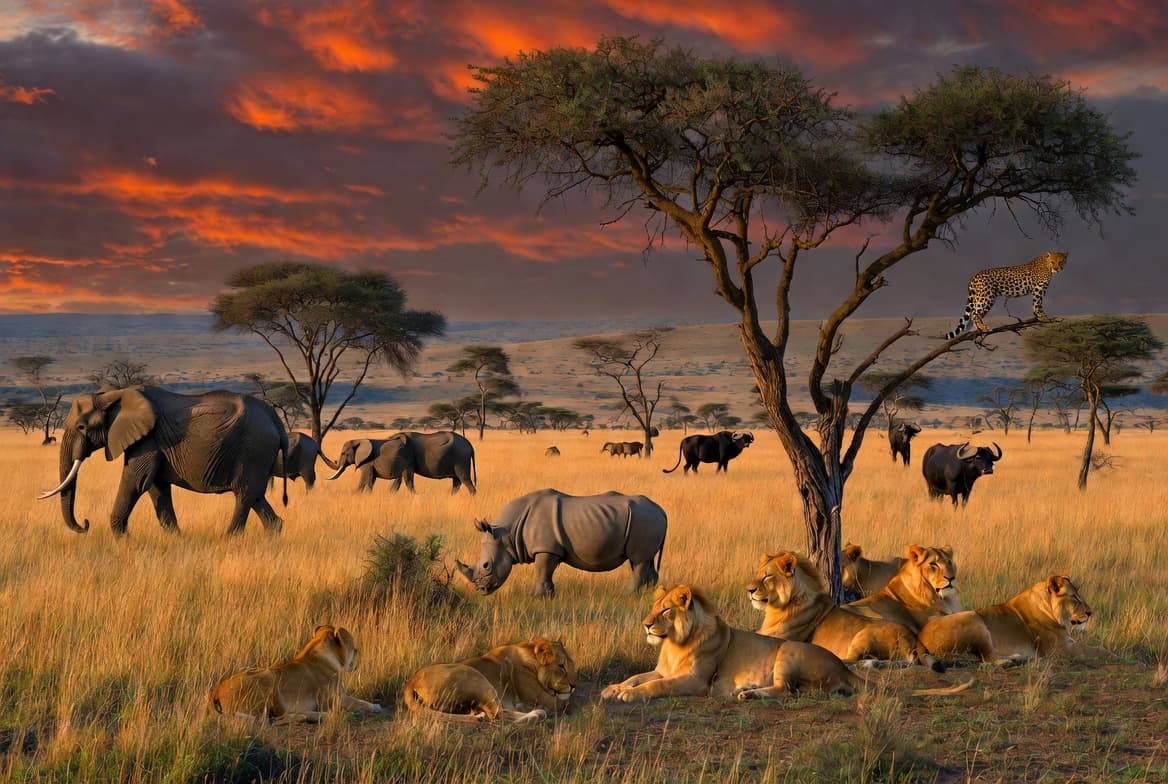
The term "Big Five" was coined by 19th-century big game hunters to describe the five most dangerous animals to hunt on foot — lion, leopard, African elephant, African buffalo, and rhinoceros. Today it defines the bucket list of every first-time safari traveller. But seeing all five on the same itinerary requires choosing the right parks, staying long enough, and having a guide who knows where to look.

KenyaTanzaniaSouth AfricaBotswanaZimbabwe

Lions are Africa's most reliably seen large predator — the Masai Mara, Serengeti, Ngorongoro Crater, Kruger, and Hwange (Zimbabwe) all offer near-daily sightings. Leopards are far more challenging: genuinely nocturnal and highly secretive, they are best seen on night drives in private reserves where off-road driving is permitted (Sabi Sand, Laikipia, Mara conservancies). The Sabi Sand Game Reserve adjoining South Africa's Kruger Park has the highest density of habituated leopards on Earth — sightings are almost guaranteed within three nights.

African elephants are the world's largest land animals and one of Africa's most emotionally affecting encounters at close range. Amboseli National Park in Kenya is the finest destination for elephant photography — enormous relaxed herds against a Kilimanjaro backdrop. Chobe National Park in Botswana harbours the continent's largest elephant population (approximately 130,000), best seen on boat safaris along the Chobe River.

African buffalo move in vast herds and are found in most major parks, but the Cape buffalo's reputation as one of Africa's most dangerous animals is well-earned — a wounded or surprised buffalo is extraordinarily dangerous. The Mara, Serengeti, and Kruger all offer outstanding buffalo sightings in herds of hundreds.

Rhinoceros — both black (critically endangered, ~6,400 remaining) and white (near-threatened, ~18,000 remaining) — are the rarest and most sought-after of the Big Five. The best rhino destinations in Africa are: Ngorongoro Crater (Tanzania — black rhino, reliably seen), Lake Nakuru (Kenya — both species, well protected), Ol Pejeta Conservancy (Kenya — largest black rhino sanctuary in East Africa), and Hluhluwe-iMfolozi (South Africa — highest density of white rhino on Earth).

Highlights
  • Lion: Masai Mara, Serengeti, Ngorongoro Crater, Kruger, Hwange — near-daily sightings
  • Leopard: Sabi Sand (Kruger buffer), Mara conservancies, Laikipia — world-class density
  • Elephant: Amboseli (photography), Chobe (volume), Laikipia (habituated, close encounters)
  • Rhino: Ngorongoro Crater, Lake Nakuru, Ol Pejeta, Hluhluwe-iMfolozi — best sanctuaries
  • Buffalo: Serengeti, Mara, Kruger — herds of hundreds are common
  • Private conservancies: off-road driving, night drives, and walking safaris unlock far better sightings
Quick Facts
Lion population
~25,000 remaining in Africa — vulnerable
Leopard
Most nocturnal; best in private reserves with night drives
Elephant
Amboseli (photography) · Chobe (volume — 130,000)
Black rhino
~6,400 remaining — critically endangered
White rhino
~18,000 remaining — near threatened
Best single park
Ngorongoro Crater — highest density Big Five per km²
Plan This Experience →
Best Time to Visit
Year-round

Cultural visits run year-round. Stone Town and Lamu are best November–March (dry, cooler). Maasai visits are year-round and are not weather-dependent. Rwanda is most pleasant June–September.

People & Culture

Cultural Journeys

East Africa Beyond the Wildlife — Community, History & Living Tradition

East Africa's wildlife is extraordinary. But the cultural landscape — the Maasai warriors who have co-existed with lions on the same land for centuries, the Swahili coast's 700-year trading civilisation, the Samburu of northern Kenya, Rwanda's healing and transformation, the ancient kingdoms of Uganda — is equally extraordinary and far less explored. Our cultural journeys are designed around genuine engagement: led by community members, paid fairly, and never performative.

Kenya (Maasai Mara, Samburu, Lamu)ZanzibarRwanda (Kigali)Uganda (Bwindi, Kampala)

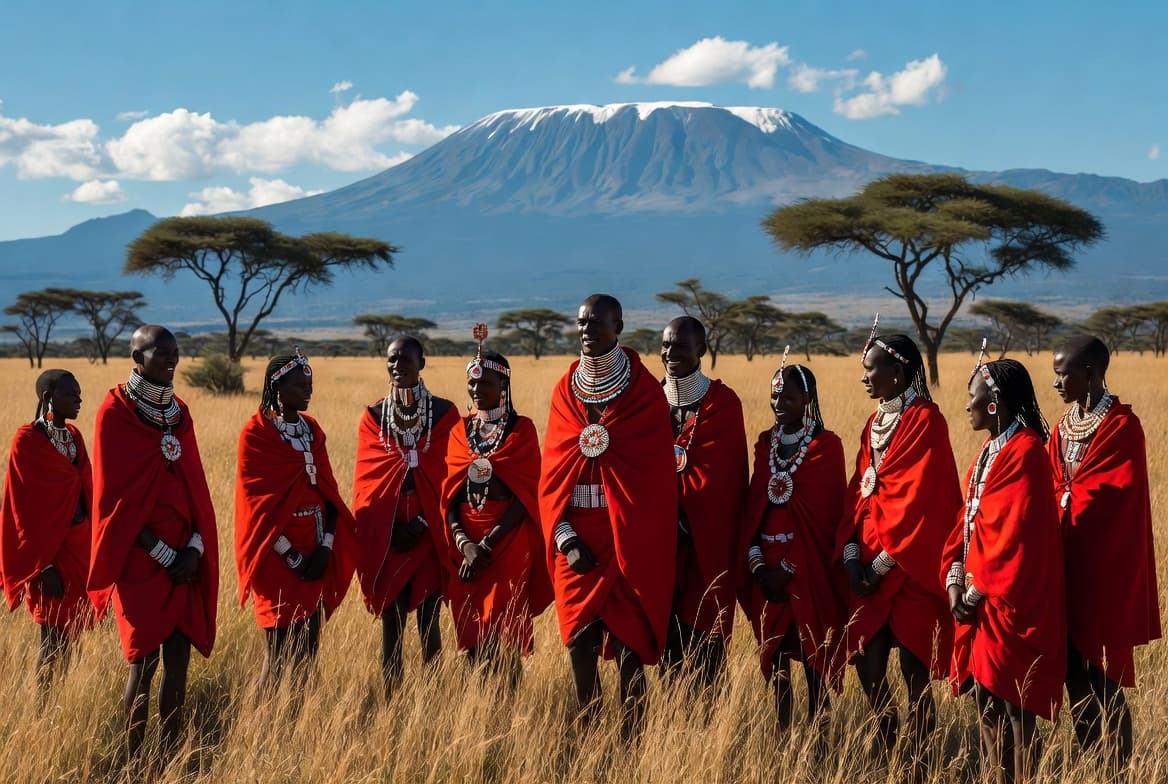
Maasai cultural visits are among East Africa's most requested experiences — and among the most frequently done badly. A 20-minute 'village visit' attached to the end of a game drive, where warriors dance briefly for a tip before tourists board their vehicles, achieves nothing of value for either party. Our Maasai visits are designed with the communities themselves: two to three hours minimum, led by a resident elder or warrior, covering the manyatta's social structure, the role of cattle in Maasai economy and cosmology, medicinal plant knowledge, and the coming-of-age ceremonies that define Maasai identity. We pay a flat community fee that funds the village's health and education fund directly — no haggling, no ambiguity.

The Swahili coast is one of the most under-visited cultural landscapes in Africa. Stone Town, Zanzibar — a UNESCO World Heritage Site — preserves 700 years of Arab, Persian, Indian, Portuguese, and British layering in a single medina of narrow alleys, carved Omani doors, and rooftop restaurants over the harbour. Lamu, further north on the Kenya coast, is even more intact and less visited: donkeys outnumber cars, the pace of life follows the tides, and 14th-century coral-stone houses are still inhabited. Our Swahili coast walks are guided by local historians, not hotel concierges.

Rwanda offers one of the world's most profound cultural tourism experiences: the Kigali Genocide Memorial and its associated historical programme. Rwanda lost approximately 800,000 people — roughly 75% of the Tutsi population — in 100 days in 1994. The country's recovery and transformation in the 30 years since is one of the most remarkable stories in modern African history. We work with Rwandan guides who experienced the genocide and its aftermath personally, and who choose to share their stories with visitors as part of Rwanda's official reconciliation and healing process.

Uganda's cultural depth is exceptional for such a small country: the Buganda Kingdom (the largest of Uganda's traditional kingdoms, with a 700-year-old monarchy still active today), the Batwa pygmy communities of the Bwindi forest (who lived inside the forest for 50,000 years before its gazettement as a national park), and the Karamojong pastoralists of the northeast. We connect guests with community-led programmes that provide real income and genuine exchange rather than performance.

Highlights
  • Maasai village visits — 2–3hrs, led by elders; community fee paid directly to village fund
  • Stone Town, Zanzibar — guided medina walks with local historians, not hotel staff
  • Lamu Archipelago — Kenya's most intact Swahili culture; UNESCO World Heritage
  • Kigali Genocide Memorial + survivor guides — Rwanda's most important cultural experience
  • Samburu warrior conversations — northern Kenya; different culture and language from Maasai
  • Batwa community programme, Bwindi — forest people sharing knowledge of their ancestral forest
Quick Facts
Engagement style
Opt-in, community-led, community-paid — never staged
Maasai visit duration
2–3 hours minimum (not 20-minute drive-by)
Languages
English-speaking community guides throughout
Cultural sites
Stone Town · Lamu · Kigali Memorial · Buganda Kingdom · Samburu
Photography
Community consent always sought; guidelines briefed beforehand
Community payment
Flat fees paid directly to community funds — no haggling
Plan This Experience →
Best Time to Visit
June – October · January – February

June–October combines the Mara River crossings with the dry coast season. January–February offers outstanding safari (calving, predators) with the warmest, calmest Indian Ocean water of the year.

Celebrations & Romance

Honeymoon Safaris

Africa for Two — Private, Unhurried, Unforgettable

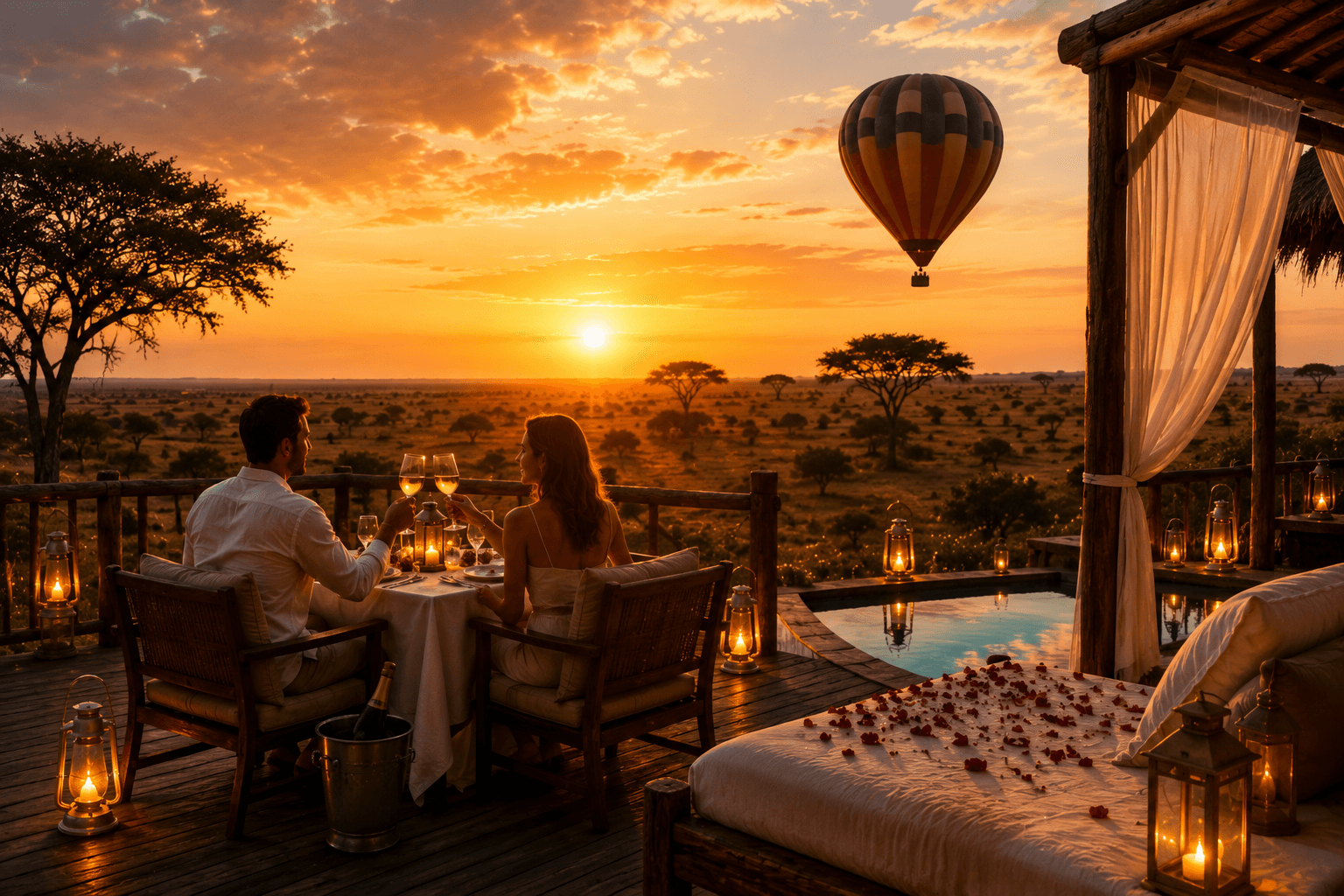
A honeymoon in Africa is unlike any other. The combination of genuine wilderness, world-class lodges with private decks over waterholes, candle-lit dinners under billion-star skies, and the transition to a barefoot Indian Ocean beach creates an experience that couples describe — years later — as the most memorable trip of their lives. We have planned hundreds of African honeymoons and the details matter enormously: we know which lodges have free-standing baths facing the bush, which camps do midnight sundowners under the Milky Way, and which beaches have the calmer seas in which month.

KenyaTanzaniaBotswanaZanzibarSeychellesMozambique

The ideal African honeymoon lasts 12–16 days. Our most requested shape is four to five days of luxury safari (Masai Mara, Serengeti, or Okavango Delta) followed by seven to nine nights on the Indian Ocean coast (Zanzibar, Seychelles, Maldives, or Mozambique). The contrast — the raw intensity of the bush giving way to barefoot beach luxury — is extraordinarily satisfying as a narrative arc for a first trip together.

Lodge selection is everything. We work only with camps that have private decks, in-room plunge pools or baths, dedicated guide-and-vehicle for your group only, and sunset positions that face west. In the Masai Mara, the conservancy camps (Angama Mara, Mahali Pa Nyati, Serian) offer levels of service, exclusivity, and photographic quality that the national park's standard camps cannot match. In the Serengeti, &Beyond Grumeti Serengeti Tented Camp positions you in the river crossing zone with a maximum of 12 guests. In the Okavango, Mombo Camp remains the gold standard for wildlife and service combined.

For the beach, our recommendation depends on what you want. Seychelles (Mahé, Praslin, La Digue) offers the world's most beautiful beaches with excellent water visibility and very private island-hopping options. Zanzibar provides an Indian Ocean beach experience with genuine Swahili cultural depth and the option to add Stone Town's UNESCO medina. Mozambique's Bazaruto Archipelago is for those who want the most pristine and least crowded Indian Ocean destination in Africa. The Maldives is for those for whom overwater villas and absolute privacy are the priority.

We arrange the thoughtful touches that make a honeymoon feel curated rather than booked: a private game drive with champagne breakfast in the bush, a candlelit dinner set up by the camp team at a private location overlooking the plains, rose petals and a hand-written note on arrival, a private dhow excursion for two at sunset, in-villa couples' massages on the beach. None of these are expensive additions — they require planning and a relationship with the camp, which we have.

Highlights
  • Private vehicles and private guides throughout the safari — no shared vehicles
  • Lodge selection: west-facing sundowner decks, plunge pools, free-standing baths in the bush
  • Private bush dinners under the stars — set up by the camp team at a private location
  • Champagne breakfasts on private game drives away from other guests
  • Beach selection matched to your priorities: Seychelles · Zanzibar · Mozambique · Maldives
  • Dhow sunset cruises, couples massages, rose-petal arrivals — arranged in advance, not as an afterthought
Quick Facts
Ideal duration
12–16 days (4–5 safari + 7–9 beach)
Safari style
Exclusive-use vehicles; maximum 2–4 guests
Top safari lodges
Angama Mara · Mahali Pa Nyati · &Beyond Grumeti · Mombo
Beach options
Seychelles · Zanzibar · Mozambique · Maldives
Best booking lead
6–9 months ahead for peak-season lodge availability
Special touches
All arranged in advance — not booked on arrival
Plan This Experience →
Ready to Begin

Tell us which experience
calls to you most.

We'll build an itinerary around it — adding the right parks, the right camps, the right time of year, and the transitions that make the whole thing feel effortless. Every enquiry receives a personalised response within 24 hours.

Submit a Travel Request