Africa's Big Five: The Complete Species Guide, Where to See Them, and Why It Matters
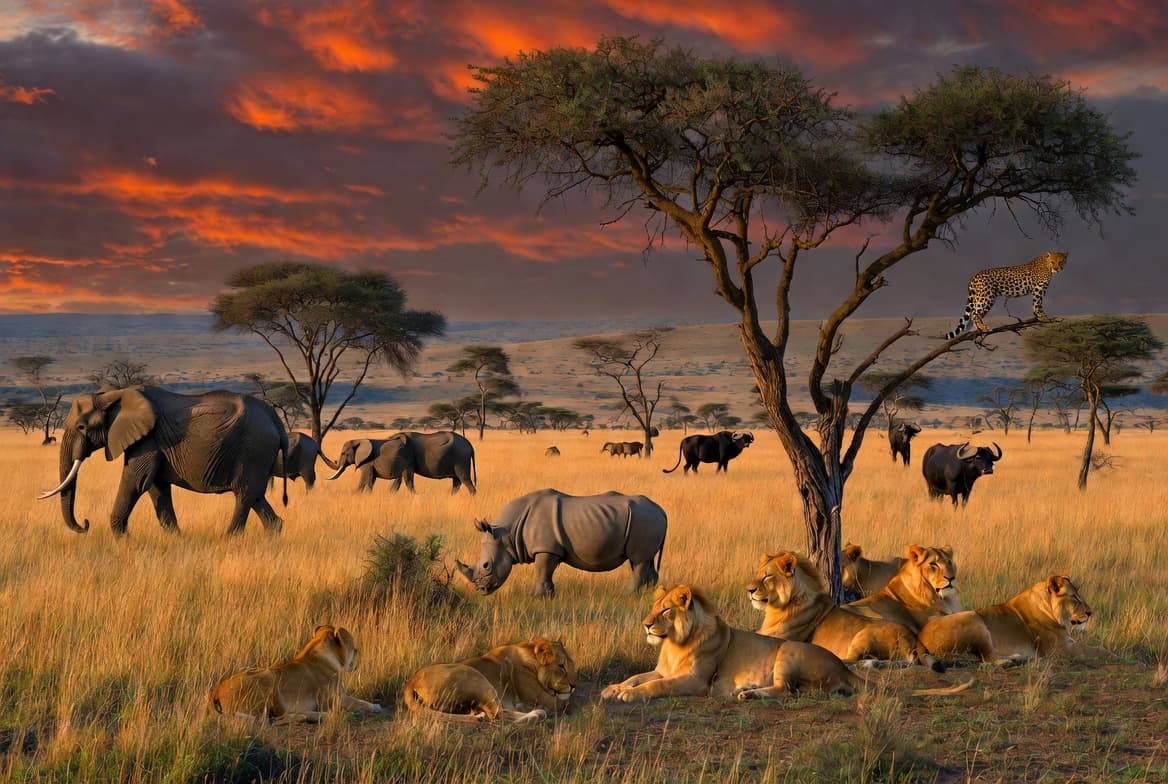
Lion. Leopard. African elephant. African buffalo. Rhinoceros. The Big Five is the most iconic wildlife checklist in the world — and seeing all five in the wild is one of wildlife travel's defining experiences. But the Big Five is also a conservation story, and understanding the population trajectories of each species transforms the sighting from a checklist item into something more meaningful.
Quick Answer: The Big Five are lion, leopard, elephant, buffalo, and rhino. The easiest to see is the elephant; the hardest are leopard and rhino. For the highest probability of seeing all five in one day, go to Ngorongoro Crater (Tanzania) or Sabi Sand (South Africa). In Kenya, combine the Masai Mara (lion, leopard, elephant, buffalo) with Ol Pejeta (rhino).
The term "Big Five" was coined by 19th-century big-game hunters to describe the five most dangerous African animals to pursue on foot: the lion, the leopard, the African elephant, the African buffalo, and the rhinoceros. They were not chosen for size alone — they were selected because all five were capable of killing an armed human hunter and had the temperament, speed, or aggression to do so unpredictably. The rifles have long since been replaced by cameras, but the reverence — and the desire to encounter all five — remains one of the defining motivations of African wildlife travel.
In 2025, the Big Five are also a conservation story. Three of the five face significant population pressures; one — the rhinoceros — is in a conservation crisis that makes every wild sighting an act of bearing witness to a species on the edge. Understanding the population trajectories, the threats, and the conservation efforts behind each species transforms the safari from a spectacular day out into something more lasting.
Best Park for Each Big Five: Quick Reference
| Animal | Best Park | Second Best | Sighting Probability |
|---|---|---|---|
| Lion | Masai Mara/Serengeti | Ngorongoro Crater | 95%+ (Mara) |
| Leopard | Sabi Sand (South Africa) | Naboisho (Kenya) | 80%+ (Sabi) |
| Elephant | Amboseli (Kenya) | Tarangire (Tanzania) | 99%+ (both) |
| Buffalo | Kruger (South Africa) | Masai Mara (Kenya) | 95%+ (both) |
| Rhino | Ol Pejeta (Kenya) | Lake Nakuru (Kenya) | 99%+ (Ol Pejeta) |
Big Five Safari Cost: What to Budget
| Park | 7‑Night Cost (2 people) | 5‑Day Cost (2 people) | Best For |
|---|---|---|---|
| Kenya (Mara + Ol Pejeta) | USD 7,000–12,000 | USD 5,000–8,000 | Classic East Africa Big Five |
| South Africa (Sabi Sand) | USD 8,000–15,000 | USD 6,000–10,000 | Highest Big Five probability |
| Tanzania (Ngorongoro + Serengeti) | USD 6,000–10,000 | USD 4,500–7,500 | Best value Big Five circuit |
1. The African Lion (Panthera leo) — Vulnerable
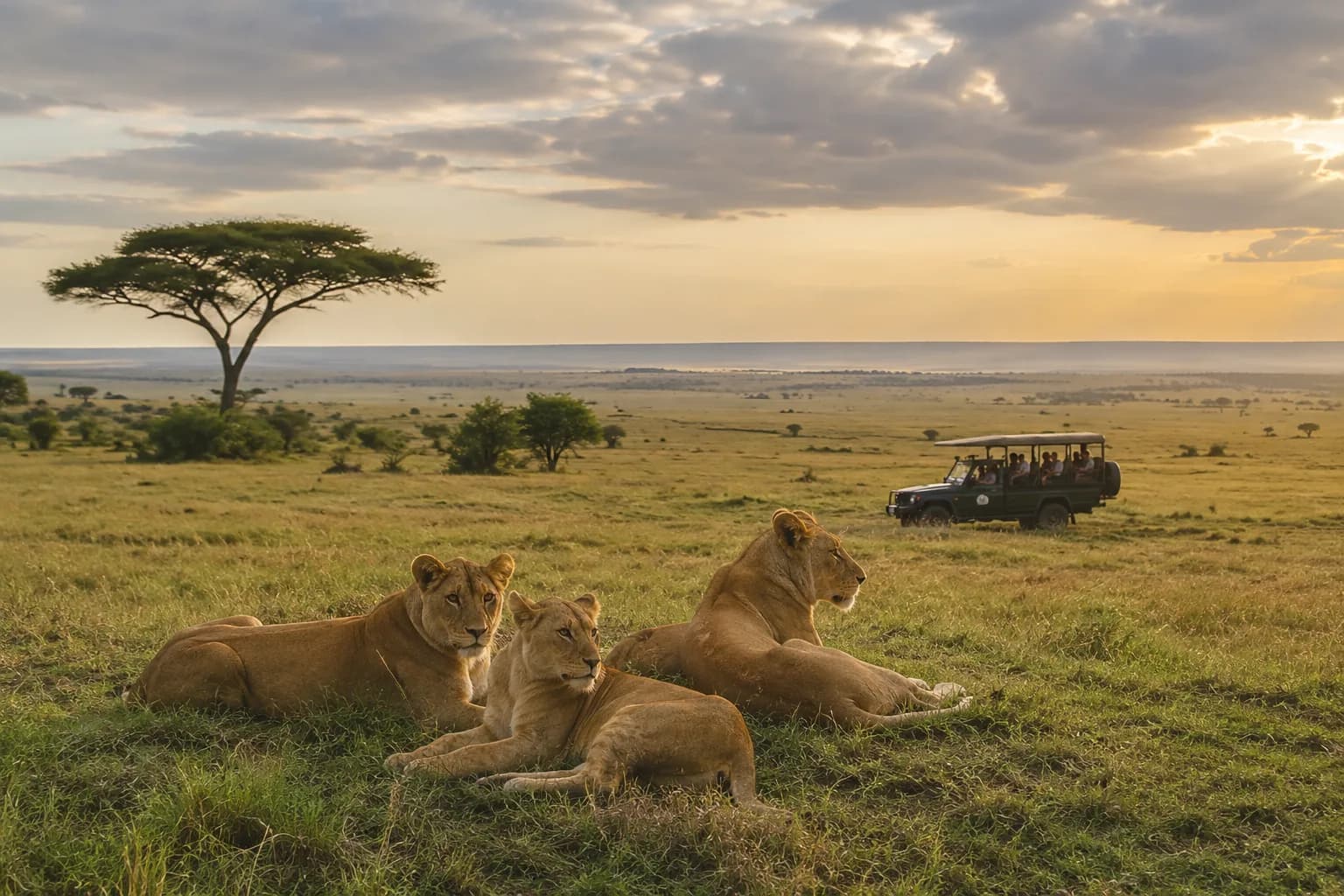
The lion is the most socially complex of the Big Five and the one safari guests most consistently request. Lions live in prides of 2–40 individuals, with a social structure centred on related females, their cubs, and a coalition of males who hold tenure over the pride for an average of 2–3 years before being displaced by rivals. The dynamics within and between prides — territorial marking, coalition fights, the extraordinary bond between lionesses — make lions the most behaviourally fascinating animal to observe over multiple hours.
Approximately 20,000 wild lions remain in sub-Saharan Africa — a 43% decline over the past 21 years. The primary threats are habitat loss as agricultural expansion encroaches on savanna, human-wildlife conflict, and trophy hunting in some range states. Kenya banned trophy hunting in 1977. The Masai Mara ecosystem supports Kenya's highest lion density — an estimated 850–900 lions across the reserve and adjoining conservancies.
| Best Locations for Lions | Country | Population Estimate | Why This Location |
|---|---|---|---|
| Masai Mara National Reserve & Conservancies | Kenya | 850–900 in ecosystem | Highest density in Kenya; open plains facilitate sightings; prides with cubs regularly visible |
| Serengeti National Park | Tanzania | 3,000+ in ecosystem | World's largest lion population; extraordinary pride diversity |
| Ngorongoro Crater | Tanzania | 60–70 within crater | Closed ecosystem; exceptionally dense; lions almost guaranteed |
| South Luangwa | Zambia | Several large prides | Walking safari proximity; exceptionally relaxed pride behaviour |
| Kruger National Park | South Africa | 1,500–2,000 | Large healthy population; good visibility across open bush |
| Queen Elizabeth NP (Ishasha) | Uganda | Small population | Tree-climbing lions — one of only two places where this is regular behaviour |
Expert Lion-Spotting Tactics
- Time your drives correctly: Lions sleep 18–20 hours per day. Active behaviour — hunting, greeting, suckling cubs, marking territory — peaks in the two-hour window around dawn (05:30–07:30) and the two hours approaching sunset (16:30–18:30).
- Follow vultures: Circling vultures or vultures descending through a treeline almost always indicate a kill in progress or a carcass being fed on. Lions are usually present.
- Find a pride with cubs: A pride with cubs from multiple age groups is typically stationary for weeks in a fixed territory, returning to the same shaded areas each afternoon. Ask your guide if known prides with cubs are in a predictable location.
- Stay, don't chase: Guides who stay with a resting pride for 90 minutes consistently see more behaviour than vehicles that move from sighting to sighting every 20 minutes. Patience is the most powerful predator-watching strategy.
2. The African Leopard (Panthera pardus) — Vulnerable
The leopard is the most elusive of the Big Five and, for many experienced safari travellers, the most coveted sighting. Solitary by nature, nocturnal by preference, and supremely adapted to concealment, the leopard can be present at a location and invisible to 10 vehicles for 30 minutes before revealing itself. When it does — in open view on a branch or rock, its rosette-patterned coat extraordinary in late afternoon light — the collective breath-hold in the safari vehicle is unlike any other wildlife moment.
The leopard is the widest-ranging wild cat in the world, occurring from sub-Saharan Africa through the Middle East and South Asia to the Russian Far East. The total African leopard population is estimated at 700,000–850,000, but declining in most range areas due to habitat fragmentation, snare-based poaching, and human-wildlife conflict.
| Best Locations for Leopards | Country | Sighting Reliability | Why This Location |
|---|---|---|---|
| Sabi Sand Game Reserve (adjacent to Kruger) | South Africa | Extremely High (daily sightings common) | Habituated leopards; highest density; trained trackers; no fences to Kruger |
| Naboisho Conservancy | Kenya | High | Low vehicle density; habituated individuals; off-road driving; night drives |
| South Luangwa | Zambia | High | One of Africa's best leopard populations; night game drives reveal crepuscular behaviour |
| Olare Motorogi Conservancy | Kenya | High | Known resident individuals with cubs; off-road; excellent guide network |
| Serengeti (Seronera) | Tanzania | Moderate-High | Leopards rest in Acacia trees; fig trees near rivers are reliable search areas |
3. The African Elephant (Loxodonta africana) — Vulnerable
The African elephant is the world's largest land animal — bulls can reach 6,000 kilograms and 4 metres at the shoulder — and the most consistently sighted of the Big Five. The total African elephant population is estimated at 415,000, representing recovery from the lowest points of the ivory crisis but remaining vulnerable to poaching, human-wildlife conflict, and habitat loss.
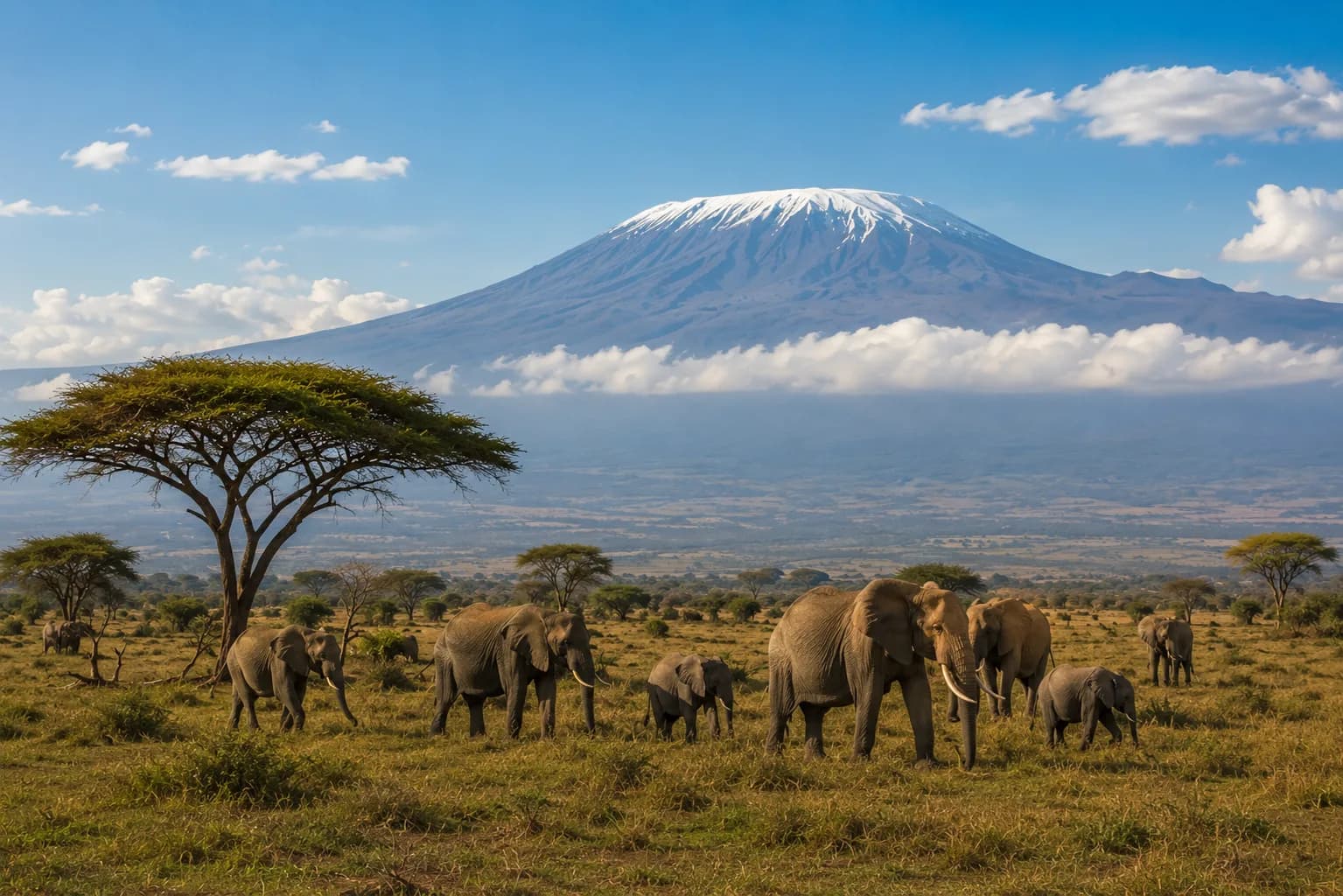
What makes elephant encounters extraordinary beyond their scale is the behaviour. Elephants live in matriarchal family groups of 10–30 related females and their calves. The eldest female (the matriarch) carries decades of environmental intelligence — knowledge of water locations, routes through difficult terrain, recognition of individual humans and predators. Watching a family at a water hole — the social interactions, the protection of calves, the communication in frequencies too low for human hearing — is one of the richest behavioural experiences in wildlife travel.
| Best Locations for Elephants | Country | Speciality | Best Season |
|---|---|---|---|
| Amboseli National Park | Kenya | World's most famous elephant experience; large herds, Kilimanjaro backdrop; well-researched families | Year-round; best Kilimanjaro views Jul–Oct and Jan–Feb |
| Laikipia Plateau | Kenya | Kenya's largest elephant population; dry-country landscape; night encounters possible | Dry season (Jun–Oct; Jan–Feb) |
| Tarangire National Park | Tanzania | Highest elephant density in Tanzania in dry season; ancient baobabs; herds of 200+ | June–October |
| Chobe National Park | Botswana | World's highest elephant density (130,000 in Chobe ecosystem); extraordinary riverside gatherings | May–October |
| Hwange National Park | Zimbabwe | Elephant population of 40,000+; artificial water pumps concentrate herds | May–October |
4. The African Buffalo (Syncerus caffer) — Near Threatened
The cape buffalo is both the most underappreciated and arguably the most dangerous of the Big Five. Old buffalo bulls (known as "dagga boys") are unpredictable, powerful, and have killed more hunters than any other African animal. Even in safari vehicles, an old bull approached too closely will charge without warning. In herds of 1,000–2,000 individuals — common in the Mara — the sound of thousands of hooves in full movement is genuinely seismic.
Buffalo herds are the most common prey species for lions in most East African ecosystems; lion-buffalo encounters, particularly when a lone bull is targeted by a large pride, are among the most dramatic predator-prey interactions in the wild. Near Threatened status reflects historical population declines from rinderpest epidemics and hunting pressure, though populations in protected areas remain stable or growing.
5. The Rhinoceros — Black Rhino (Critically Endangered); White Rhino (Near Threatened)
The rhinoceros is the most threatened of the Big Five and the one whose wild sighting carries the heaviest emotional weight. There are two African species: the black rhinoceros (approximately 6,195 individuals remaining) and the white rhinoceros (approximately 20,000 remaining). Both have been devastated by poaching for their horns — composed entirely of keratin (the same protein as human fingernails) but erroneously believed in some Asian markets to have medicinal properties.
The last two northern white rhinoceros on Earth — both female — live at the Ol Pejeta Conservancy in Kenya's Laikipia Plateau. They are named Najin and Fatu; they are mother and daughter; and they represent the functional extinction of their subspecies. Visiting Ol Pejeta to see Najin and Fatu in person is one of wildlife travel's most sobering and important experiences — a reminder of what has been lost and what is at stake.
| Best Locations for Rhinos | Country | Species | Reliability |
|---|---|---|---|
| Ol Pejeta Conservancy (Laikipia) | Kenya | Black rhino (largest in East Africa); Northern white rhino (last 2 on Earth) | High — dedicated rhino tracking with rangers available |
| Lake Nakuru National Park | Kenya | Black and white rhino | High — fenced park with concentrated population |
| Ngorongoro Crater | Tanzania | Black rhino (critically small population — 8–12 individuals) | Moderate — consider yourself very fortunate if you see one |
| Etosha National Park | Namibia | Black and white rhino | High — open landscape; water holes at night offer excellent sightings |
| Hluhluwe-iMfolozi Park | South Africa | White rhino (birthplace of white rhino conservation) | Very High — the original white rhino stronghold |
The Five Parks Where You Can See All Big Five in a Single Day
- NGORONGORO CRATER (Tanzania): The 260 km² caldera floor is a self-contained ecosystem with resident populations of all Big Five species. The crater's enclosed geography means animals cannot disperse; density per km² is extraordinary. A full-day descent (entering 07:00, departing 18:00) gives 11 hours with the Big Five in one of the world's most dramatic landscapes. The single best Big Five day on the continent.
- LAKE NAKURU (Kenya): The fastest Big Five circuit from Nairobi (2.5 hours). Lion, leopard, buffalo, elephant, and both black and white rhino in 188 km². Not the most dramatic landscape but the most concentrated Big Five experience near Kenya's capital.
- SABI SAND / KRUGER (South Africa): Resident populations of all Big Five. Sabi Sand adds extraordinary leopard reliability to Kruger's strong rhino, lion, elephant, and buffalo. The combined landscape — particularly Londolozi and Singita Sabi Sand — offers consistently outstanding Big Five viewing.
- MASAI MARA + OL PEJETA CIRCUIT (Kenya): The Mara alone does not reliably deliver rhino. Pairing 4 Mara nights with 2 Ol Pejeta nights gives you world-class lion, leopard, elephant, and buffalo in the Mara, and guaranteed rhino (black + northern white) at Ol Pejeta.
- HLUHLUWE-IMFOLOZI (South Africa): The original Big Five park — the site of Operation Rhino that saved the white rhino from extinction in the 1960s. All five species present; less visited than Kruger; excellent value.
Frequently Asked Questions
What is the easiest of the Big Five to see on safari?
+
The African elephant is the easiest — large, highly visible, present in large numbers in most parks, and active throughout the day. African buffalo are also very reliably seen in herds in most savanna parks. The lion is reliably sighted in the Masai Mara, Serengeti, and Ngorongoro. The leopard and rhinoceros are the most challenging: leopards due to their secretive, nocturnal behaviour; rhinos due to critically low population numbers.
Which country is best for Big Five safaris?
+
Kenya (Masai Mara and Ol Pejeta combination) and South Africa (Sabi Sand/Kruger and Hluhluwe-iMfolozi) offer the most consistently excellent Big Five viewing. Tanzania's Ngorongoro Crater offers statistically the best single-day Big Five probability. For a first-time Big Five safari, Kenya is our recommendation: excellent infrastructure, English communication, and the combination of Mara (lion, leopard, elephant, buffalo) plus Ol Pejeta (rhino) in one circuit.
Which of the Big Five is hardest to see?
+
The leopard is consistently the hardest to see due to its nocturnal, solitary, and secretive nature. Rhino are increasingly difficult due to their critically low population numbers and habitat restriction to specific conservancies and fenced parks. The Sabi Sand in South Africa offers the best leopard sighting rates in Africa; Ol Pejeta in Kenya is the most reliable rhino destination in East Africa.
Are the Big Five dangerous to tourists on safari?
+
In vehicles with an experienced guide, the Big Five pose no danger to tourists. On foot (walking safaris), a professional armed ranger accompanies all activities. The Big Five earned their name from hunting danger — not from being generally aggressive to humans in a wildlife setting. Follow all guide instructions and your experience will be entirely safe.
More Expert Guides