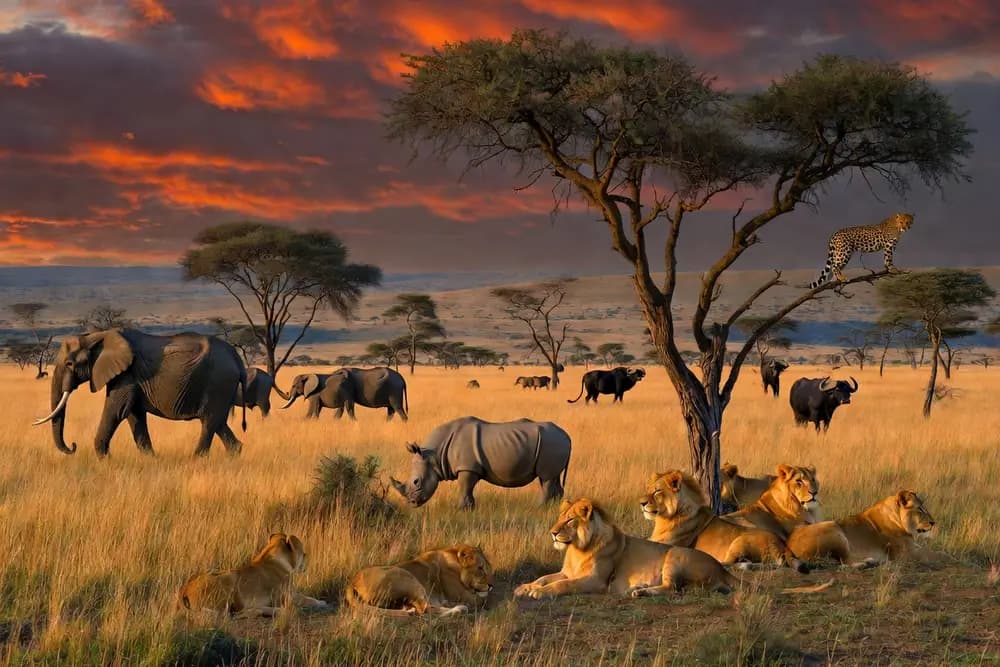
Tsavo East National Park
Tsavo East is Kenya's largest national park at roughly 13,747 km², and its single most recognisable sight is its elephants: dust-bathed a deep, distinctive red by the park's iron-rich soil, in herds that can number in the hundreds along the Galana River. It's a flatter, drier, more classically 'big sky' safari landscape than Tsavo West's volcanic terrain next door.
The red colouring isn't a species difference — it's the same African elephant found across Kenya, dust-bathing in Tsavo's distinctive laterite soil as a way to cool down and protect their skin from the sun and insects. The effect is striking enough that Tsavo's elephants are instantly recognisable in photographs, and it's become one of the park's defining images.
The Galana River cuts through the park and is where most game viewing concentrates, particularly at the Lugard Falls rapids and the crocodile-filled pools downstream. The Aruba Dam, a man-made watering hole on the Voi River, is one of the most reliable wildlife-gathering points in Kenya at dusk — elephant, buffalo, and predators converge here especially in the dry season.
Because Tsavo East is so large and much of it remains genuinely remote, a relatively small portion of the park sees regular tourist traffic — most game drives concentrate in the northern sector near the Galana River, leaving vast areas of the park essentially untouched wilderness.
It pairs naturally with Tsavo West immediately to its south, and with the Kenya coast to its east — Diani, Watamu, and Mombasa are all a two-to-three-hour drive away, making Tsavo East a common final safari stop before a beach extension.
Highlights
- ◆Red, dust-bathed elephant herds — Tsavo East's defining image
- ◆Galana River and Lugard Falls — the park's main wildlife corridor
- ◆Aruba Dam — one of Kenya's most reliable dusk wildlife-gathering points
- ◆Kenya's largest national park (~13,747 km²), with vast untouched wilderness
- ◆A natural final stop before a bush-to-beach extension to the coast
- ◆Flatter, more open terrain than the volcanic landscape of Tsavo West
Where to Stay
Lodges Overlooking Aruba Dam
A handful of properties are positioned with direct views over the dam, letting you watch the evening wildlife gathering without needing to drive to it.
Camps Along the Galana River
Riverside properties in the park's northern sector, closest to the main game-viewing corridor and Lugard Falls.
En-Route Stops Toward the Coast
For guests continuing on to Diani, Watamu, or Mombasa, a single night here works well as a scenic, wildlife-rich stopover rather than a dedicated multi-night stay.
Frequently Asked Questions
Why are Tsavo's elephants red?
+
It's dust, not their natural colour — Tsavo's soil is rich in iron oxide, and elephants dust-bathe constantly to cool off and protect their skin, which stains them a deep red. It's the same species you'll see elsewhere in Kenya, just covered in different-coloured dirt.
Is Tsavo East worth visiting if I've already been to the Masai Mara?
+
Yes, if you want a different kind of landscape and a genuinely quieter, more remote feel — Tsavo East sees far less tourist traffic than the Mara, and its scale (Kenya's largest park) means there's a lot of untouched wilderness even close to the main circuit.
How does Tsavo East fit with a coastal trip?
+
Very naturally — it's two to three hours from Diani, Watamu, or Mombasa, which makes it a common final safari stop before a beach extension on a bush-to-beach itinerary.
How many days do I need in Tsavo East?
+
One to two days covers the main sights along the Galana River and at Aruba Dam. It's most often visited as part of a longer route alongside Tsavo West, Amboseli, or a coastal itinerary, rather than as a standalone destination.
Itineraries Featuring Tsavo East National Park
Experiences Here
Other Places in Kenya
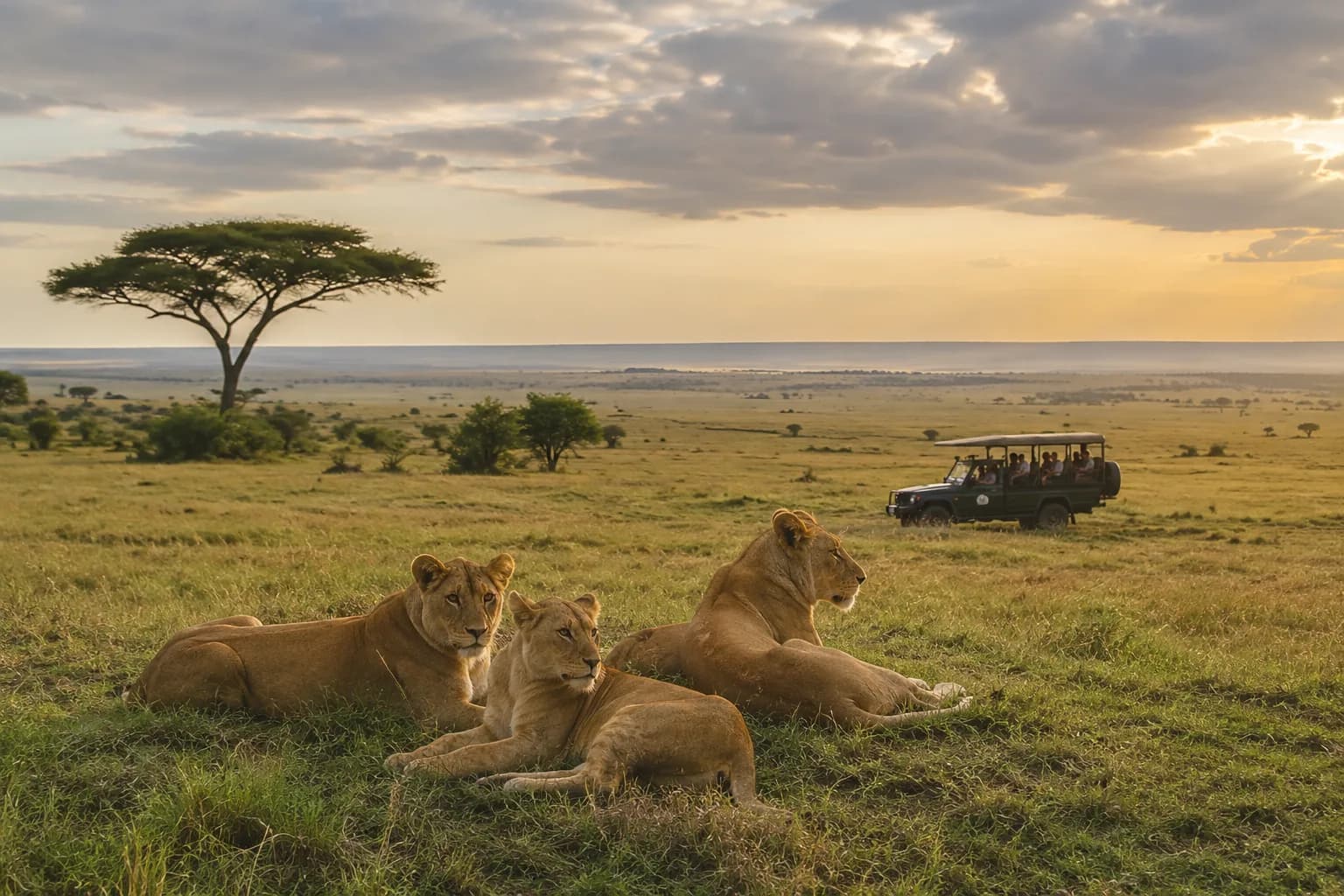
Masai Mara National Reserve
Kenya's Wildlife Theatre, and the Stage for the Great Migration's Final Act
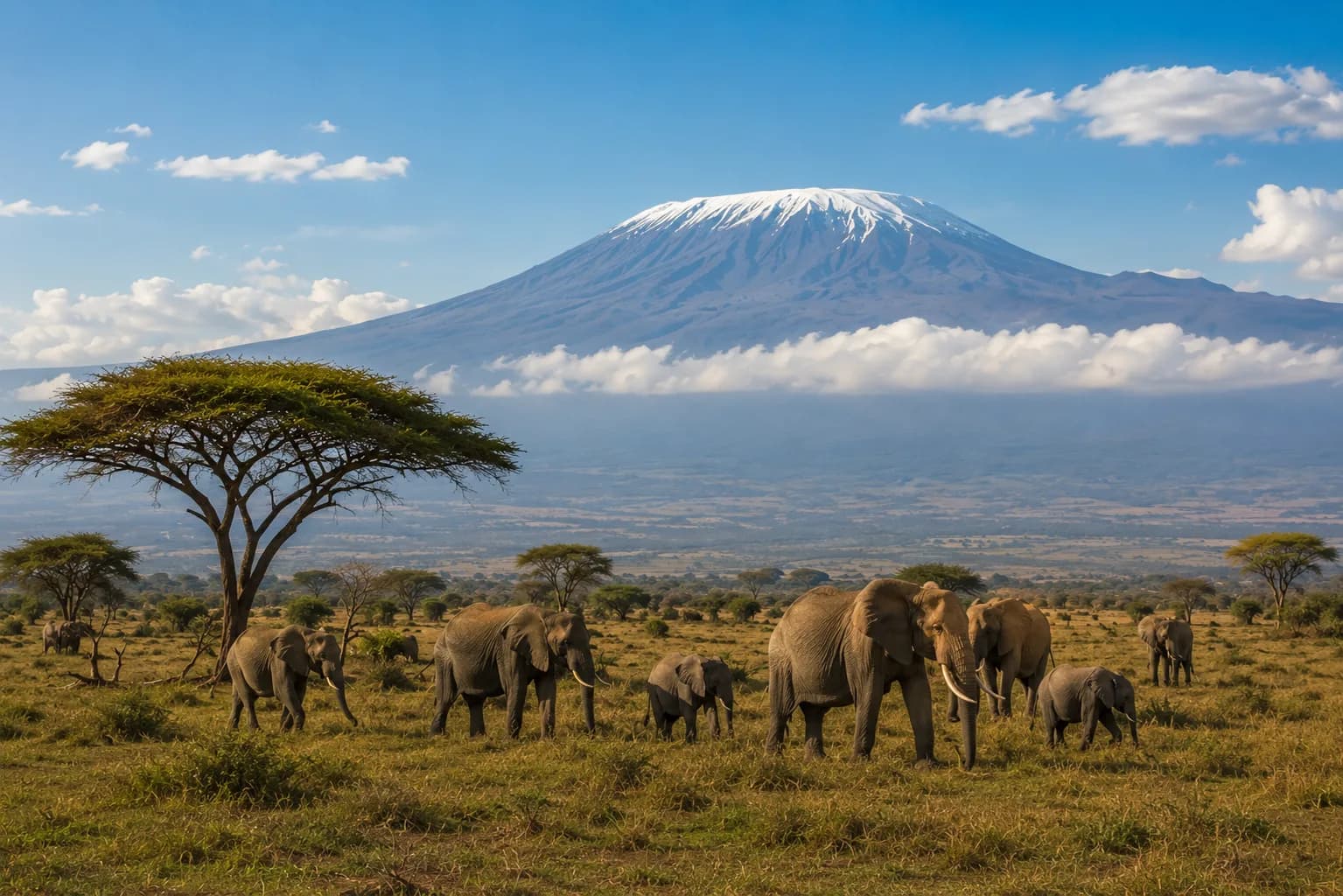
Amboseli National Park
Africa's Most Photographed Backdrop, and Its Gentlest Elephant Herds
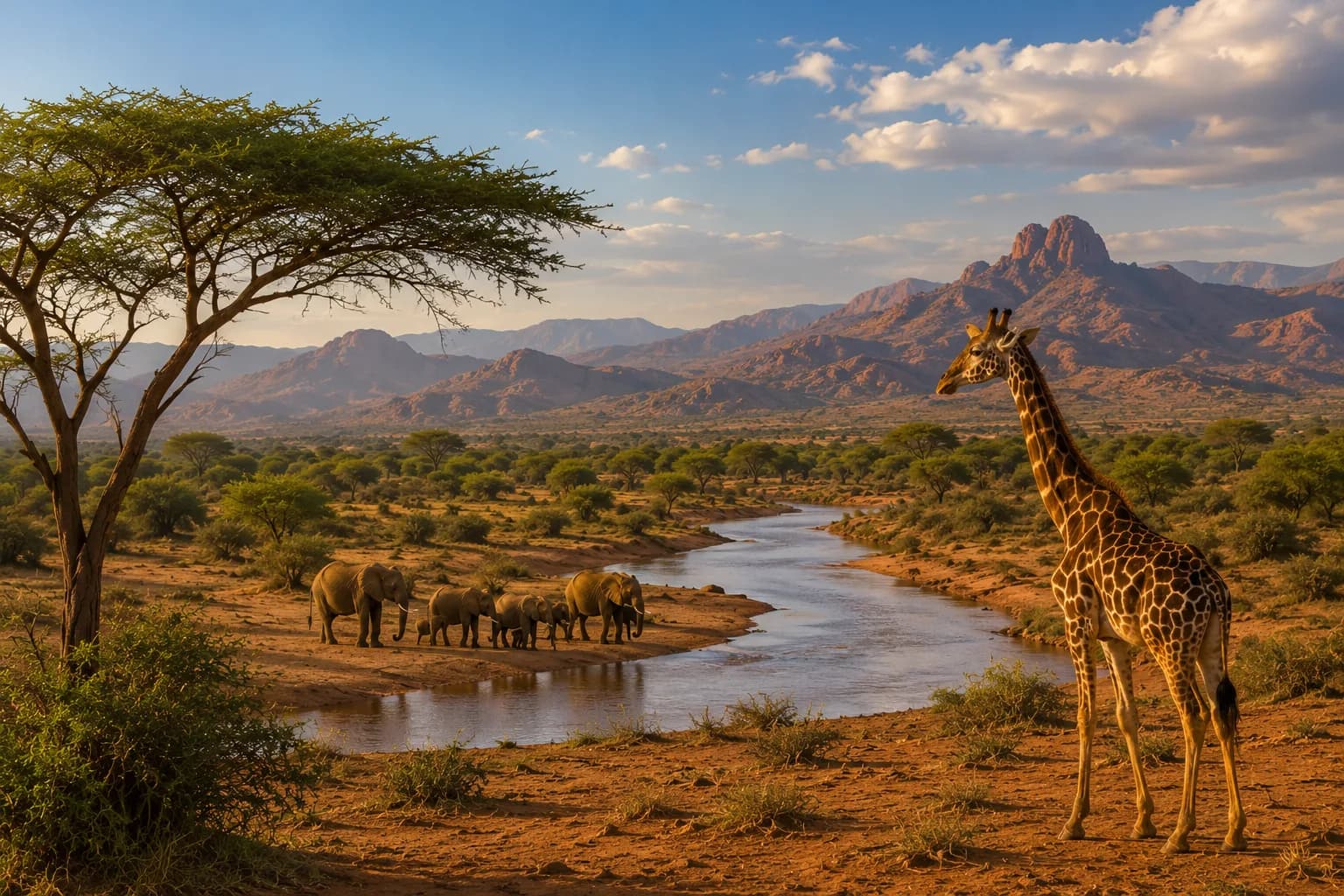
Samburu National Reserve
Northern Kenya's Wilder, Rarer Safari — Species You Won't See in the Mara
Tsavo West National Park
Kenya's Volcanic Safari — Underwater Hippos and Black Lava Fields