Kenya and Tanzania share one ecosystem, one migration and the Big Five — but they make very different trips. Here is how they compare on wildlife, timing, crowds, costs, visas and beaches, and how to choose between them or combine the two.
Quick Answer: Choose Kenya for a shorter or first safari: the Masai Mara is 45 minutes by air from Nairobi, its private conservancies limit vehicles and offer walks and night drives, and the migration is there from about August to October. Choose Tanzania for scale and for the migration at other times of year — the Serengeti has the herds in some form every month, including the calving season from January to March — plus the Ngorongoro Crater and Zanzibar. Both have the Big Five, and at the same standard of camp the costs are close. With ten days or more, you can combine them.
Kenya and Tanzania sit either side of one border and one ecosystem: the wildebeest that cross the Mara River into Kenya in August were calving on Tanzania's southern plains in February. So the question is not which country has the better wildlife — both are superb — but which suits your dates, your budget, the way you like to travel and what else you want from the trip. This guide compares the two on the points that actually change the decision.
Kenya vs Tanzania at a glance
| Topic | Kenya | Tanzania |
|---|---|---|
| Best for | Shorter trips, first safaris, private conservancies with walks and night drives | Longer trips, the migration in any month, the Ngorongoro Crater, Zanzibar |
| Migration | Masai Mara, about August to October | Serengeti all year: calving January–March, Grumeti June–July, Mara River July–October |
| Signature parks | Masai Mara, Amboseli, Samburu, Laikipia, Lake Nakuru, Tsavo | Serengeti, Ngorongoro, Tarangire, Lake Manyara, Nyerere (Selous) |
| Getting around | Short flights from Nairobi; 4–6 hours by road to the main parks | A drive-and-fly circuit from Arusha; about 3 hours by road to the Ngorongoro rim |
| Main park fees (2026) | Masai Mara USD 100 (January–June) or 200 (July–December) per adult per day | Serengeti about USD 71–83 per 24 hours, plus about USD 71 a night inside the park; Ngorongoro crater about USD 295 per vehicle |
| Entry | eTA online, about USD 30 plus a processing fee | eVisa online, USD 50 for most nationalities (USD 100 for US citizens), plus USD 44 travel insurance |
| Beach add-on | Diani, Watamu or Lamu on the Kenyan coast | Zanzibar, about an hour by air from Arusha |
Wildlife and the Great Migration
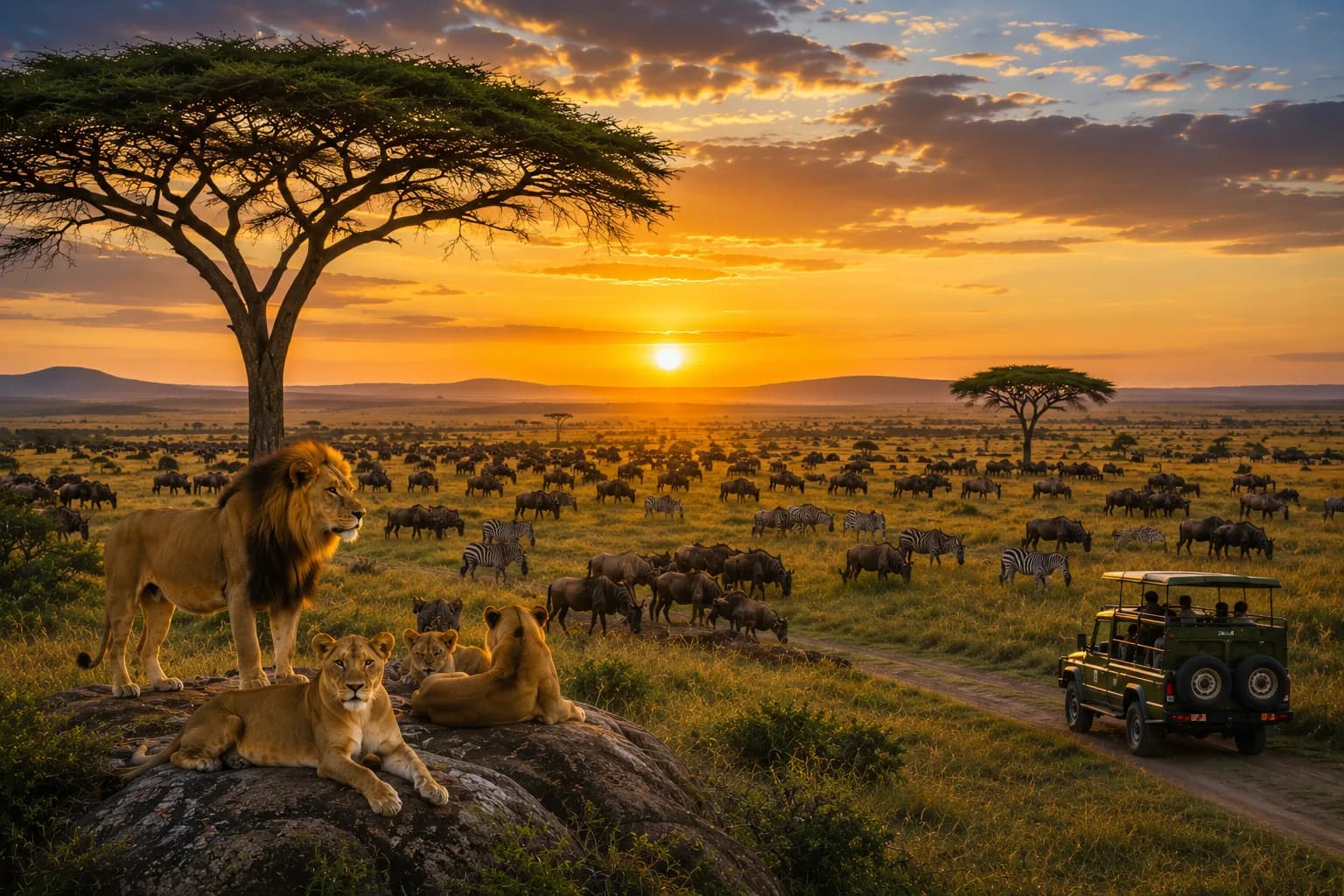
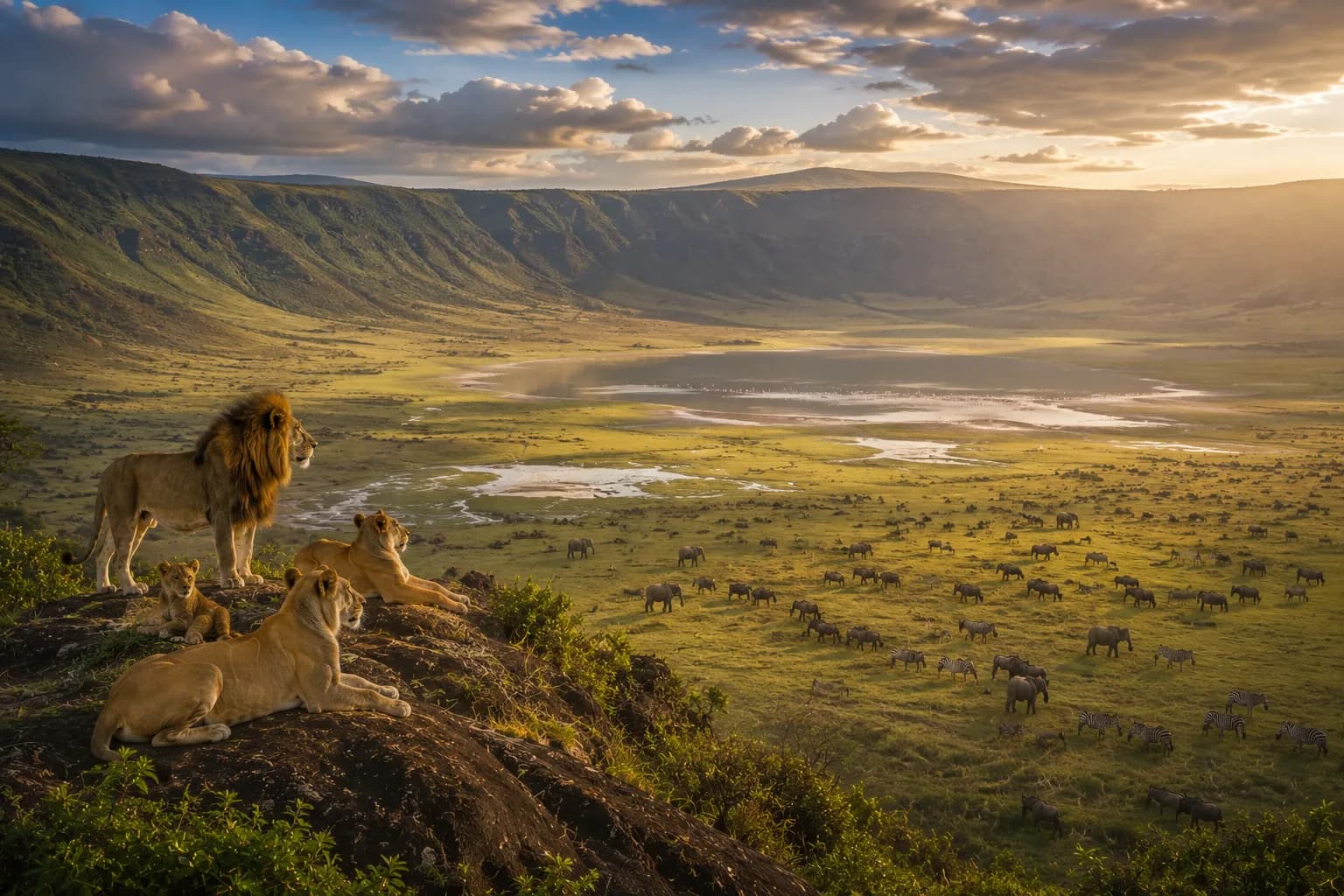
Both countries have the Big Five, and in both the dry season — roughly June to October, with a shorter dry spell in January and February — is the easiest time to see game. The differences are in the details. Kenya's Masai Mara is one of the best places in Africa for lions, leopards and cheetahs; Samburu adds northern species found in few other parks — Grevy's zebra, reticulated giraffe, gerenuk, Beisa oryx and Somali ostrich; and Laikipia and Lake Nakuru are strongholds for rhinos. Tanzania has the bigger stage: the Serengeti alone is about ten times the size of the Masai Mara National Reserve, the Ngorongoro Crater is one of the most reliable places in East Africa to see black rhino, and Tarangire draws huge elephant herds in the dry season.
The migration month by month
| Months | Where the herds usually are | Country |
|---|---|---|
| January–March | Calving on the short-grass plains of the southern Serengeti and Ndutu | Tanzania |
| April–May | Moving north and west through the central Serengeti in the long rains | Tanzania |
| June–July | The Western Corridor and the Grumeti River crossings | Tanzania |
| July–October | The northern Serengeti and the Masai Mara, crossing the Mara River | Both |
| November–December | Heading south through the eastern Serengeti | Tanzania |
Crowds, conservancies and the style of safari
The Masai Mara National Reserve is small and popular, and in the peak months a river crossing can draw dozens of vehicles. Kenya's answer is its private conservancies — Mara North, Olare Motorogi, Naboisho and others around the reserve, and the ranches of Laikipia — where camps limit the vehicles at a sighting and offer what the national reserve does not: off-road driving, guided walks and night drives. Tanzania's parks are bigger, so away from Seronera and the river crossings you can drive for an hour without seeing another vehicle. Off-road driving and night drives there are mostly limited to the land around Tarangire and some concessions on the edge of the Serengeti, with Lake Manyara one of the few national parks that offers night drives.
Getting there and getting around
Nairobi's Jomo Kenyatta airport has far more long-haul connections than Kilimanjaro, and light aircraft from Nairobi's Wilson airport reach the Mara in about 45 minutes, so a Kenya safari loses little time in transit. Tanzania's northern circuit starts in Arusha, about an hour's drive from Kilimanjaro airport: the classic route runs from Arusha to Tarangire, Lake Manyara and the Ngorongoro Crater — about three hours from Arusha to the crater rim — and on to the Serengeti, often flying back. Fly-in safaris work in both countries; they cost more, but save long days on the road.
Costs and park fees
At the same standard of camp, the two countries cost about the same: expect roughly USD 300 to 550 per person per day, all-inclusive, at a mid-range camp, USD 550 to 850 at a luxury camp, and more at the top camps. Park fees are where they differ. In 2026 the Masai Mara charges non-resident adults USD 100 per day from January to June and USD 200 from July to December; in the private conservancies the fee is usually included in the camp's rate. The Serengeti charges about USD 83 per adult per 24 hours in high season and USD 71 in low season, plus a concession fee of about USD 71 a night if you sleep inside the park, and the Ngorongoro Crater adds a service fee of about USD 295 per vehicle for each descent, on top of a conservation fee of about USD 71 per person per 24 hours.
Visas and entry
- KENYA: an Electronic Travel Authorisation (eTA), applied for online before you fly — about USD 30 plus a processing fee.
- TANZANIA: an eVisa, applied for online — USD 50 for most nationalities and USD 100 for US citizens — plus the government's inbound travel insurance, USD 44 per adult, required on the mainland since October 2026 and on Zanzibar since October 2024.
- YELLOW FEVER: if you fly from Kenya to Tanzania, including Zanzibar, you need a yellow fever vaccination certificate, even after a transit of more than 12 hours in Kenya.
- BOTH: allow a few days for the online applications, and check the current rules for your passport before you book.
Beaches: the Kenyan coast or Zanzibar?
Both countries end well on the Indian Ocean. Kenya's coast — Diani, Watamu and Lamu — is a short flight from Nairobi and keeps the whole trip in one country. Zanzibar, part of Tanzania, adds Stone Town's history and the spice farms to its beaches, and is about an hour to an hour and a half by air from Arusha or Nairobi. On Zanzibar, choose Nungwi or Kendwa in the north if you want to swim at any time of day; on the east coast the tide goes out a long way. Our Zanzibar guide covers the island beach by beach.
Kenya or Tanzania? How to choose
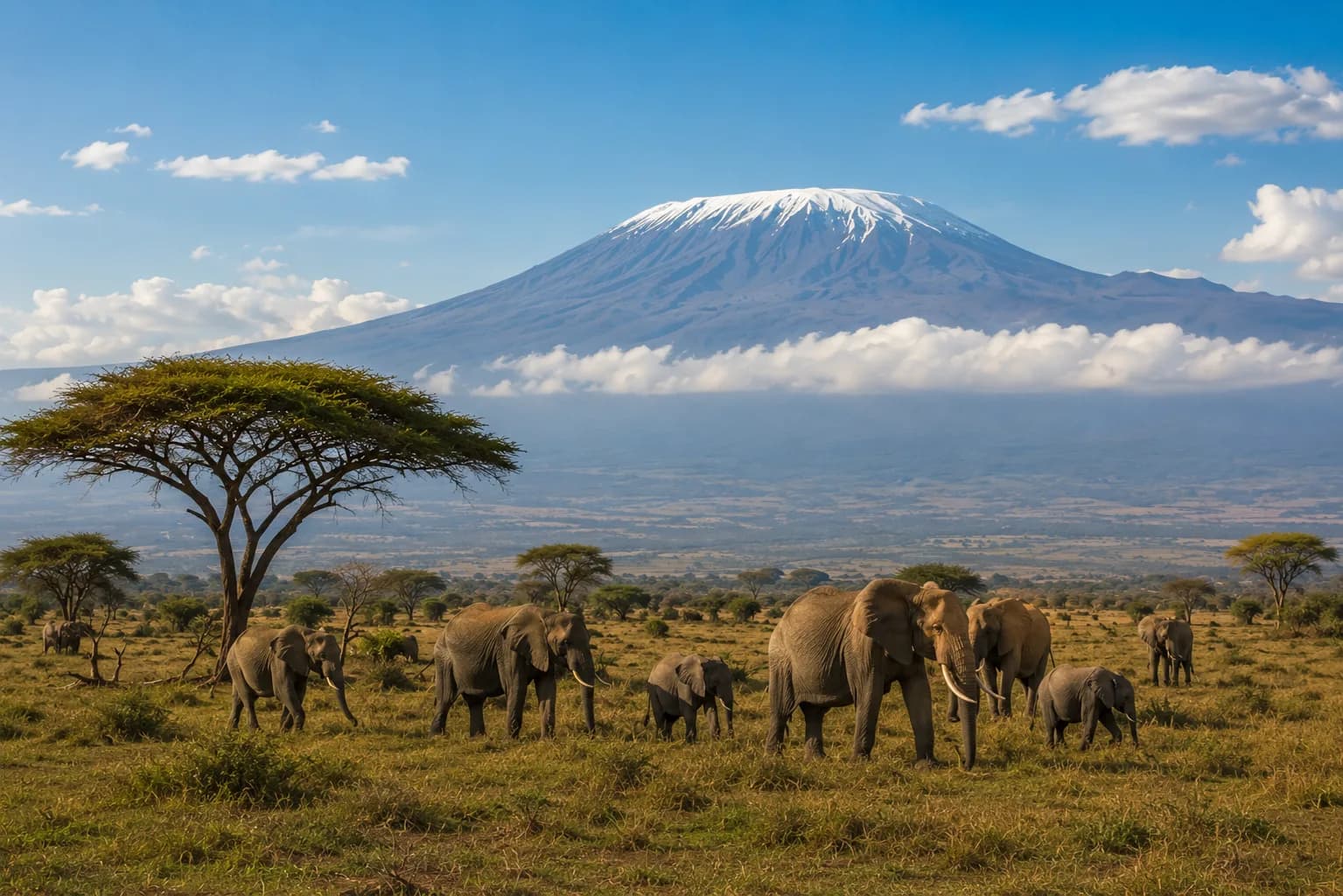
- CHOOSE KENYA if you have a week or less, want the Masai Mara from August to October, value private conservancies with walks and night drives, or want Samburu's northern species and Amboseli's elephants under Kilimanjaro.
- CHOOSE TANZANIA if you are travelling from December to March for the calving season, want the Serengeti's scale and the Ngorongoro Crater, plan to climb Kilimanjaro, or want Zanzibar as your beach.
- CHOOSE EITHER from June to October: the dry season is excellent in both, and from August to October the Mara River crossings happen on both sides of the border.
- COMBINE THEM with ten days or more — the Masai Mara, then the Ngorongoro Crater and the Serengeti — flying between Nairobi and Kilimanjaro or driving through the Namanga border post between Nairobi and Arusha. There is no open border crossing for visitors inside the Mara–Serengeti ecosystem.
Sample routes
| Trip | Route | Our itinerary |
|---|---|---|
| 8 days in Kenya | Lake Nakuru, the Masai Mara, Samburu and Ol Pejeta | 8-day classic Kenya safari |
| 7 days in Tanzania | Tarangire, the Ngorongoro Crater and the Serengeti | 7-day northern Tanzania |
| 8 days, safari and beach | Amboseli and the Tsavo parks, then the Kenyan coast | 8-day bush and beach |
| 10–12 days, both countries | The Masai Mara, then the Ngorongoro Crater and the Serengeti, with Zanzibar to finish | Tailor-made — tell us your dates |
Still deciding? Our Masai Mara vs Serengeti guide compares the two great migration parks month by month, and our Kenya safari planning guide covers routes, lodges and budgets in more depth.
Frequently Asked Questions
Is Kenya or Tanzania better for a first safari?
+
Kenya is usually the easier first safari: shorter transfers, the Masai Mara less than an hour's flight from Nairobi, and conservancy camps that add walks and night drives to the game drives. Tanzania suits first-timers too, especially with a week or more, a fly-in itinerary or a trip from December to March for the calving season.
Is a Kenya or a Tanzania safari cheaper?
+
At the same standard of camp they are close — roughly USD 300 to 550 per person per day at a mid-range camp and USD 550 to 850 at a luxury one, in either country. Kenya can work out cheaper on a short trip, because transfers are shorter and the Mara fee is USD 100 a day from January to June. From July to December the Mara's USD 200 fee is higher than the Serengeti's, but Tanzania adds the Ngorongoro crater fee and longer transfers.
Which country is better for the Great Migration?
+
It depends on the month. From about August to October the herds are in the Masai Mara and the northern Serengeti, so either works. For the rest of the year they are in Tanzania, including the calving season on the southern Serengeti plains from January to March.
Can you visit Kenya and Tanzania on one trip?
+
Yes, with ten days or more. Most travellers fly between Nairobi and Kilimanjaro, or drive between Nairobi and Arusha through the Namanga border post; there is no open crossing for visitors inside the Mara–Serengeti ecosystem. You need Kenya's eTA, Tanzania's eVisa and travel insurance, and a yellow fever certificate when you arrive in Tanzania from Kenya.
Which has better beaches, Kenya or Tanzania?
+
Both are excellent. Zanzibar has Stone Town and the island atmosphere, with the calmest swimming in the north at Nungwi and Kendwa; the Kenyan coast — Diani, Watamu and Lamu — is closer to the Kenyan parks and keeps the trip in one country.
How many days do I need for a safari in Kenya or Tanzania?
+
Five to seven days covers two or three parks in either country; eight to ten lets you add a third region or a few days on the beach; and ten to fourteen is enough to combine Kenya and Tanzania without rushing.