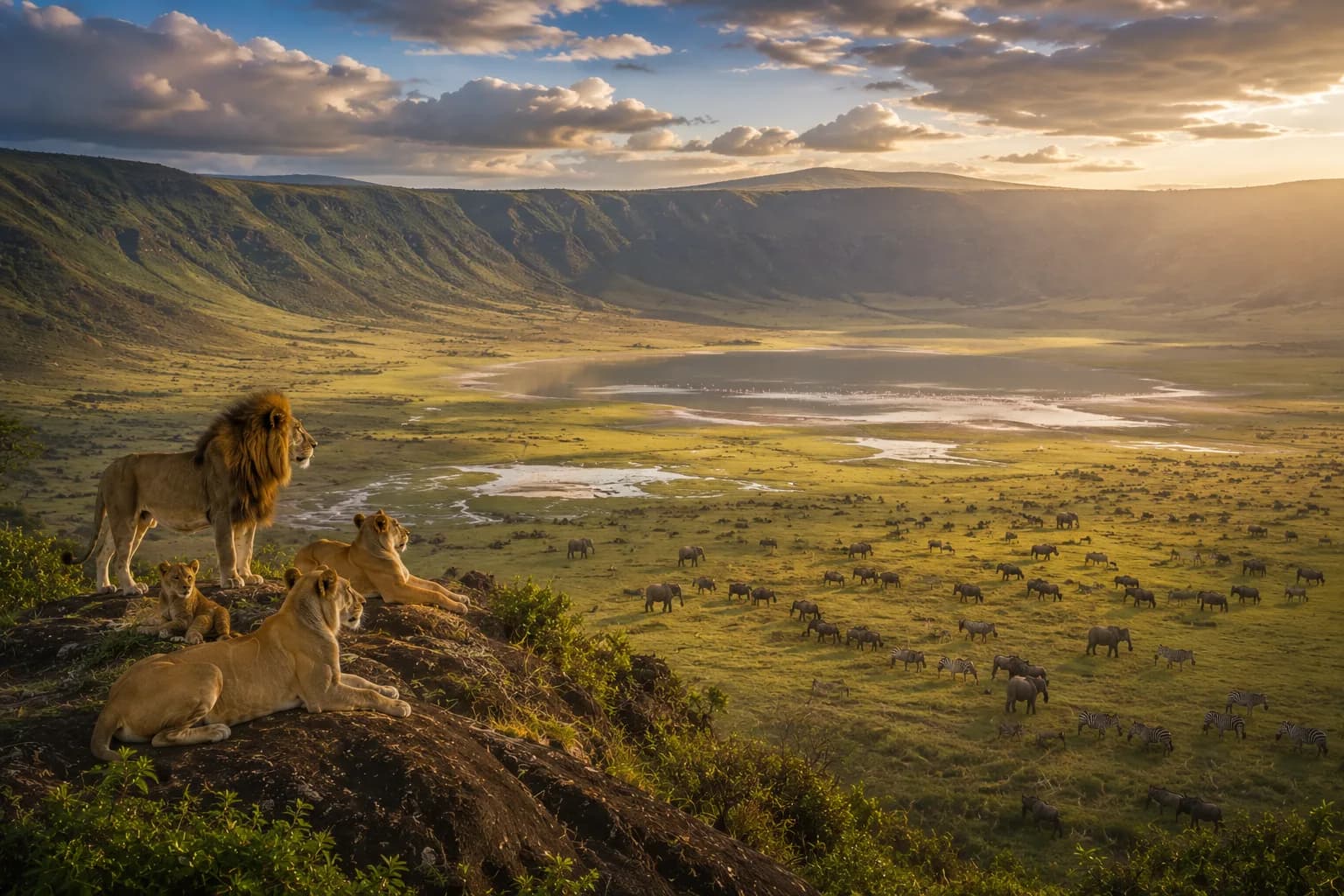
Ngorongoro Conservation Area
The Ngorongoro Crater is a collapsed volcanic caldera 19km wide and 600m deep, and its floor holds one of the most concentrated populations of wildlife anywhere on the continent — roughly 25,000 large animals living within a single, largely self-contained ecosystem. It's the single most reliable place in East Africa to see all of the Big Five, including black rhino, in one day.
The crater formed when a volcano larger than Kilimanjaro collapsed on itself roughly 2–3 million years ago, leaving walls steep enough that most of the wildlife inside stays largely resident year-round rather than migrating in and out — which is exactly why sightings here are so consistent regardless of season.
Black rhino is the animal that draws most people specifically to Ngorongoro rather than the Serengeti — the crater holds one of Tanzania's most important rhino populations, and it's one of the few places in East Africa where a rhino sighting on a single game drive is genuinely likely rather than a matter of luck.
Access works differently here than in most parks: lodges sit up on the crater rim, often with genuinely spectacular views straight down into the caldera, and guests descend by vehicle each morning for the day's game drive before returning to the rim in the evening — nobody stays overnight on the crater floor itself, which is protected from permanent camps.
Because the crater is a fixed, contained area rather than an open expanse like the Serengeti, it's also one of the most time-efficient wildlife experiences in Africa — a single well-planned day can realistically deliver the entire Big Five, something that can take considerably longer in a larger, more open park.
Highlights
- ◆One of the highest wildlife densities in Africa — roughly 25,000 large animals
- ◆Among the most reliable single-day Big Five sightings anywhere, including black rhino
- ◆Crater-rim lodges with views straight down into the caldera
- ◆Largely resident wildlife population — consistent sightings regardless of season
- ◆A collapsed volcano once larger than Kilimanjaro
- ◆Maasai communities still graze livestock within the wider conservation area
Where to Stay
Crater-Rim Luxury Lodges
Properties perched directly on the rim with views into the caldera itself — arguably the single most dramatic lodge setting in East Africa, and worth prioritising if the view matters as much as the game drive.
Rim-Adjacent Mid-Range Lodges
Set back slightly from the rim edge, trading a little of the direct view for a gentler price, while keeping the same short descent to the crater floor each morning.
Wider Conservation Area Camps
Properties further out in the broader Ngorongoro Conservation Area, often combined with a stop at Olduvai Gorge or a Maasai community visit alongside the crater game drive.
Frequently Asked Questions
Is Ngorongoro Crater worth visiting if I'm already doing the Serengeti?
+
Yes — most itineraries combine them precisely because they offer different things. The Serengeti gives you scale and the migration; Ngorongoro gives you density and reliability, including some of the best black rhino odds in East Africa, in a single contained day.
Can I stay overnight inside the crater?
+
No — the crater floor is protected from permanent accommodation, so all lodges sit up on the rim. You descend for the day's game drive and return to your lodge each evening.
How many days do I need at Ngorongoro?
+
One full day on the crater floor covers it thoroughly, since the area is compact and the wildlife density is so high. Most itineraries pair a single Ngorongoro day with several days in the Serengeti.
Is Ngorongoro the best place in Tanzania to see a rhino?
+
It's the most reliable single spot — the crater holds one of the country's most important black rhino populations, concentrated in a relatively small, easily covered area.
Experiences Here
Other Places in Tanzania
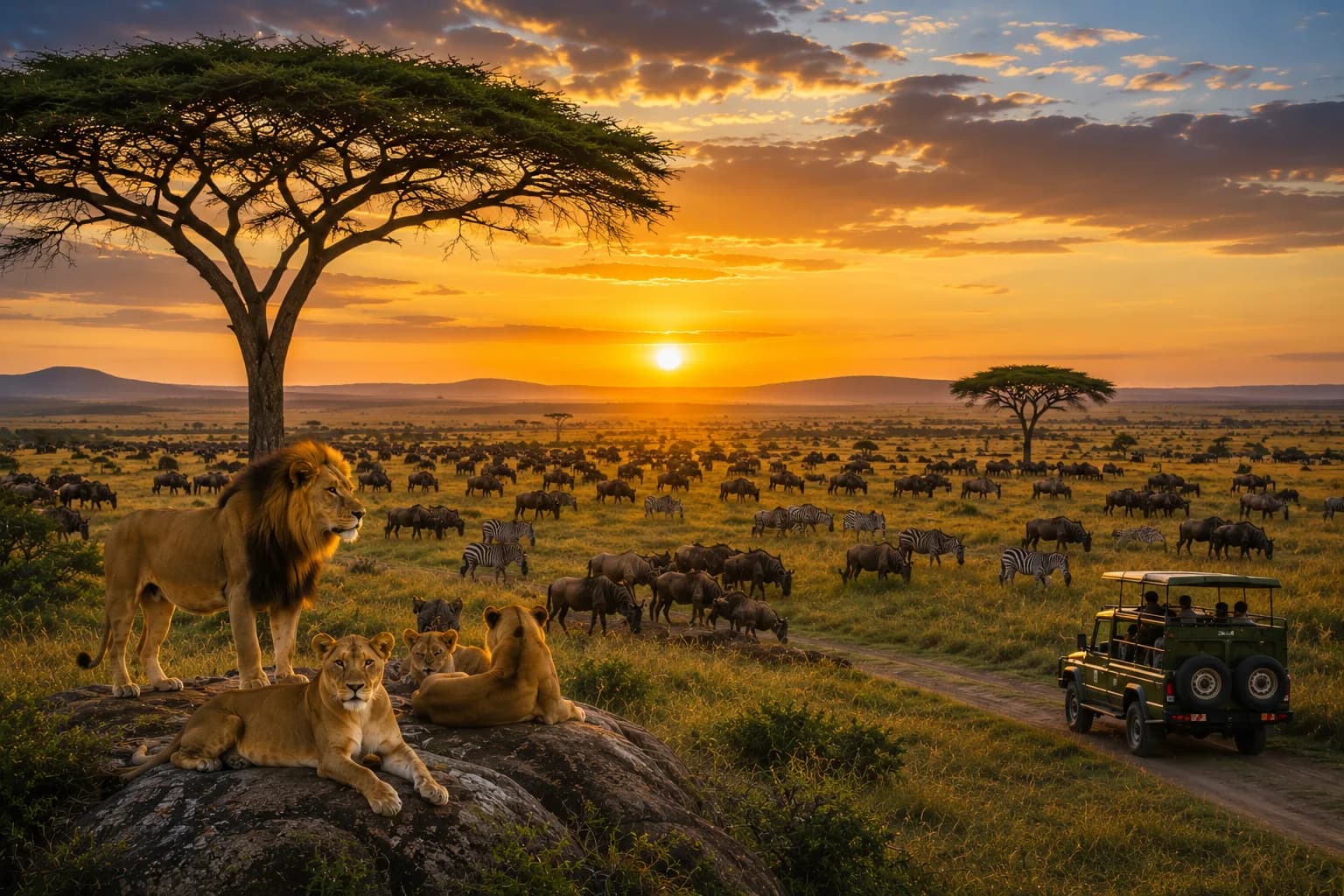
Serengeti National Park
The Endless Plains — Africa's Original Safari, and the Engine of the Great Migration
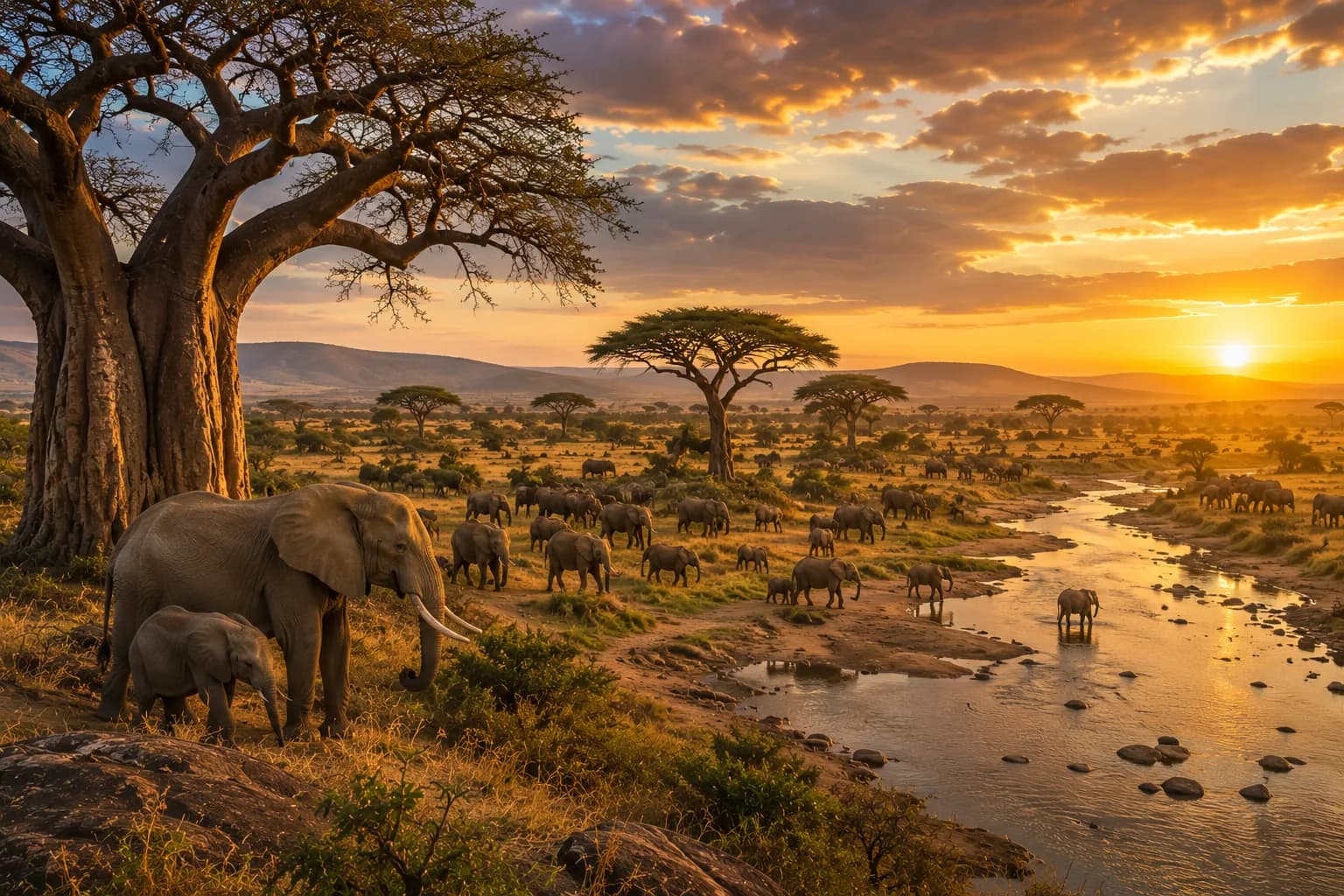
Tarangire National Park
Tanzania's Elephant Park — Ancient Baobabs and the Country's Highest Elephant Density
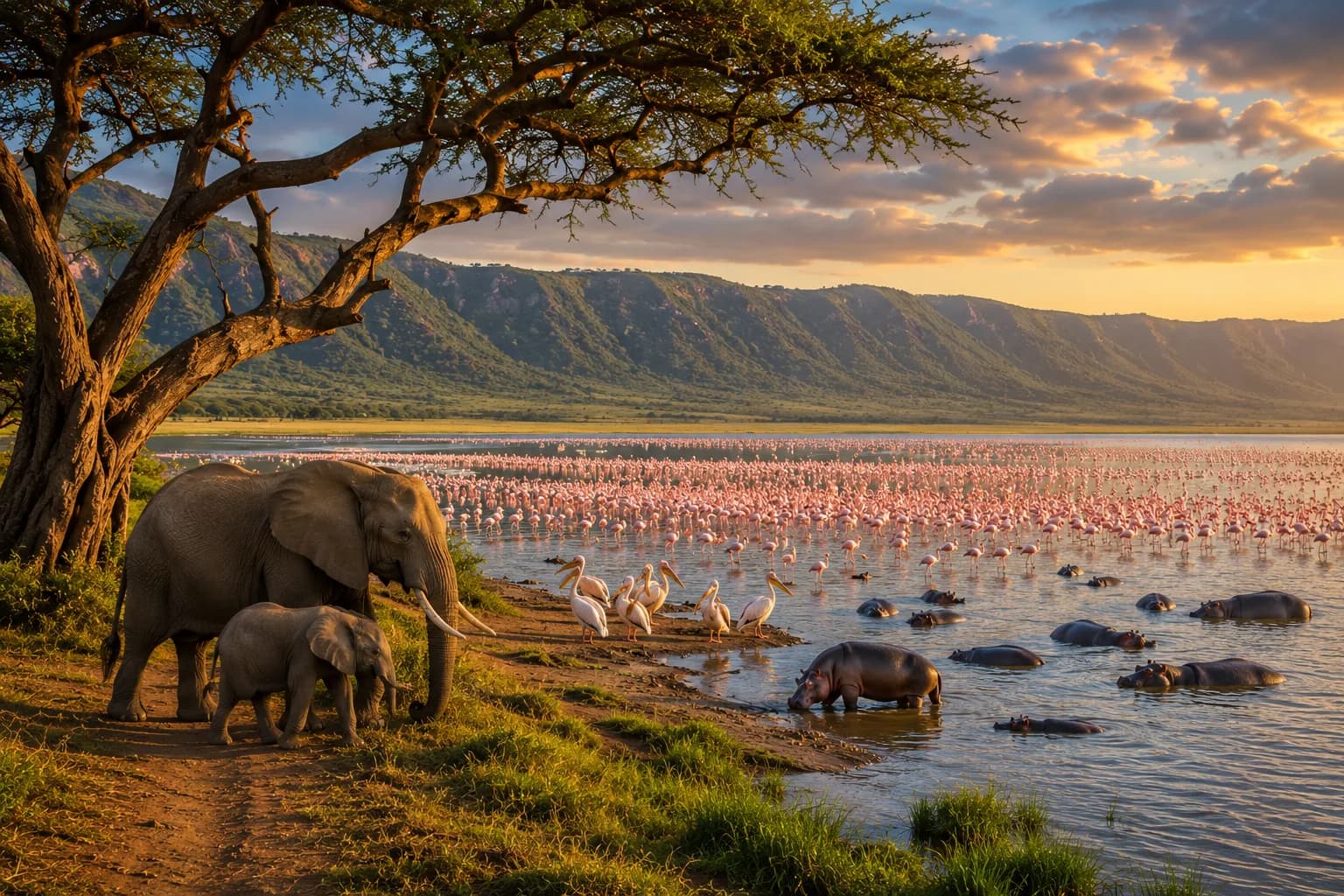
Lake Manyara National Park
A Compact Park Beneath the Rift Valley Wall, Famous for Lions in the Trees
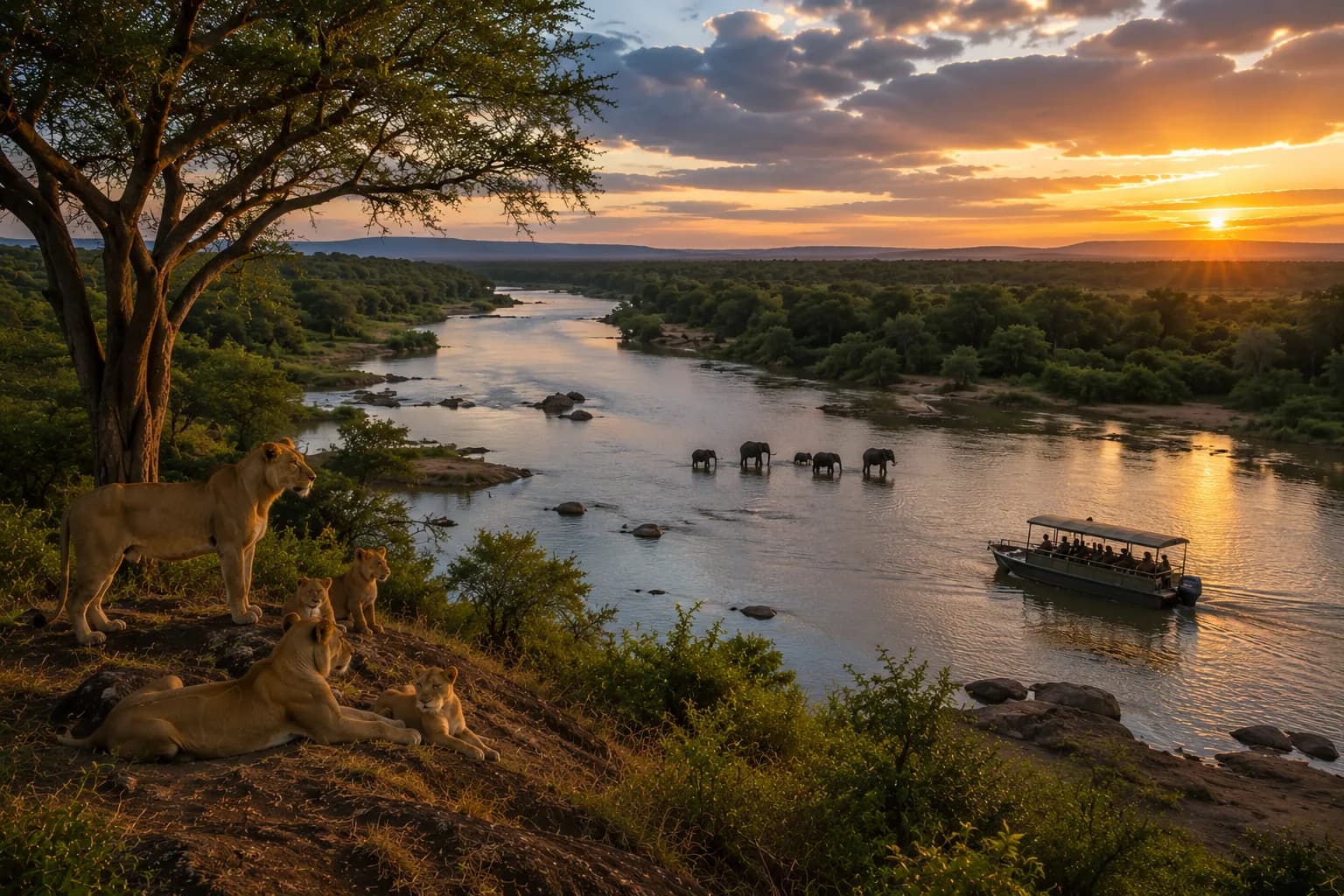
Selous / Nyerere National Park
Africa's Largest Protected Wilderness — Boat Safaris on the Rufiji, Far From the Crowds