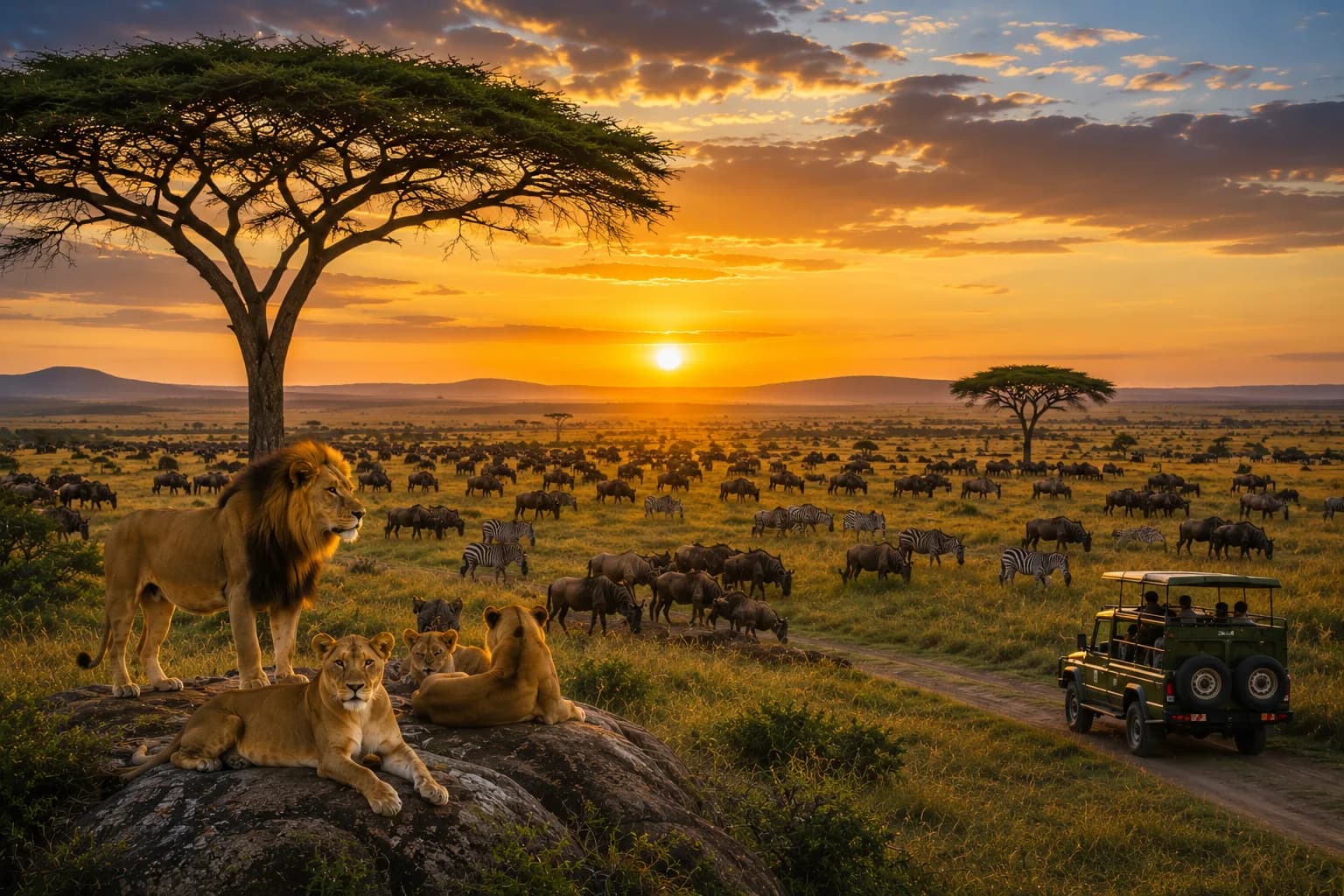
Serengeti National Park
The Serengeti is 14,763 km² of open grassland, acacia woodland, and granite kopjes at the heart of the Serengeti-Mara ecosystem — and unlike the Masai Mara, which only hosts the migration for part of the year, the Serengeti is home to some phase of it in every single month. It's also, park for park, the best big-cat viewing in Africa: healthy populations of lion, leopard, and cheetah spread across genuinely varied terrain.
The Serengeti's defining feature is its scale and internal variety — the short-grass plains of the south around Ndutu, the central Seronera Valley's year-round resident wildlife, the riverine forest of the west corridor, and the northern Serengeti bordering the Mara, each with a different character and a different phase of the migration passing through at different times of year.
Because the ecosystem spans both the Serengeti and the Mara, understanding the migration means understanding a full circuit, not a single event: calving in the southern plains around Ndutu (January–March), the move north through the central and western Serengeti (April–June), the Grumeti River crossings (June–July), and the herds pushing into the Mara for the Mara River crossings (July–October) before turning back south through the eastern Serengeti as the short rains arrive in November.
Seronera, in the park's centre, holds resident wildlife year-round regardless of where the migration currently is — it's often the most reliable single area for leopard, thanks to the riverine forest along the Seronera River, and consistently strong for lion.
The park's granite kopjes — ancient rock outcrops rising out of the plains — aren't just scenic; they're genuine wildlife hotspots, offering shade, vantage points, and denning sites that concentrate lion and leopard sightings in specific, well-known locations.
Highlights
- ◆Some phase of the Great Migration present in every month of the year
- ◆Seronera Valley — reliable year-round resident lion and leopard sightings
- ◆Ndutu plains — calving season (Jan–Mar) and dense predator activity
- ◆Granite kopjes — genuine wildlife hotspots, not just scenery
- ◆Grumeti River crossings (Jun–Jul) — smaller, less crowded than the Mara crossings
- ◆Balloon safaris over the plains at dawn
Where to Stay
Ndutu & Southern Plains Camps
Seasonal camps positioned for calving season, when the density of predators following the newborn herds is at its highest anywhere in the ecosystem.
Seronera & Central Serengeti Lodges
Permanent, well-established properties in the park's most reliable year-round game-viewing area — a strong choice whenever your dates don't line up with a specific migration phase.
Northern Serengeti & Mara-Border Camps
Positioned for the July–October river-crossing season, with easy access to both the Serengeti and Mara sides of the crossing points.
Frequently Asked Questions
What's the difference between the Serengeti and the Masai Mara?
+
They're one continuous ecosystem split by a national border — the Serengeti is the much larger Tanzanian portion, the Mara is the smaller Kenyan portion the migration passes through for part of the year. The Serengeti holds some phase of the migration in every month; the Mara mainly comes alive from around July to October.
When should I visit for the Great Migration?
+
It depends what you want to see: January to March for calving on the Ndutu plains, June to July for the Grumeti River crossings, or July to October for the Mara River crossings in the park's north. There's no wrong time — just a different phase of the story.
Is the Serengeti good for big cats specifically?
+
It's arguably the best single park in Africa for them — healthy lion, leopard, and cheetah populations spread across genuinely varied terrain, with the Seronera Valley in particular known for reliable year-round sightings of all three.
How many days do I need in the Serengeti?
+
Three to four days is a solid visit; if you're combining it with Ngorongoro Crater (which most itineraries do), five to six days total across both gives you real depth in each.
Experiences Here
The Great Wildebeest Migration
Follow 1.5 million wildebeest across the Serengeti-Mara ecosystem. Witness dramatic river crossings, predator action, and the raw theatre of the African plains.
Big Five Safaris
Track lion, leopard, elephant, buffalo, and rhino in private conservancies.
Other Places in Tanzania
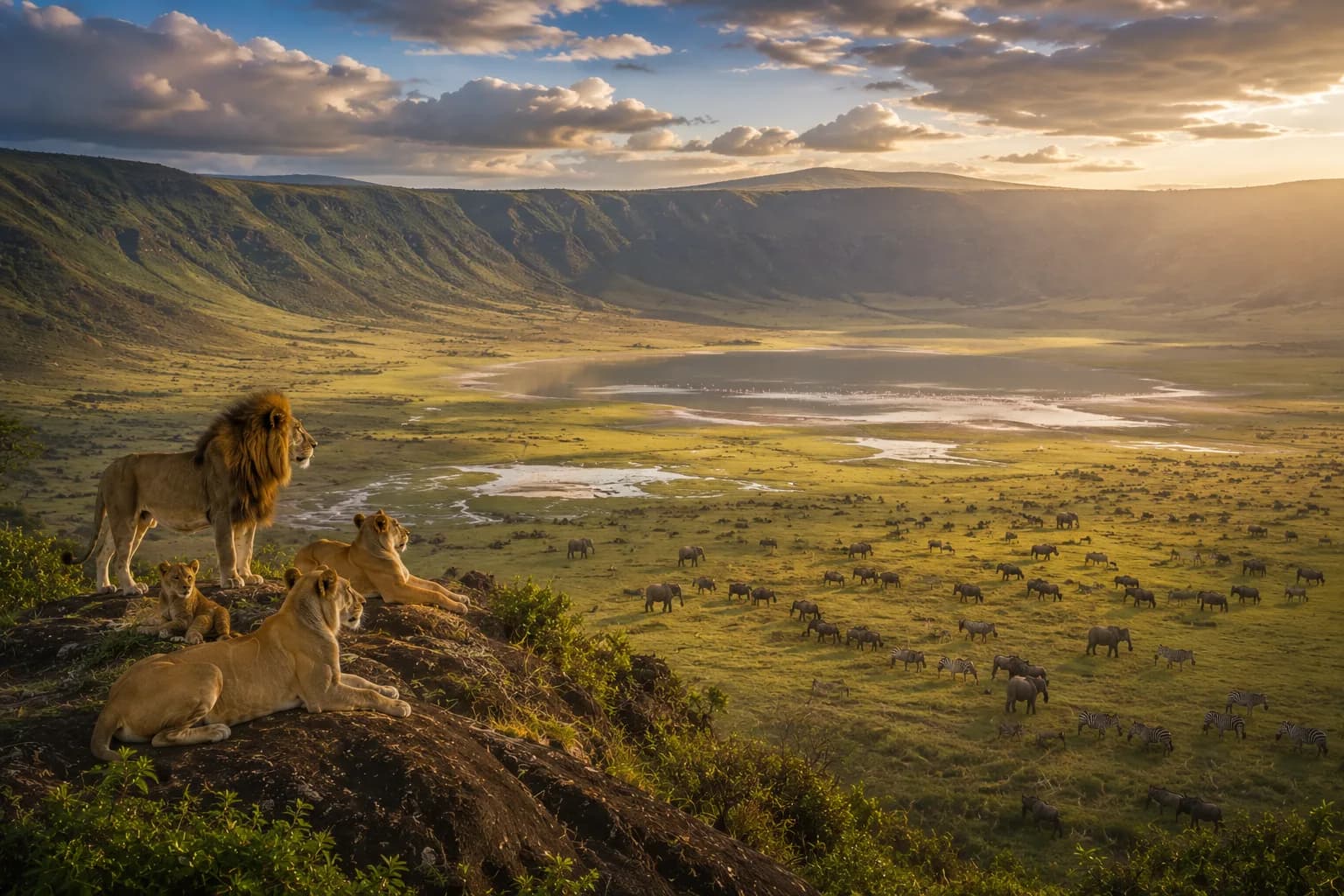
Ngorongoro Conservation Area
A Self-Contained World — The Densest Concentration of Big Five Wildlife on Earth
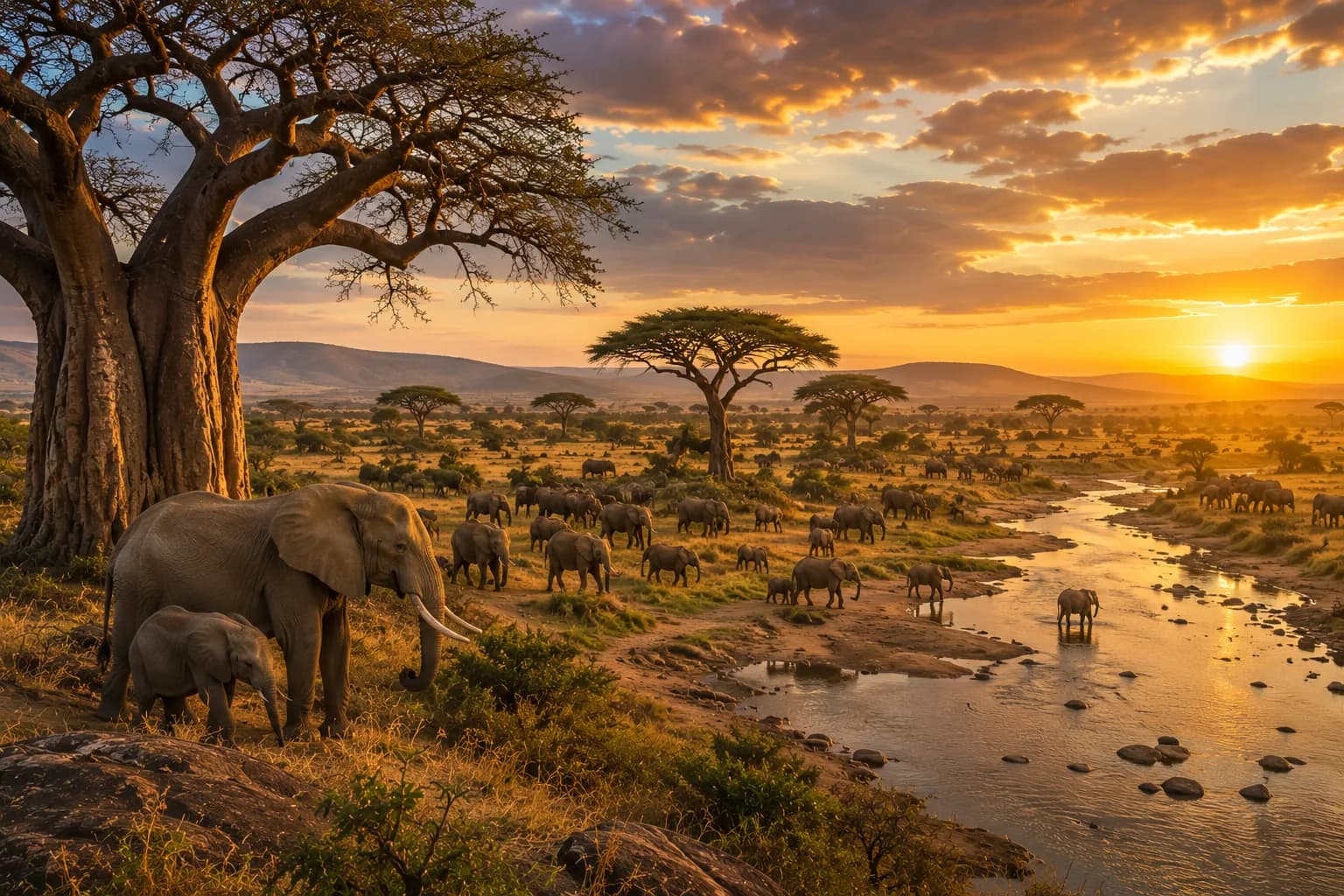
Tarangire National Park
Tanzania's Elephant Park — Ancient Baobabs and the Country's Highest Elephant Density
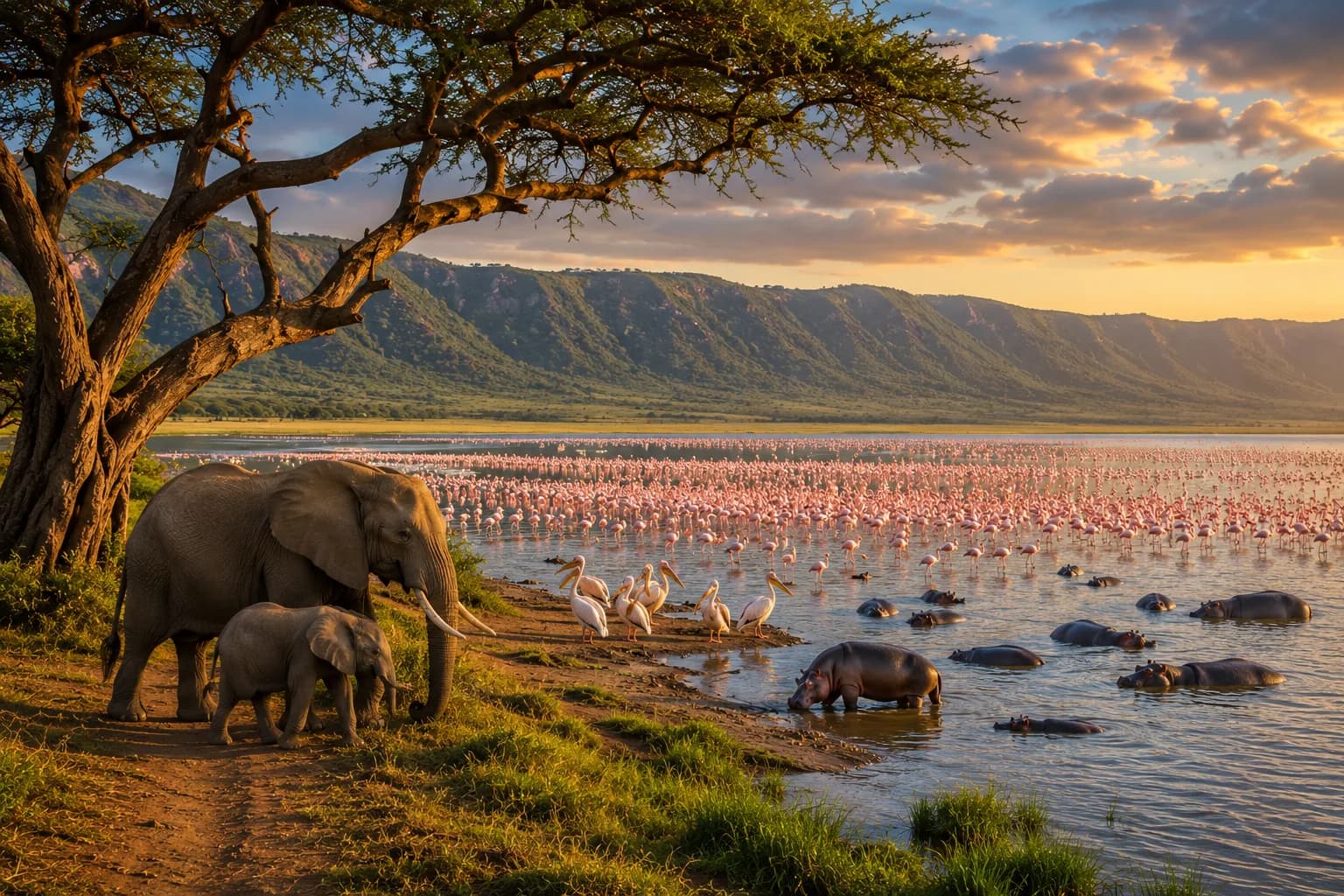
Lake Manyara National Park
A Compact Park Beneath the Rift Valley Wall, Famous for Lions in the Trees
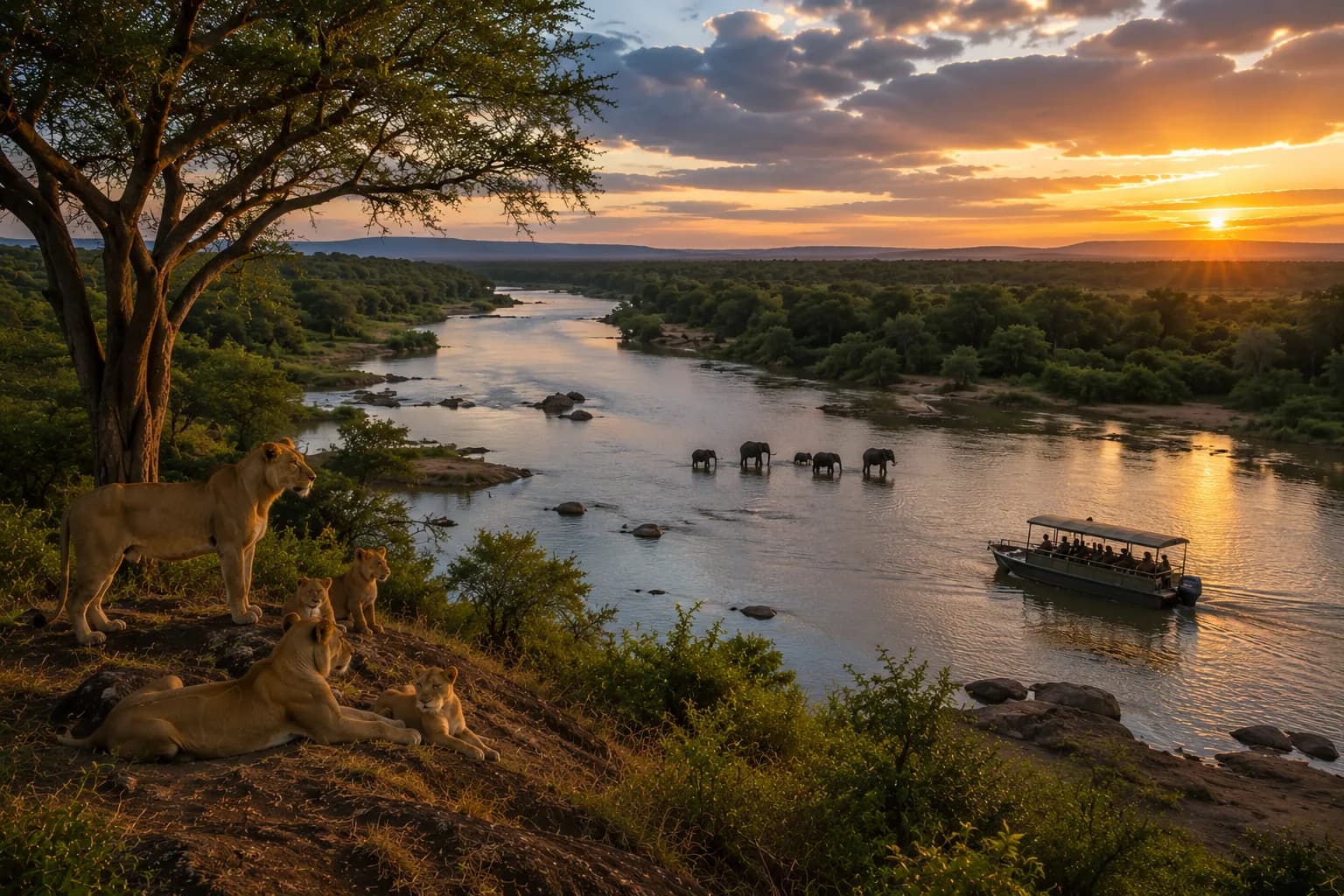
Selous / Nyerere National Park
Africa's Largest Protected Wilderness — Boat Safaris on the Rufiji, Far From the Crowds