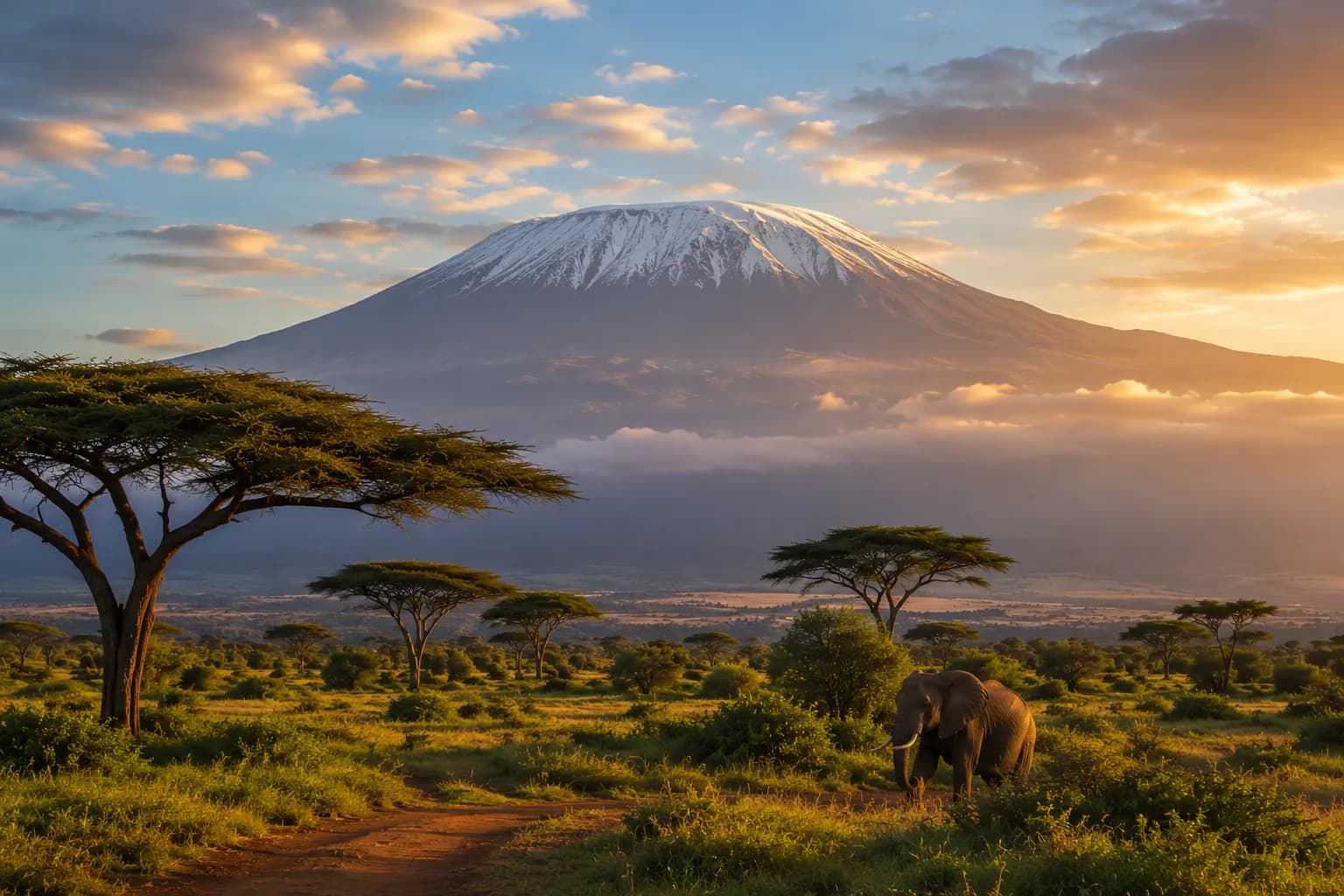
Mount Kilimanjaro
Kilimanjaro is Africa's highest mountain and the world's tallest free-standing one: Uhuru Peak, on the rim of the Kibo crater, stands 5,895 m above sea level and about 4,900 m above the farmland at its foot. No technical climbing is needed — it is a long, high trek through rainforest, moorland, alpine desert and the glaciers of the summit — and anyone reasonably fit can reach the top, given enough days to acclimatise. Every climb must be led by a licensed guide, and most take six to eight days.
There are six main routes. Marangu, the 'Coca-Cola route', is the only one with huts and the shortest at five or six days, but its quick ascent makes acclimatising harder. Machame, the 'Whiskey route', is the most popular: scenic, steeper and six or seven days. Lemosho, from the west, is longer and quieter, with seven or eight days and excellent acclimatisation, while the Northern Circuit circles the mountain over eight or nine. Rongai climbs from the drier northern side near Kenya, and Umbwe is the steepest and most direct.
Altitude, not fitness, is what stops most climbers. At the summit the air holds about half the oxygen it does at sea level, and altitude sickness can affect anyone, however fit. The best protection is time: routes with more days and a 'climb high, sleep low' profile — Lemosho, the Northern Circuit, or Machame with an extra day — give your body the chance to adjust. Talk to your doctor about altitude medication before you go, walk slowly ('pole pole', as the guides say), and tell your guide early if you feel unwell.
The climb ends with summit night: you leave high camp around midnight and climb for six to eight hours by headtorch to reach Stella Point or Uhuru Peak around sunrise, then descend most of the way the same day. Every group climbs with a licensed guide and a crew of assistant guides, porters and a cook — choose an operator that follows the guidelines of the Kilimanjaro Porters Assistance Project (KPAP) on pay, loads and kit.
Most climbers fly into Kilimanjaro International Airport, between Moshi and Arusha, and spend a night in Moshi before starting. The mountain pairs naturally with a northern Tanzania safari — Tarangire, Ngorongoro and the Serengeti are a few hours' drive away — and with a beach finish on Zanzibar. On a clear day you can also see Kilimanjaro from Kenya's Amboseli National Park, just across the border.
Kilimanjaro routes compared
- Marangu (5–6 days): the only route with huts; gentle gradients but a quick ascent, so take the extra day.
- Machame (6–7 days): the most popular camping route, steep and scenic, with the Barranco Wall scramble.
- Lemosho (7–8 days): a quieter western approach across the Shira Plateau, with some of the best acclimatisation.
- Northern Circuit (8–9 days): the longest route, circling the quiet north side before the summit.
- Rongai (6–7 days): from the north, near the Kenyan border — drier in the rains and less crowded.
- Umbwe (6–7 days): the steepest, most direct route, for experienced high-altitude trekkers.
Park fees and costs
Kilimanjaro National Park's fees are a large share of any climb. In 2026 they include a conservation fee of about USD 70 per adult per day, a camping fee of about USD 50 per night (about USD 60 in the Marangu huts) and a one-off rescue fee of USD 20, plus 18% VAT — around USD 800 to 1,500 per climber in park fees alone, depending on the route and the number of days. A reputable operator adds the crew's wages, food, equipment, transfers and a night or two in Moshi; be wary of prices that look too cheap, as crew welfare and safety are usually what get cut.
Combining Kilimanjaro with a safari
The classic pairing is the climb first and a safari after, as a reward for tired legs: Tarangire, Lake Manyara, Ngorongoro and the Serengeti are all reached by road from Arusha, and Zanzibar is about an hour's flight away for the beach. If you would rather not climb, a day hike on the lower slopes — through the rainforest to the first huts — gives you a taste of the mountain.
Highlights
- ◆Uhuru Peak, 5,895 m — the roof of Africa
- ◆No technical climbing: a high trek through rainforest, moorland, alpine desert and glaciers
- ◆Six main routes, from the hut-based Marangu to the eight- or nine-day Northern Circuit
- ◆Sunrise on the crater rim after summit night
- ◆Easy to combine with a Serengeti and Ngorongoro safari, and Zanzibar
- ◆Kilimanjaro National Park, a UNESCO World Heritage Site since 1987
Where to Stay
Moshi — the climbing town
Hotels and lodges in and around Moshi, at the foot of the mountain, where most climbs start and end; the night before you set off is usually spent here, with the briefing and kit check.
Mountain camps and huts
On the climb itself you sleep in tents pitched by your crew at the designated campsites, or in the dormitory huts on the Marangu route.
Arusha and the coffee farms
Garden lodges and coffee-estate hotels between Arusha and the airport — a comfortable place to recover before your safari.
Frequently Asked Questions
How many days do you need to climb Kilimanjaro?
+
At least six, and seven or eight if you can: extra days on the mountain give your body time to acclimatise and are the single best way to improve your chance of reaching the summit. Marangu can be done in five, but we would add a day.
Which Kilimanjaro route is best?
+
For most first-time climbers, Lemosho (seven or eight days) or Machame (seven days) — both are scenic and acclimatise well. Choose Marangu if you want huts rather than tents, Rongai for a quieter, drier approach, and the Northern Circuit if you have nine days and want the most gradual climb.
Do I need climbing experience for Kilimanjaro?
+
No technical experience, but you should be fit enough to walk five to eight hours a day for a week, at altitude. Regular hiking in the months before, ideally on hills, is the best preparation.
When is the best time to climb Kilimanjaro?
+
January to early March and June to October, the driest months. April and May bring the long rains and November the short rains, when the trails are muddy and the summit views are more often lost in cloud.
How much does it cost to climb Kilimanjaro?
+
Park fees alone are around USD 800 to 1,500 per climber in 2026, depending on the route and the days; a full climb with a reputable operator — guides, porters, food, equipment and transfers — costs several times that. Very cheap climbs usually save money on crew wages and safety.
Can I combine Kilimanjaro with a safari?
+
Yes — it is the classic Tanzania trip: climb first, then spend two to five days in Tarangire, Ngorongoro and the Serengeti, with Zanzibar to finish if you have time.
Itineraries featuring Mount Kilimanjaro
- 01Kilimanjaro Day Hike — Marangu Gate to Mandara Hut and Maundi CraterFull day · about 8–9 hours from Moshi · Kilimanjaro National Park, TanzaniaOn Request→
- 02Kilimanjaro Machame Route — 7 Days on the Mountain9 Days / 8 Nights · Kilimanjaro, TanzaniaOn Request→
- 03Kilimanjaro Lemosho Route — 8 Days on the Mountain10 Days / 9 Nights · Kilimanjaro, TanzaniaOn Request→
- 04Kilimanjaro Marangu Route — 6 Days, Sleeping in Huts8 Days / 7 Nights · Kilimanjaro, TanzaniaOn Request→
Experiences Here
Bush & Beach Safaris
Combine Big Five game viewing with a week on the Indian Ocean — Zanzibar, Diani, the Seychelles or Mauritius.
The Great Wildebeest Migration
Follow more than a million wildebeest across the Serengeti-Mara ecosystem. Witness dramatic river crossings, predator action, and the raw theatre of the African plains.
Other places in Tanzania
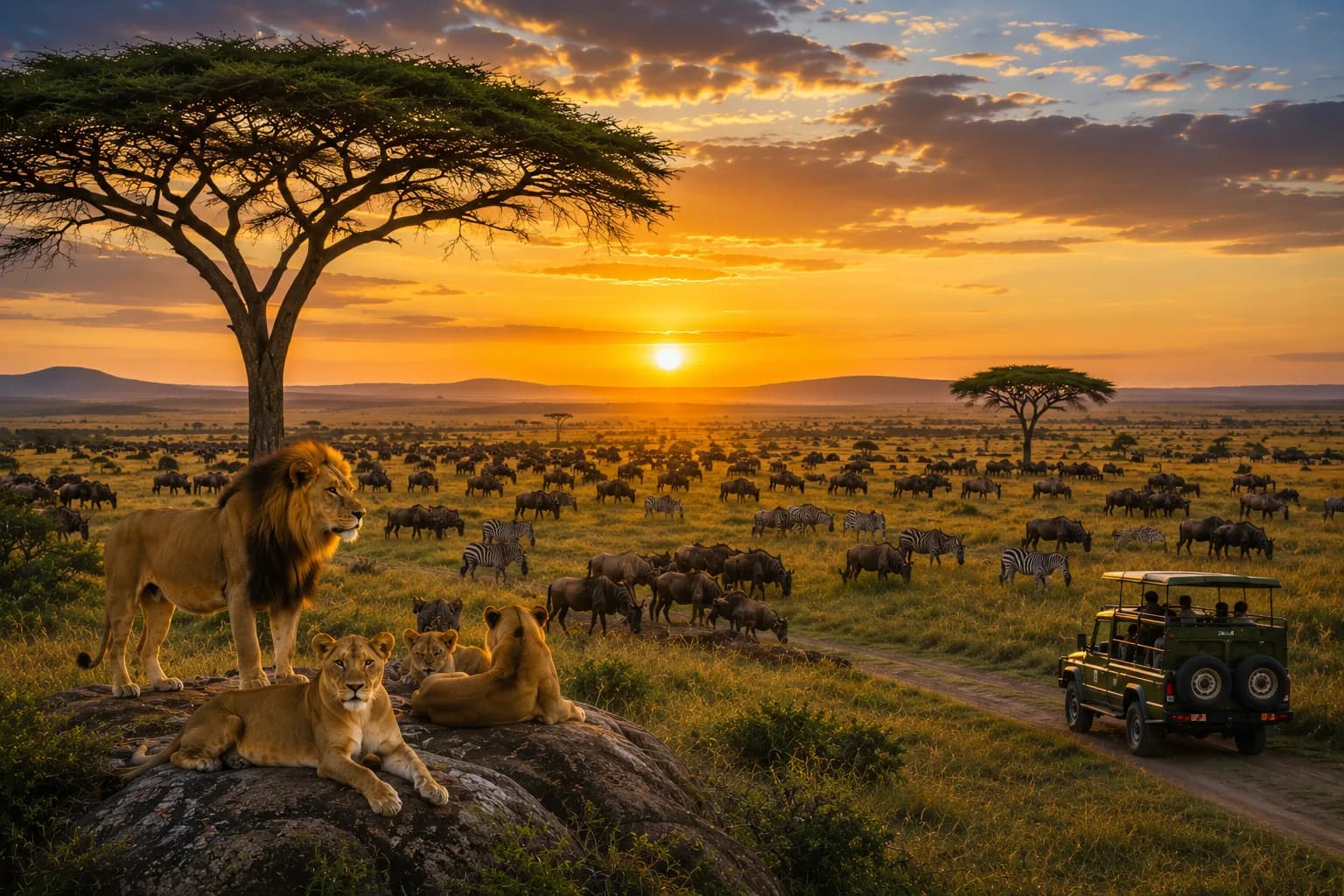
Serengeti National Park
The Endless Plains — Africa's Original Safari, and the Engine of the Great Migration
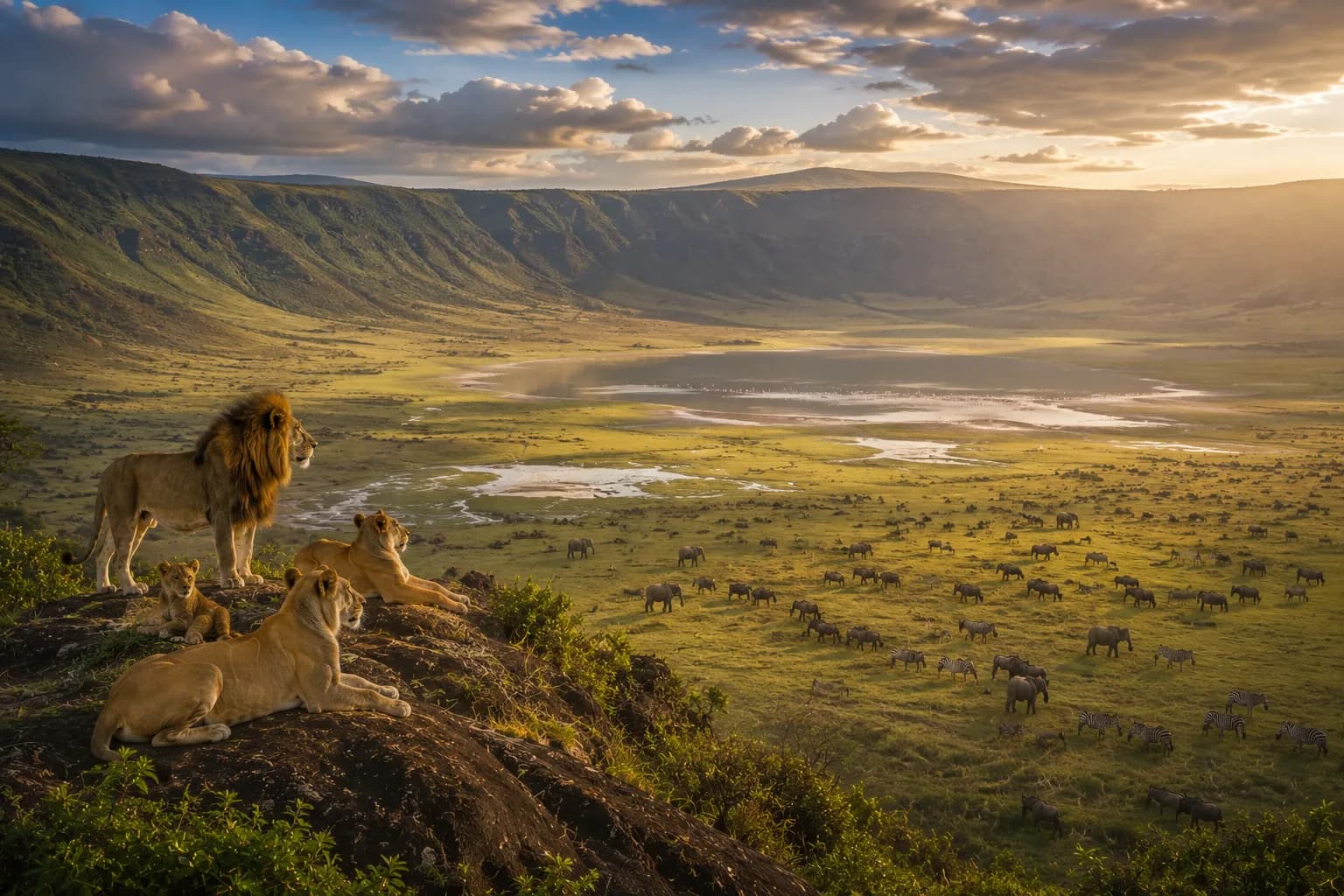
Ngorongoro Conservation Area
A Self-Contained World — The Densest Concentration of Big Five Wildlife on Earth
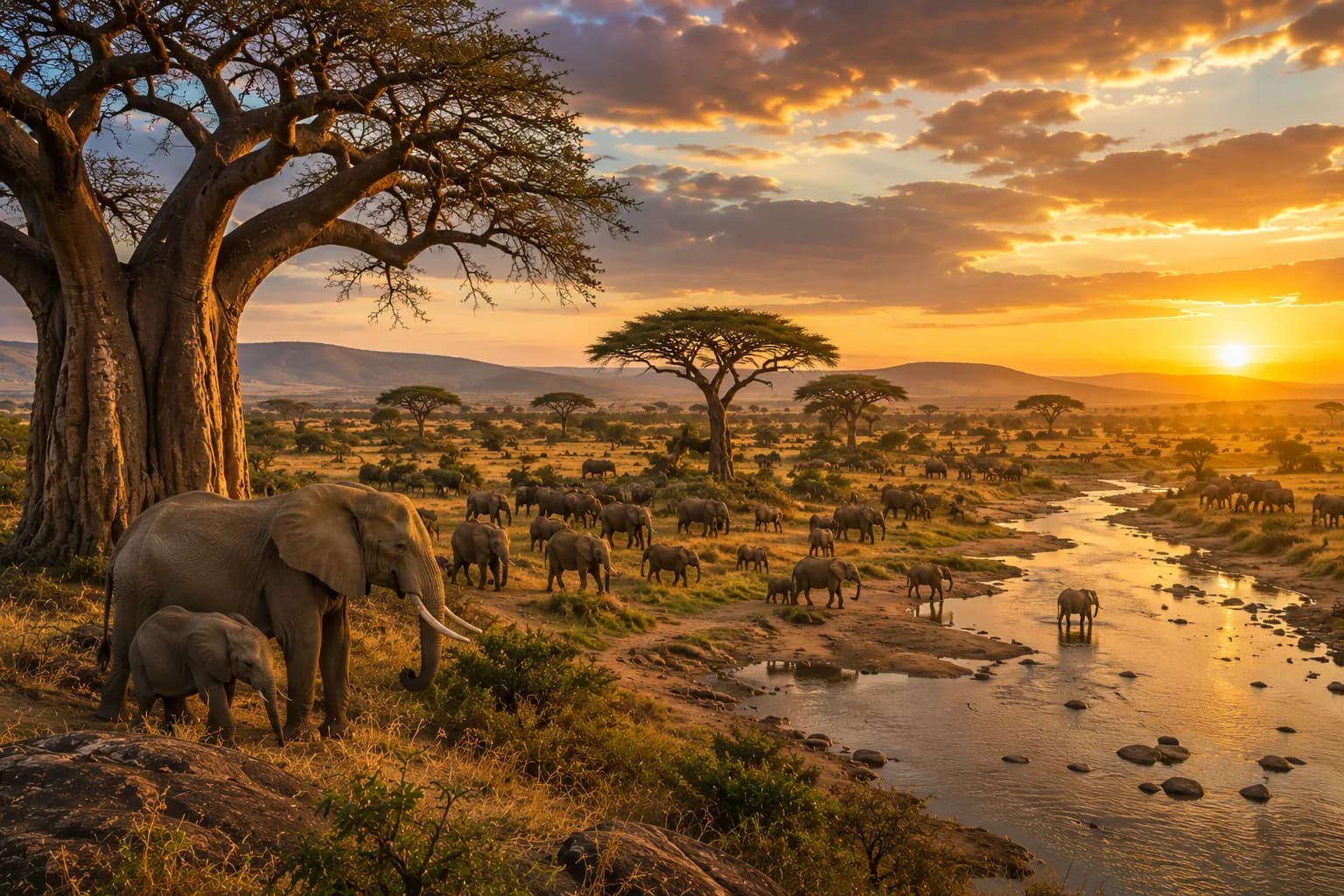
Tarangire National Park
Tanzania's Elephant Park — Ancient Baobabs and the Country's Highest Elephant Density
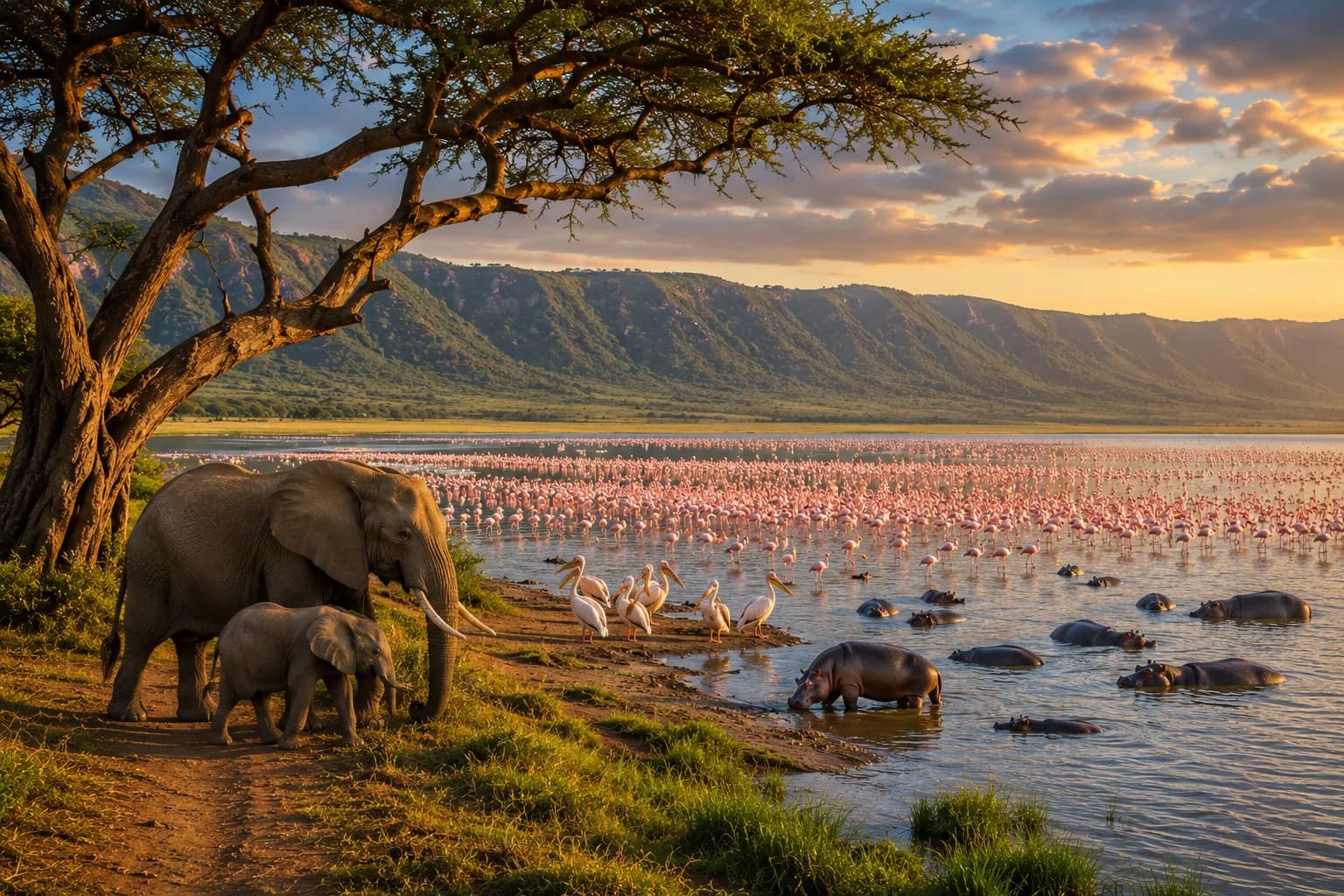
Lake Manyara National Park
A Compact Park Beneath the Rift Valley Wall, Famous for Lions in the Trees
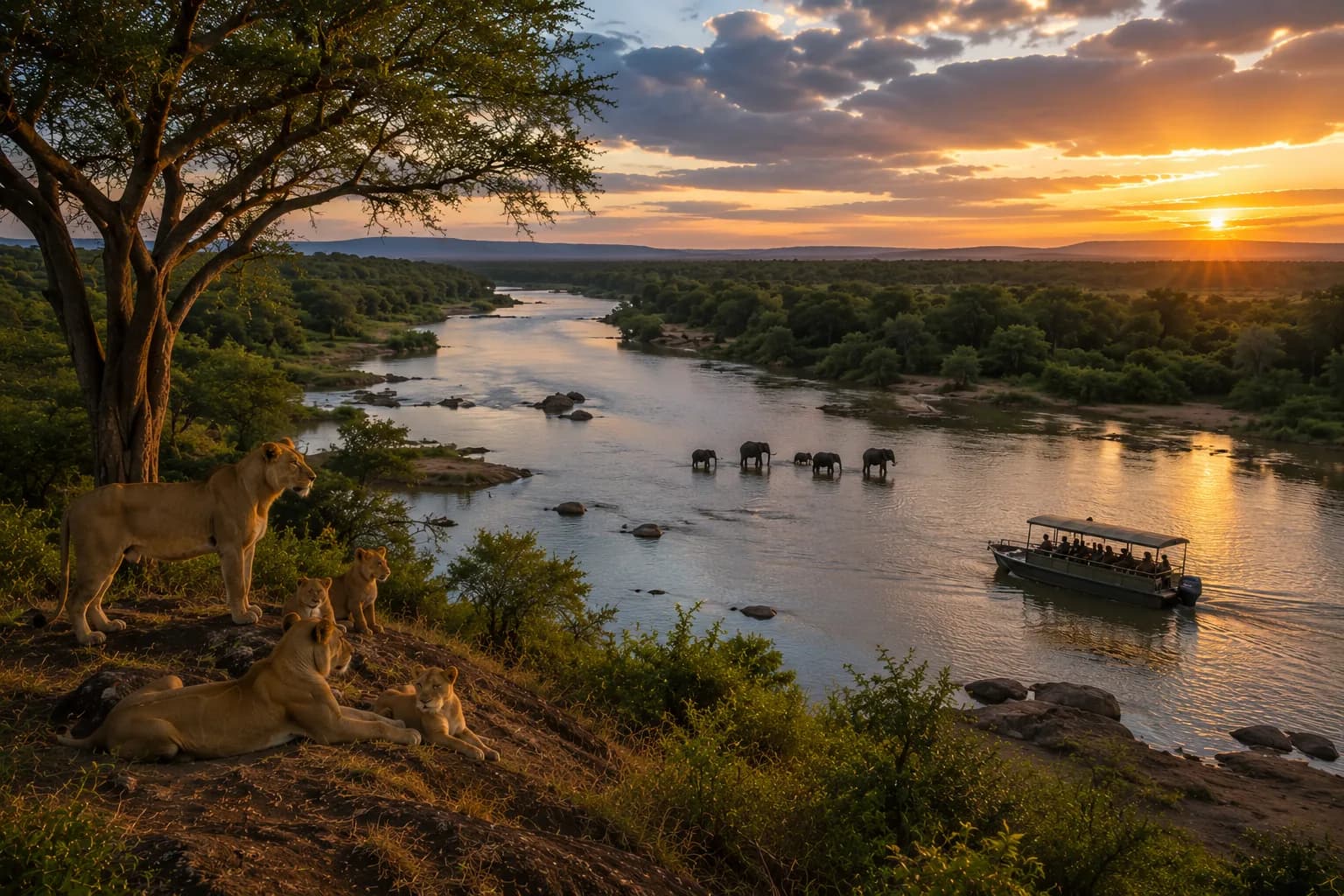
Selous / Nyerere National Park
One of Africa's Largest Wildernesses — Boat Safaris on the Rufiji, Far From the Crowds