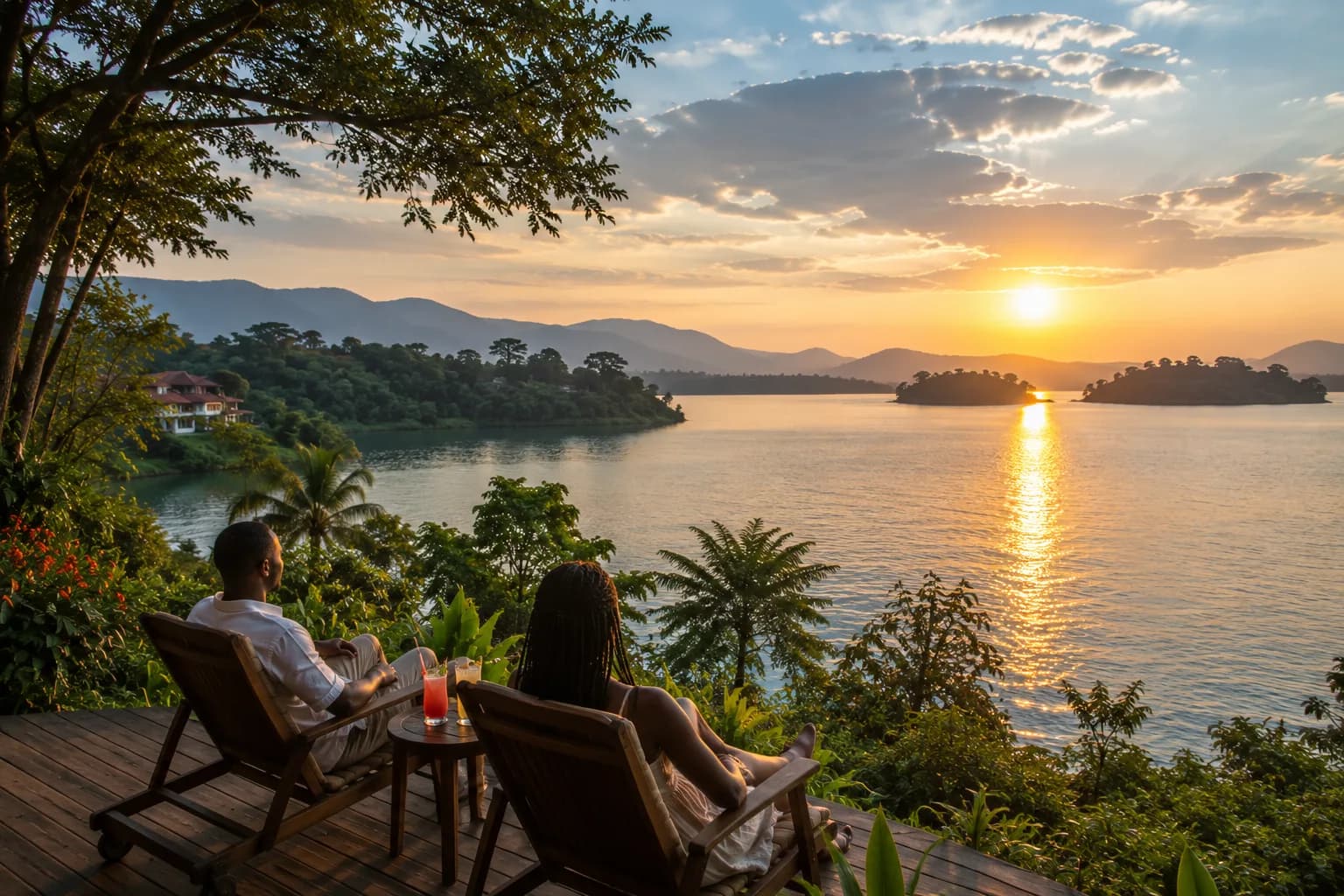
Lake Kivu
Lake Kivu is one of Africa's Great Lakes, forming a 90km stretch of Rwanda's western border with the Democratic Republic of Congo. Ringed by terraced hills and small fishing villages, it's Rwanda's classic post-trek unwind — a genuinely relaxing lakeside stop that most itineraries build in immediately after the physical exertion of gorilla trekking or a Nyungwe forest hike.
Unlike most African Great Lakes, Kivu is unusually safe for swimming — it holds none of the crocodiles, hippos, or bilharzia risk that keep most of the region's lakes off-limits, thanks to high dissolved-gas concentrations at depth that are inhospitable to the parasite. This makes it one of the few places in East Africa where a genuine, unhurried swim is part of the itinerary rather than an activity to avoid.
The lake's main towns — Gisenyi in the north, Kibuye in the centre, and Rusizi in the south — each offer a slightly different character: Gisenyi has the most developed resort infrastructure and sits closest to Volcanoes National Park (about an hour's drive), Kibuye is quieter with a scattering of small islands offshore, and Rusizi connects on to Nyungwe Forest for travellers continuing south.
Boat trips are the standard on-water activity: sunset cruises along the shoreline, day trips to Napoleon Island (home to a large fruit bat colony) or Amahoro Island, and, for the more energetic, kayaking along the calmer bays. Coffee tours are also worth building in — the volcanic soil around the lake produces some of Rwanda's best-regarded specialty coffee, and several cooperatives welcome visitors for tastings and farm walks.
Most itineraries treat Lake Kivu as a one- or two-night stop directly after Volcanoes National Park, taking advantage of Gisenyi's short drive from the gorilla-trekking gate — a low-key, restorative close to a Rwanda trip before the drive or flight back to Kigali.
Highlights
- ◆Safe for swimming — one of the few African Great Lakes without crocodile, hippo, or bilharzia risk
- ◆Gisenyi — the most developed lakeside town, ~1hr from Volcanoes National Park
- ◆Boat trips to Napoleon Island (fruit bat colony) and Amahoro Island
- ◆Specialty coffee tours on the volcanic soil surrounding the lake
- ◆Kayaking in the calmer bays
- ◆The natural, low-key rest stop after gorilla trekking or a Nyungwe forest hike
Where to Stay
Lakefront Resorts
Established resort properties directly on the water in Gisenyi, with private beaches, water-sports facilities, and the shortest drive from Volcanoes National Park.
Boutique Lakeside Lodges
Smaller, design-led properties around Kibuye and Rusizi, offering a quieter, more intimate stay with direct lake access.
Island & Eco Retreats
A handful of small, low-impact properties on or near the lake's islands, for travellers wanting genuine seclusion.
Frequently Asked Questions
Is Lake Kivu safe to swim in?
+
Yes — unusually for an African Great Lake, Kivu has no crocodile or hippo population and carries no meaningful bilharzia risk, thanks to high dissolved-gas concentrations at depth. It's one of the few lakes in the region where swimming is routinely part of the itinerary.
Which Lake Kivu town should I choose?
+
Gisenyi, in the north, is the most developed and sits closest to Volcanoes National Park — about an hour's drive — making it the natural choice directly after gorilla trekking. Kibuye is quieter with offshore islands; Rusizi in the south connects on to Nyungwe Forest.
How many days should I spend at Lake Kivu?
+
One to two nights is typical — enough to properly rest after a gorilla trek, take a boat trip or coffee tour, and enjoy the lake, without it becoming the centrepiece of a Rwanda itinerary that's really built around the gorillas.
Is Lake Kivu worth visiting if I'm not trekking gorillas?
+
It's a pleasant lakeside stop in its own right, but most of its appeal for our guests comes from the contrast with the physical exertion of trekking — as a standalone destination it competes with better-known lake and beach options elsewhere on a longer Africa itinerary.
Experiences Here
Other Places in Rwanda
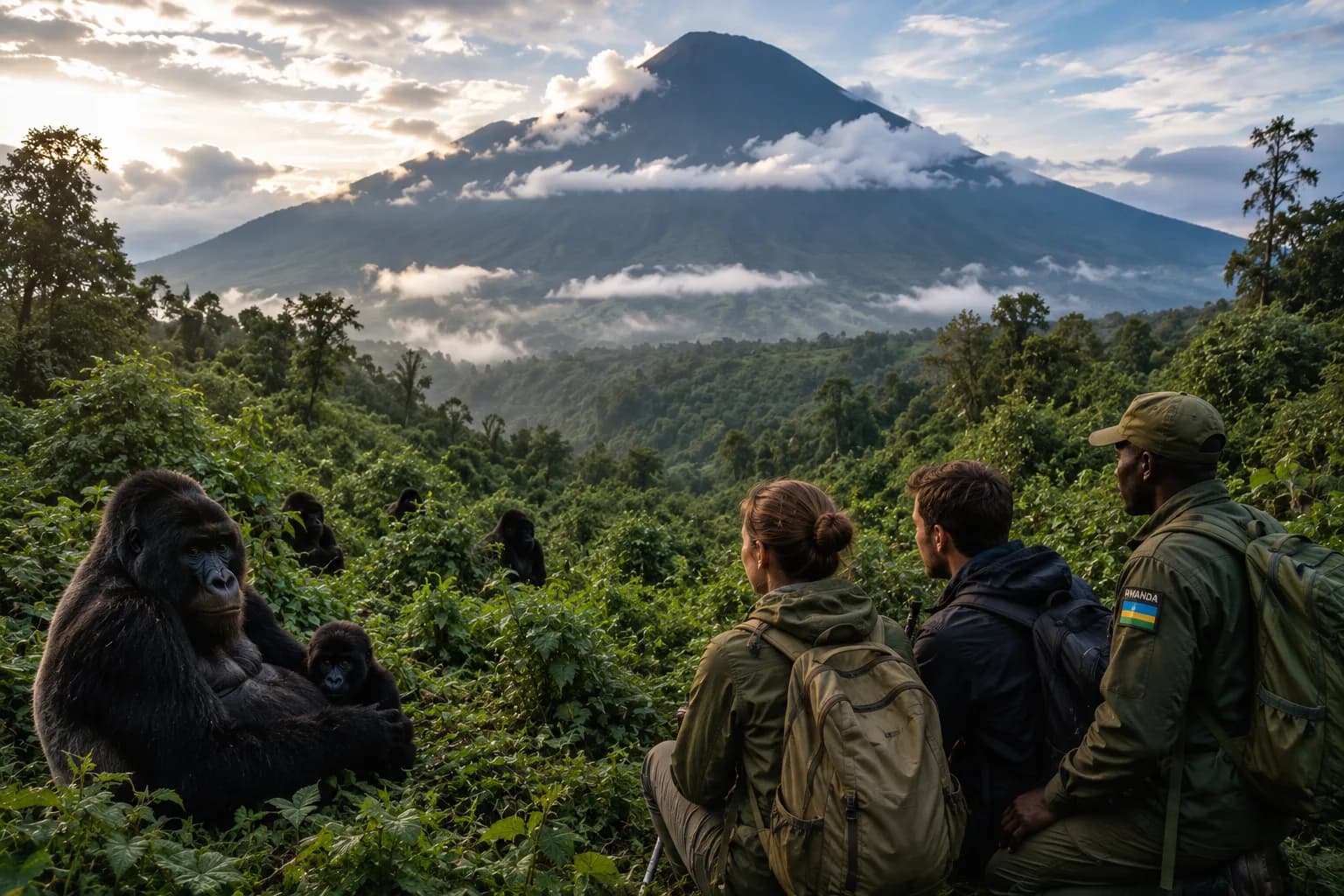
Volcanoes National Park
Where Dian Fossey Worked, and Where Rwanda's Gorilla Story Began
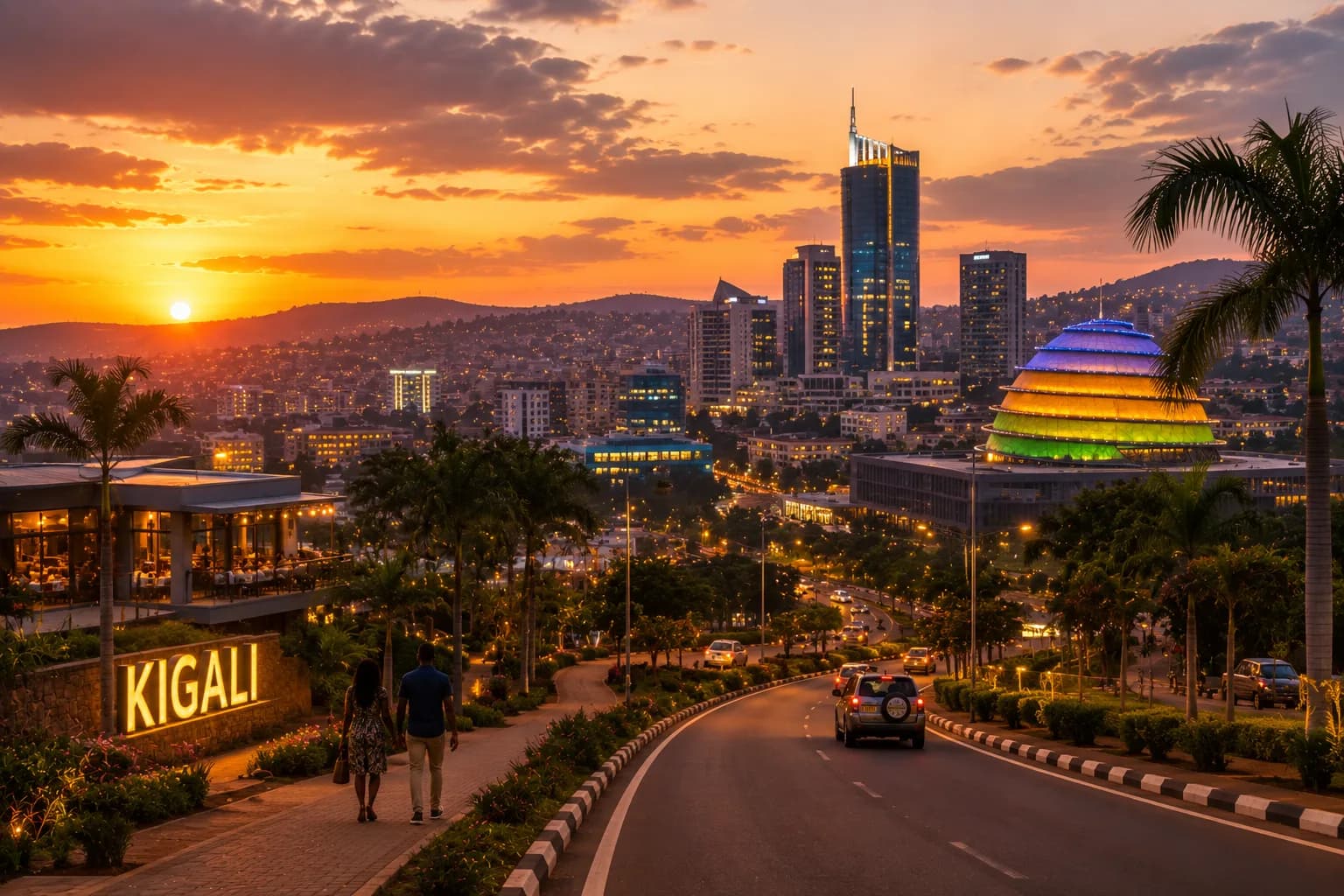
Kigali
East Africa's Most Orderly Capital, and Its Most Important Memorial
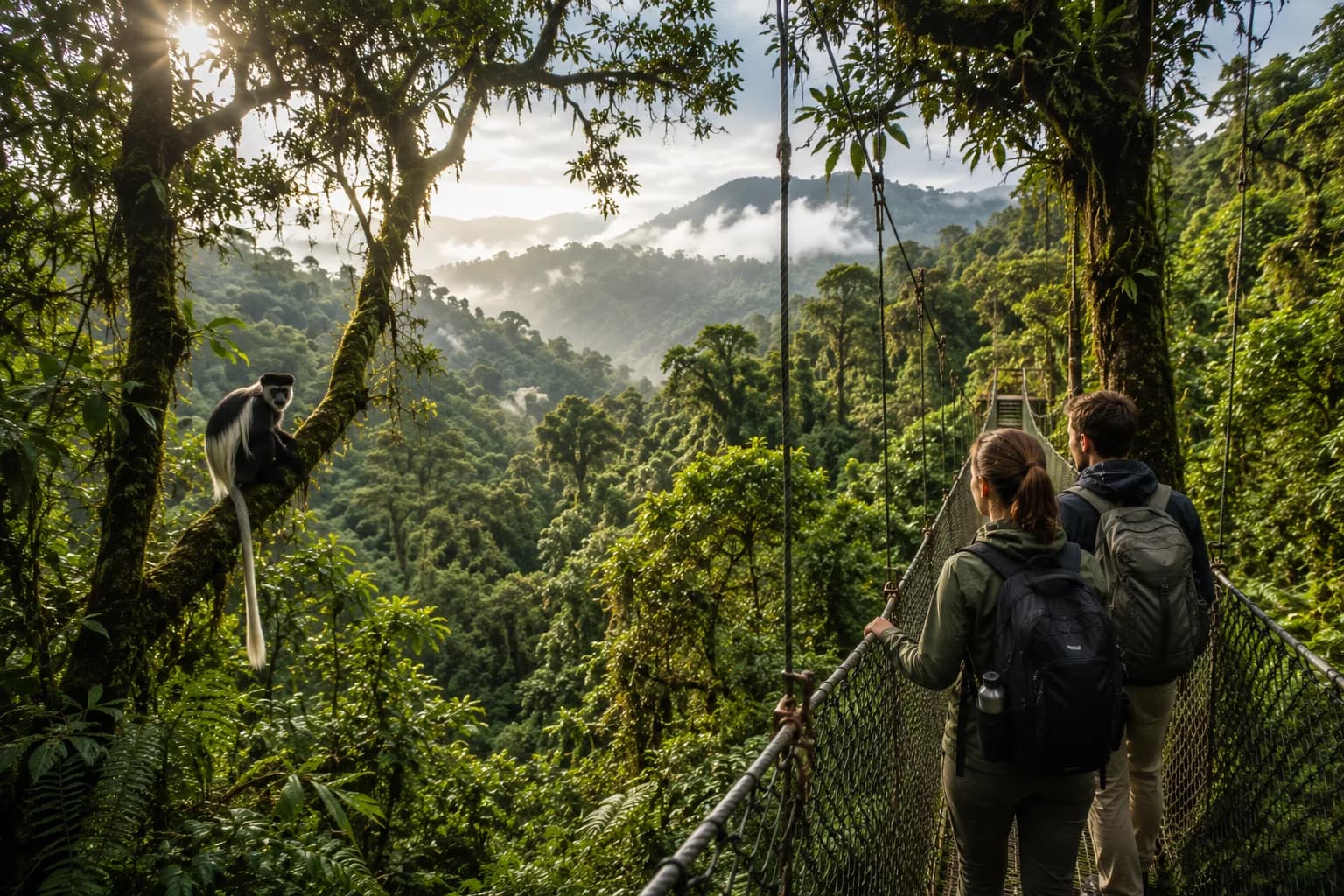
Nyungwe Forest National Park
One of Africa's Oldest Rainforests, Crossed by a Canopy Walkway
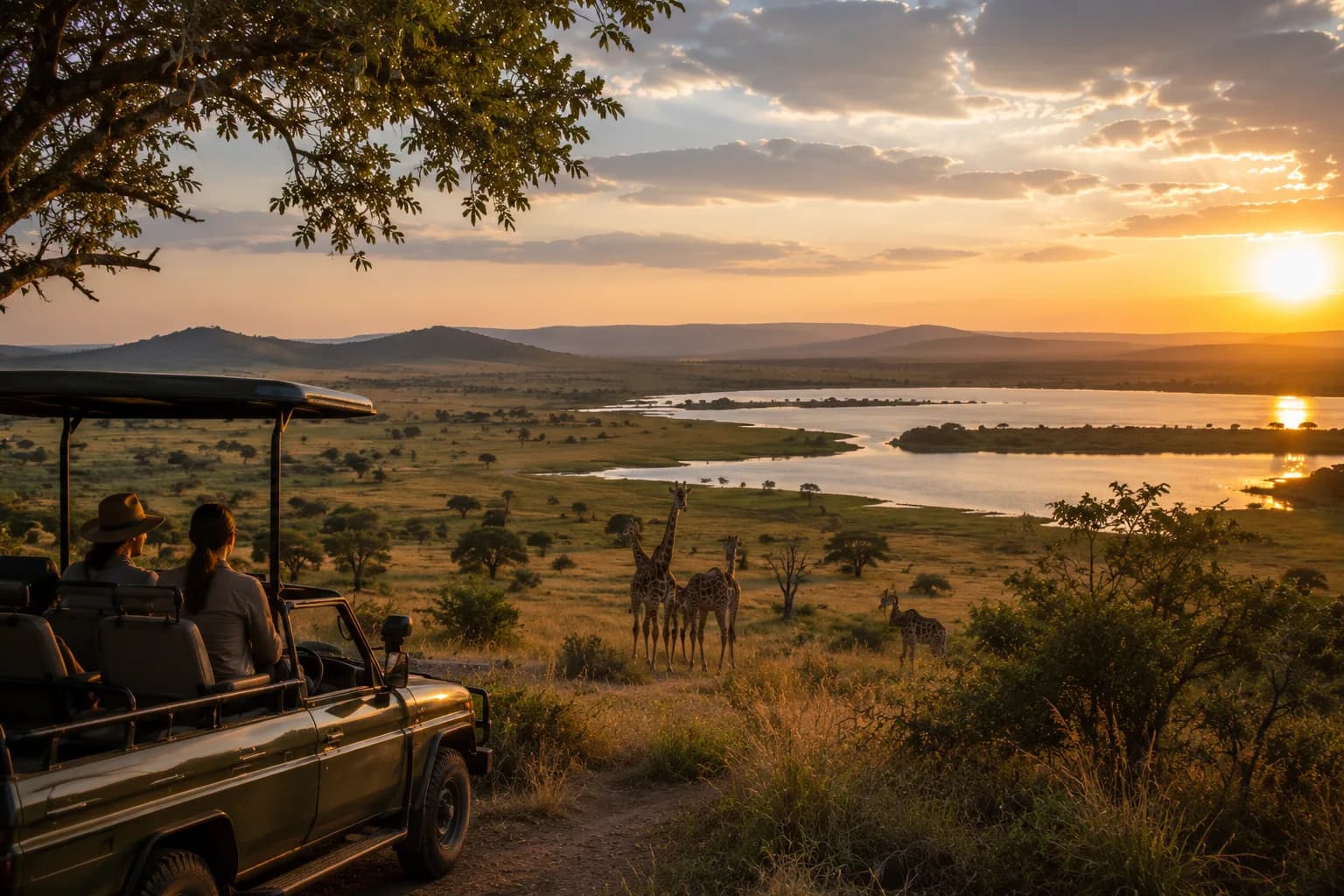
Akagera National Park
Rwanda's Restored Savanna, and Its Only Big Five Park