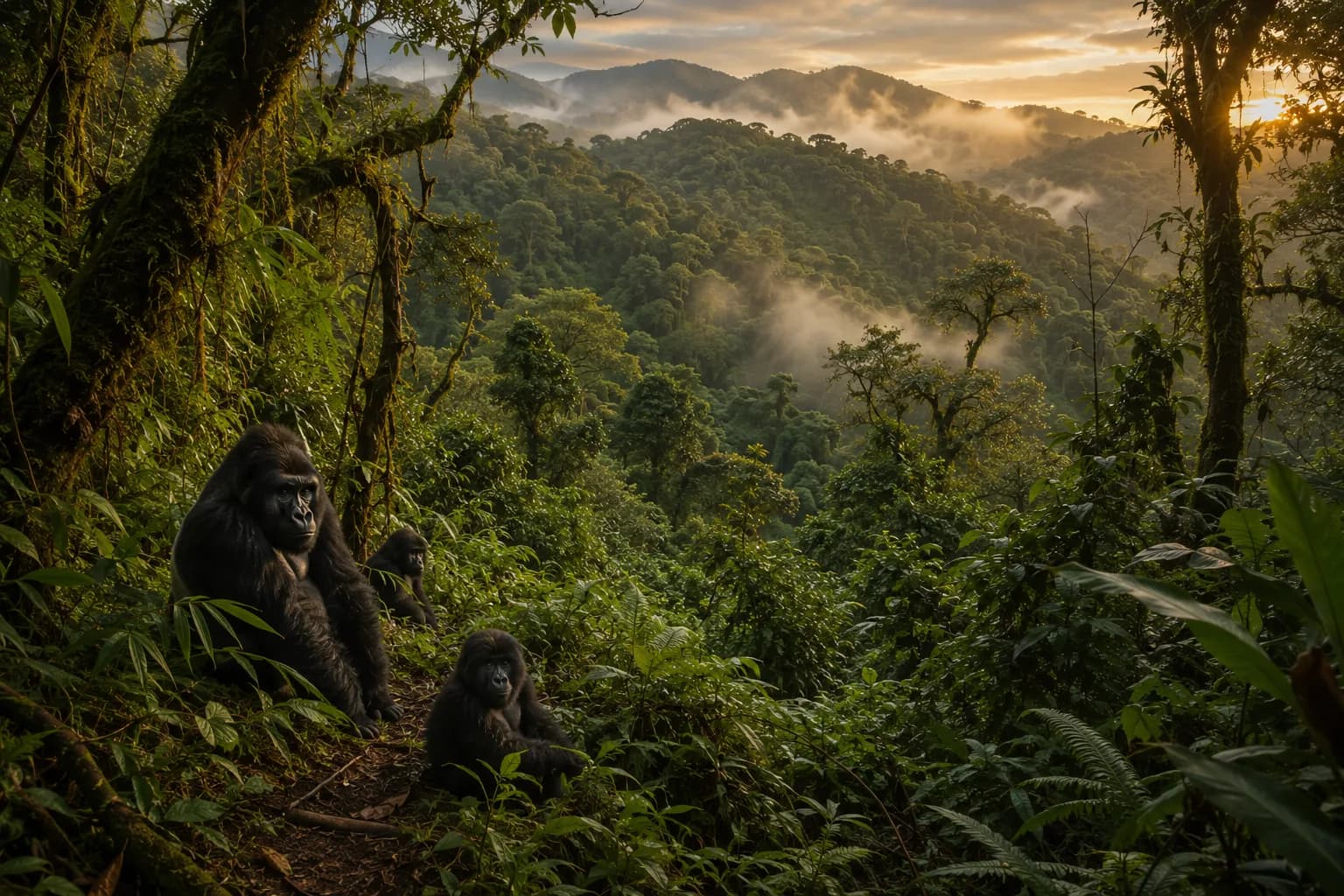
Bwindi Impenetrable Forest
Bwindi Impenetrable National Park is 321 km² of ancient montane rainforest in southwestern Uganda, unbroken by glaciation since the last Ice Age. That continuity is why it's so extraordinarily biodiverse — over 400 plant species, 350 bird species, 200 butterflies, and, most famously, approximately 459 mountain gorillas across 19 habituated family groups, the single largest population anywhere on Earth.
Bwindi is split into four trekking sectors — Buhoma, Ruhija, Rushaga, and Nkuringo — each with its own habituated families, lodges, and access road. Buhoma, in the north, is the oldest and most established sector, with the widest lodge selection. Rushaga, in the south, has the most habituated families of any sector and is also where Uganda's gorilla habituation experience (up to four hours with a family still being acclimatised to human presence, rather than the standard one hour) is based.
The 'Impenetrable' in the name is not exaggeration. Treks move through genuinely dense, steep, tangled forest — vines, thick undergrowth, and slopes that can exceed 60% gradient in places. This is what makes Bwindi's trekking more physically demanding than Rwanda's Volcanoes National Park, and also what makes reaching a gorilla family here feel like a genuine expedition rather than a scenic walk.
Beyond gorillas, Bwindi rewards travellers who stay an extra day: guided forest walks to the Munyaga River waterfalls, birding for Albertine Rift endemics found nowhere else on Earth, and visits to Batwa pygmy communities who lived inside this forest for an estimated 50,000 years before its 1991 gazettement as a national park displaced them. A Batwa-led cultural walk, done properly, is one of the most quietly moving add-ons available anywhere on a Uganda itinerary.
Because permits are capped at eight visitors per family per day across 19 families, Bwindi has real, hard capacity limits — unlike savanna parks, you cannot simply show up and book a game drive. We book permits three to six months ahead, choosing the sector that best matches your lodge, itinerary routing, and fitness level.
Highlights
- ◆Approximately 459 mountain gorillas across 19 habituated families — the largest population on Earth
- ◆Four distinct trekking sectors: Buhoma, Ruhija, Rushaga, Nkuringo — each with its own access and lodges
- ◆Gorilla habituation experience in Rushaga — up to 4 hours with a family still being acclimatised
- ◆UNESCO World Heritage rainforest unbroken since the last Ice Age
- ◆Albertine Rift endemic birding — over 350 species, several found nowhere else
- ◆Batwa pygmy cultural walks — the forest's original inhabitants, displaced by the 1991 park gazettement
Where to Stay
Luxury Forest Lodges
Small, high-end properties on the forest edge in Buhoma and Nkuringo — often fewer than 10 rooms, with verandas looking directly into the canopy and genuinely excellent guiding.
Boutique & Mid-Range Camps
Comfortable tented camps and lodges across all four sectors, offering full board and reliable transfers at a more accessible price point than the luxury tier, without sacrificing proximity to the trailhead.
Community-Run Guesthouses
Simple, locally-owned accommodation near Buhoma gate — the most affordable way to base yourself at Bwindi, with proceeds feeding directly back into the surrounding community.
Frequently Asked Questions
Which Bwindi sector should I choose?
+
Buhoma has the widest choice of established lodges and the gentlest access road. Rushaga has the most habituated families and is the only sector offering the 4-hour habituation experience. Ruhija and Nkuringo are quieter and more remote. We match the sector to your lodge preference and itinerary routing rather than picking one in isolation.
How do I get to Bwindi from Entebbe?
+
By light aircraft (about 1hr 20min to one of the local airstrips) or by road (8–9 hours via Lake Mburo, often broken into two days). Most itineraries with limited time fly at least one direction.
Is Bwindi harder to trek than Volcanoes National Park in Rwanda?
+
Generally yes — Bwindi's terrain is steeper and denser, living up to its name. Rwanda's trails through bamboo and hagenia woodland are usually considered more manageable, though both parks can throw up a genuinely tough trek depending on where the gorillas moved overnight.
What is the Batwa cultural experience?
+
A guided walk led by Batwa community members — the forest's original inhabitants — sharing traditional hunter-gatherer skills, medicinal plant knowledge, and the story of their displacement when Bwindi became a national park in 1991. It's usually added as a half-day activity alongside gorilla trekking.
Itineraries Featuring Bwindi Impenetrable Forest
Experiences Here
Other Places in Uganda
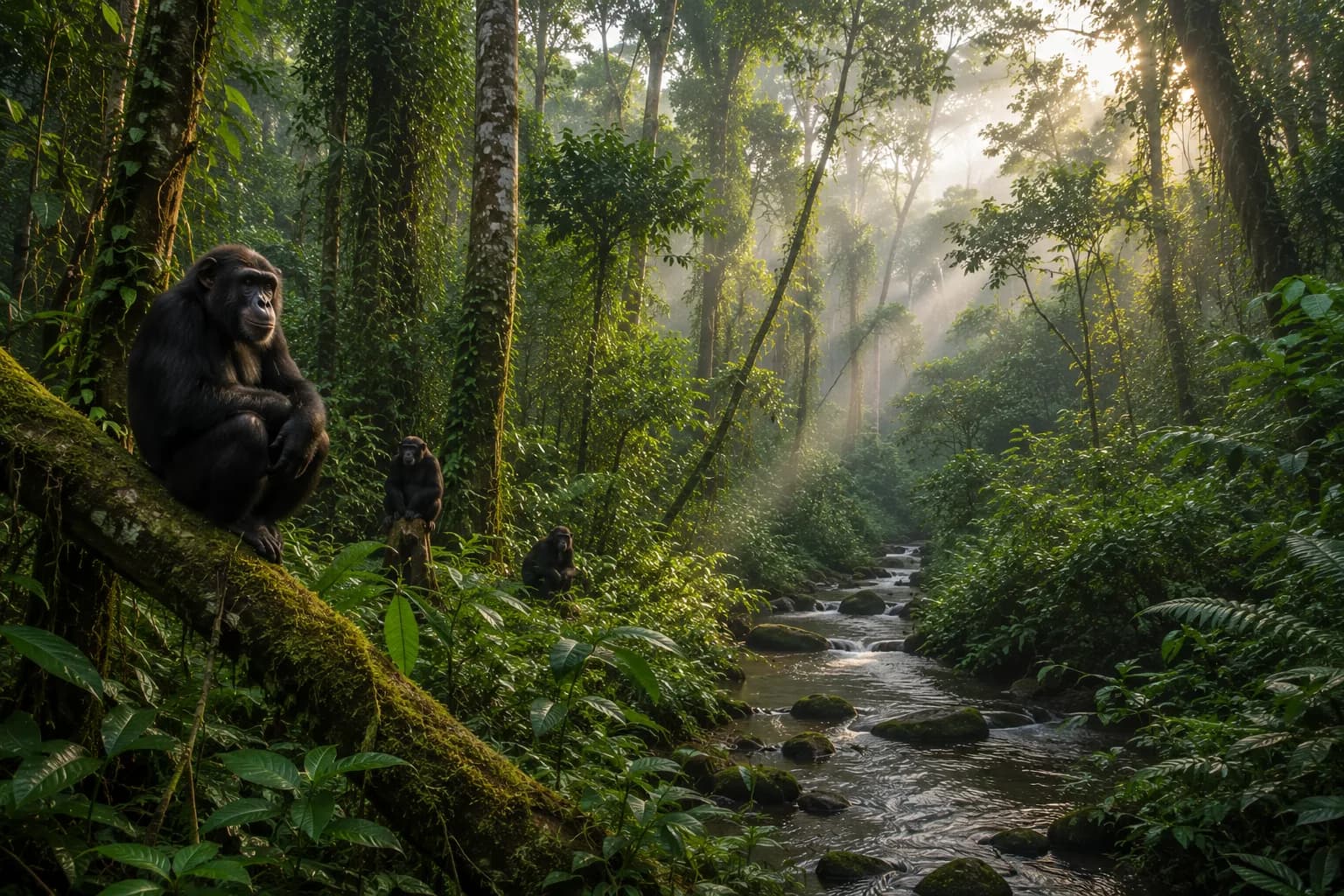
Kibale National Park
Africa's Primate Capital — Thirteen Species in One Forest
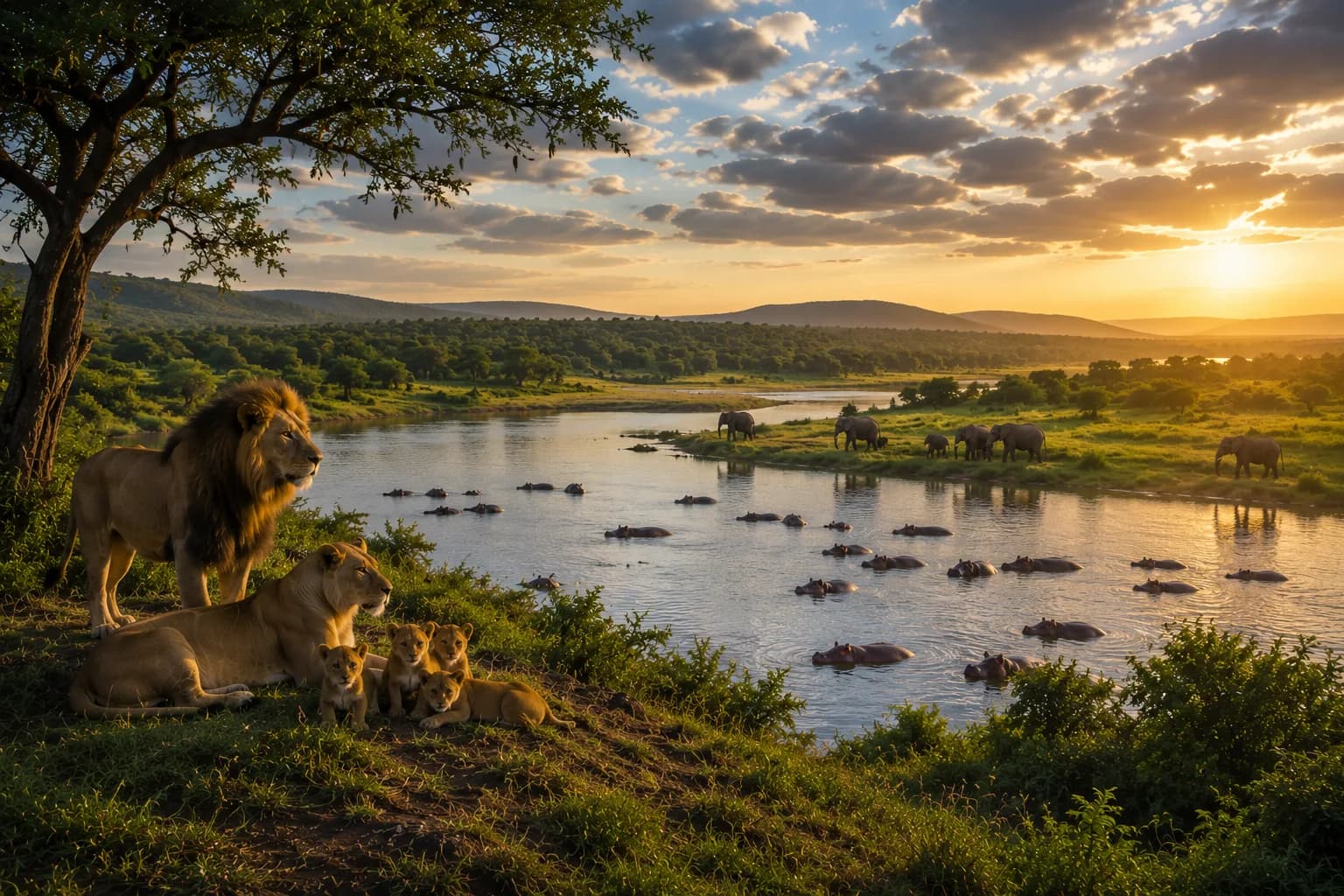
Queen Elizabeth National Park
Straddling the Equator, Famous for Lions That Climb Trees
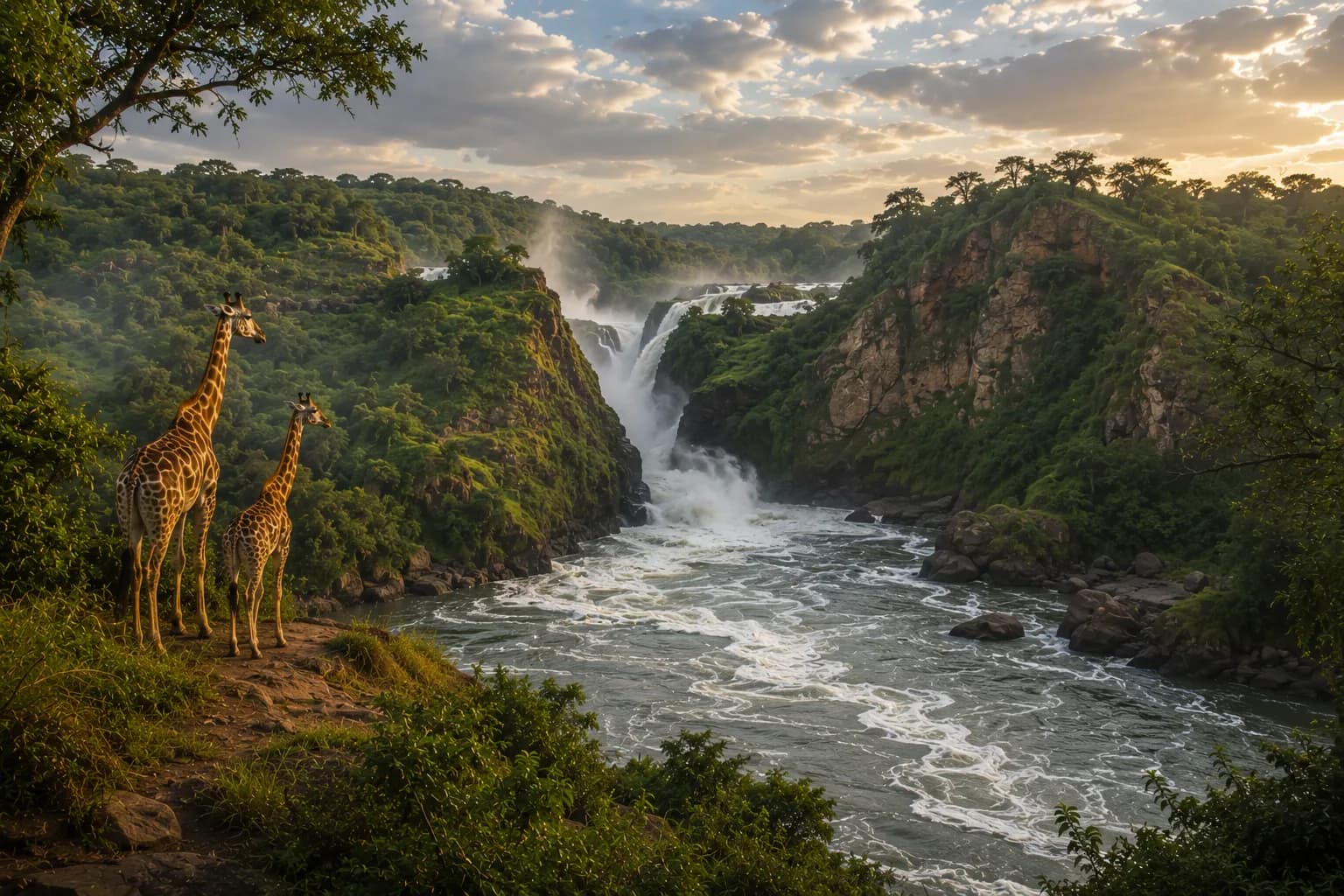
Murchison Falls National Park
Where the Nile Forces Itself Through a Seven-Metre Gap
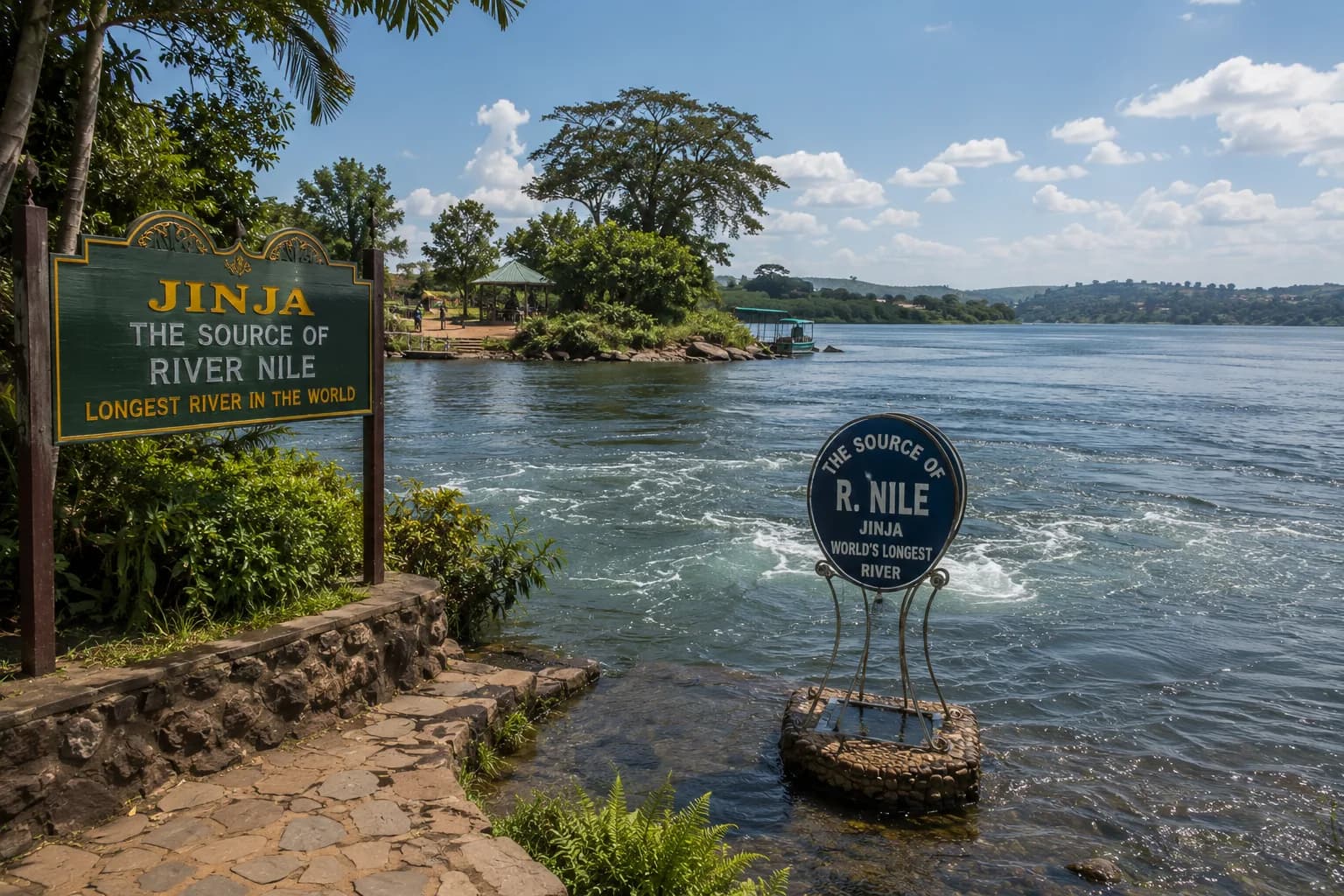
Jinja & the Source of the Nile
East Africa's Adventure Capital, at the Point Where the Nile Begins