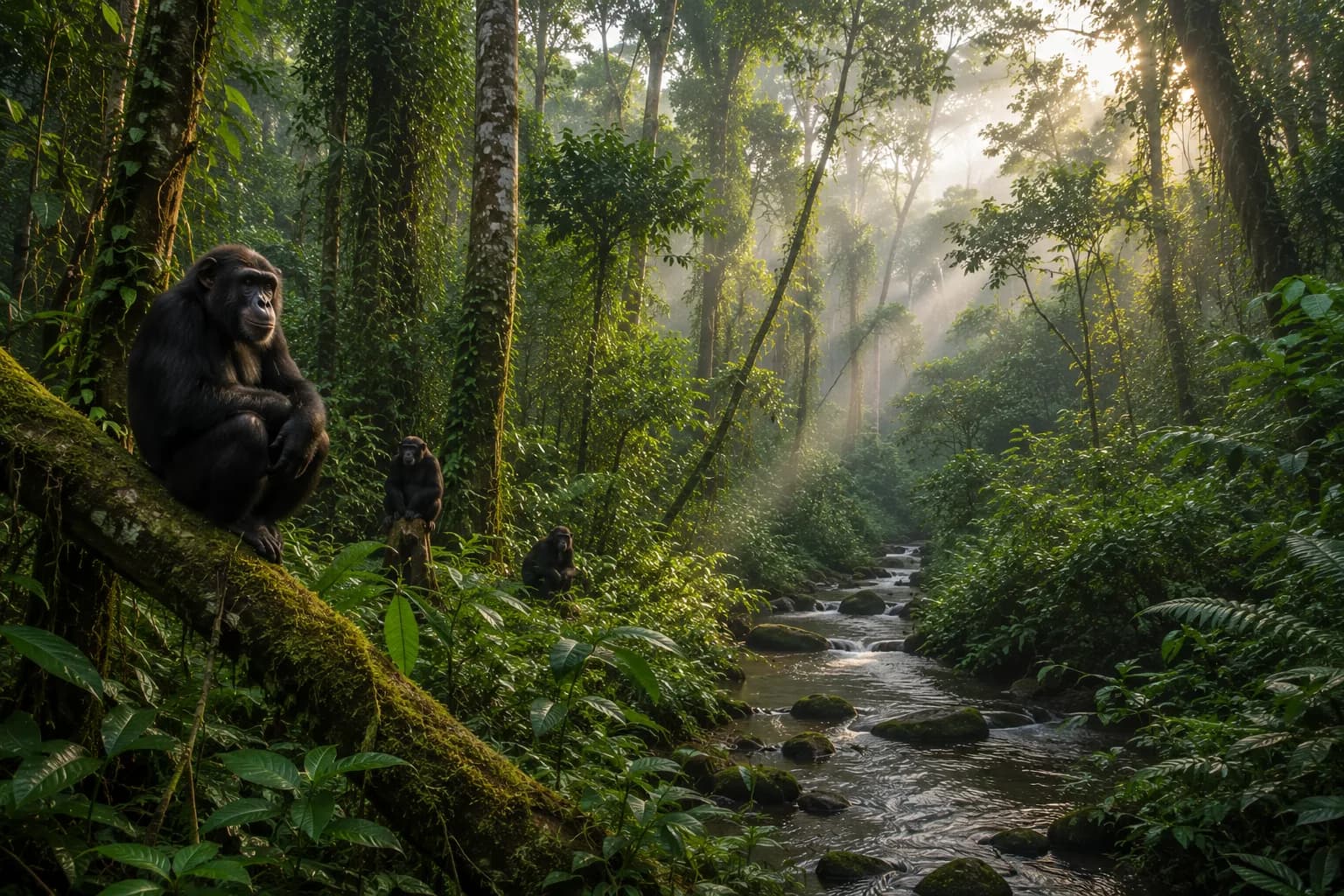
Kibale National Park
Kibale National Park protects 795 km² of moist, tall-canopy tropical forest in western Uganda, and holds the highest concentration and diversity of primates of any forest in Africa: 13 species, including an estimated 1,500 chimpanzees — the largest habituated chimpanzee population anywhere on the continent open to tourism.
Chimpanzee tracking here is a genuinely different experience from gorilla trekking. Chimps are fast, loud, and constantly on the move through the upper canopy — a trek can involve a fair amount of half-jogging to keep pace with a community as it forages, calls, and reorganises. Where a gorilla encounter is quiet and still, a Kibale chimp trek is kinetic and unpredictable, often the louder, more chaotic cousin experience.
Beyond chimpanzees, Kibale holds red colobus, L'Hoest's monkey, grey-cheeked mangabey, and Uganda's largest population of forest elephant, alongside over 375 bird species. The forest also offers a habituation experience — a longer, four-hour permit that follows researchers actually working to habituate a wild community, rather than visiting one already fully accustomed to tourists.
Bordering the park, the community-run Bigodi Wetland Sanctuary is one of Uganda's best-kept secrets: a papyrus swamp reserve managed entirely by the local community, offering excellent birding (over 200 species, including the elusive great blue turaco) and eight further primate species on a gentler half-day walk — a good complement to a full morning chimp trek.
Kibale sits conveniently between Queen Elizabeth National Park and the Fort Portal crater lake region, making it a natural link in a longer Uganda circuit rather than a standalone destination — most guests visit it as the second or third stop on a wider primate-and-savanna itinerary.
Highlights
- ◆Uganda's largest habituated chimpanzee population — approximately 1,500 individuals
- ◆13 primate species in a single forest — the highest diversity in Africa
- ◆Chimpanzee habituation experience — up to 4 hours following a community still being acclimatised
- ◆Bigodi Wetland Sanctuary — community-run reserve bordering the park, 8 further primate species
- ◆Over 375 bird species, including the great blue turaco
- ◆Natural link between Queen Elizabeth National Park and the Fort Portal crater lakes
Where to Stay
Forest-Edge Lodges
Comfortable properties bordering the park near Kanyanchu, putting you a short drive from the trailhead with verandas and gardens that themselves attract forest birds and monkeys.
Crater Lake Retreats
Lodges around the nearby Fort Portal crater lakes — a scenic 30–45 minute drive from Kibale — offering a quieter, more scenic base with volcanic crater-lake views.
Budget Guesthouses
Simple, affordable accommodation near the park headquarters, well suited to travellers prioritising the trek itself over lodge luxury.
Frequently Asked Questions
How likely am I to see chimpanzees in Kibale?
+
Very likely — success rates are consistently above 90%, among the highest of any chimp-tracking destination in Africa, thanks to the size and habituation level of Kibale's communities.
Is chimp tracking more or less strenuous than gorilla trekking?
+
It varies, but chimps move faster and more unpredictably through the canopy than gorillas do on the ground, so a trek can involve more pace and less of the steep climbing that characterises Bwindi. Overall exertion is usually comparable, just distributed differently.
What is the Bigodi Wetland Sanctuary?
+
A community-owned wetland reserve just outside Kibale, offering a gentler half-day guided walk with excellent birding and eight primate species — a good lower-intensity complement to a full chimp-tracking morning, and one where the guiding fees go directly to the local community.
Can I combine Kibale with gorilla trekking?
+
Yes — it's the standard pairing. Kibale sits a comfortable drive from Queen Elizabeth National Park, which itself connects on to Bwindi, so gorillas and chimps combine naturally into a single Uganda primate safari.
Itineraries Featuring Kibale National Park
Experiences Here
Other Places in Uganda
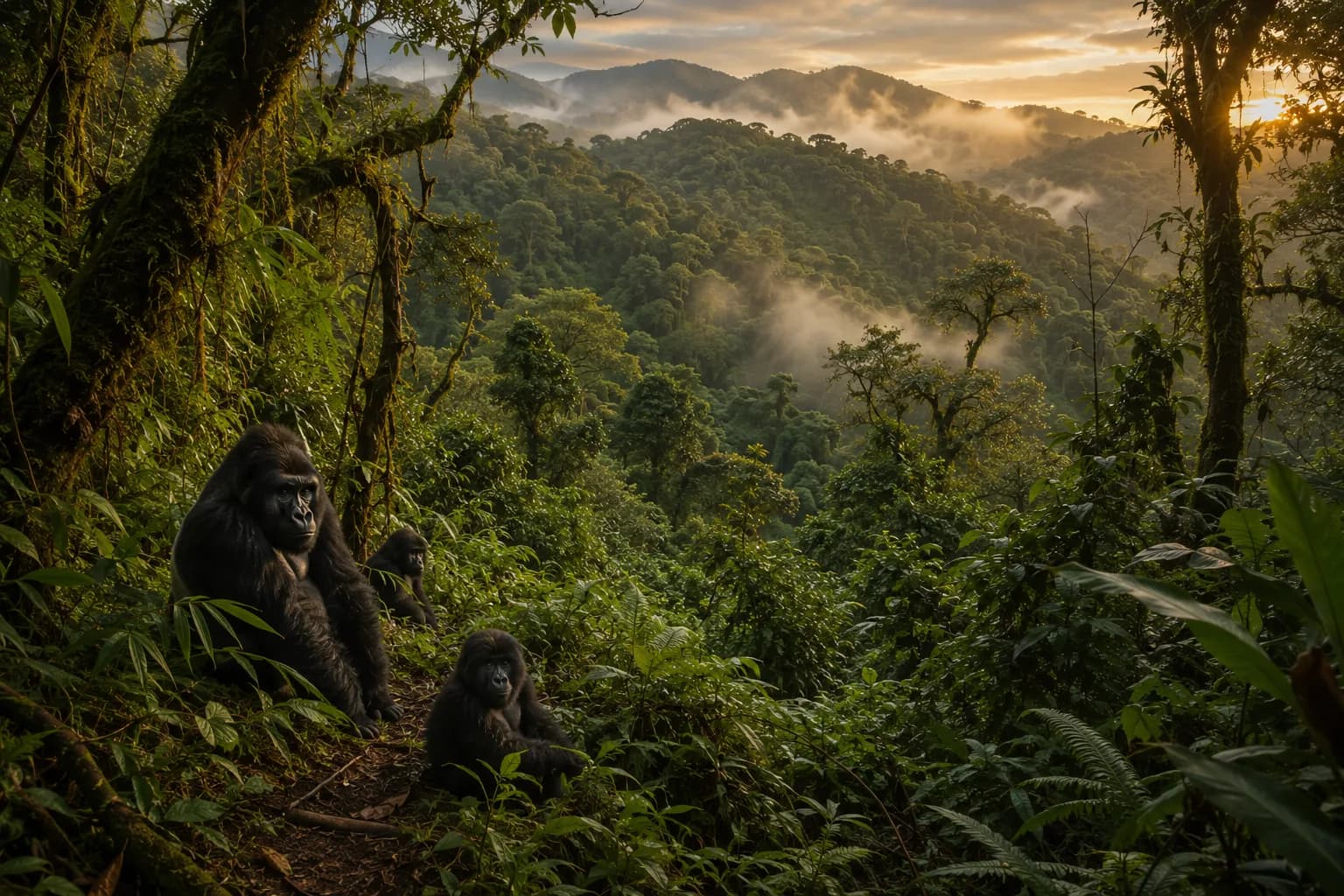
Bwindi Impenetrable Forest
An Ice-Age Rainforest Holding Half the World's Mountain Gorillas
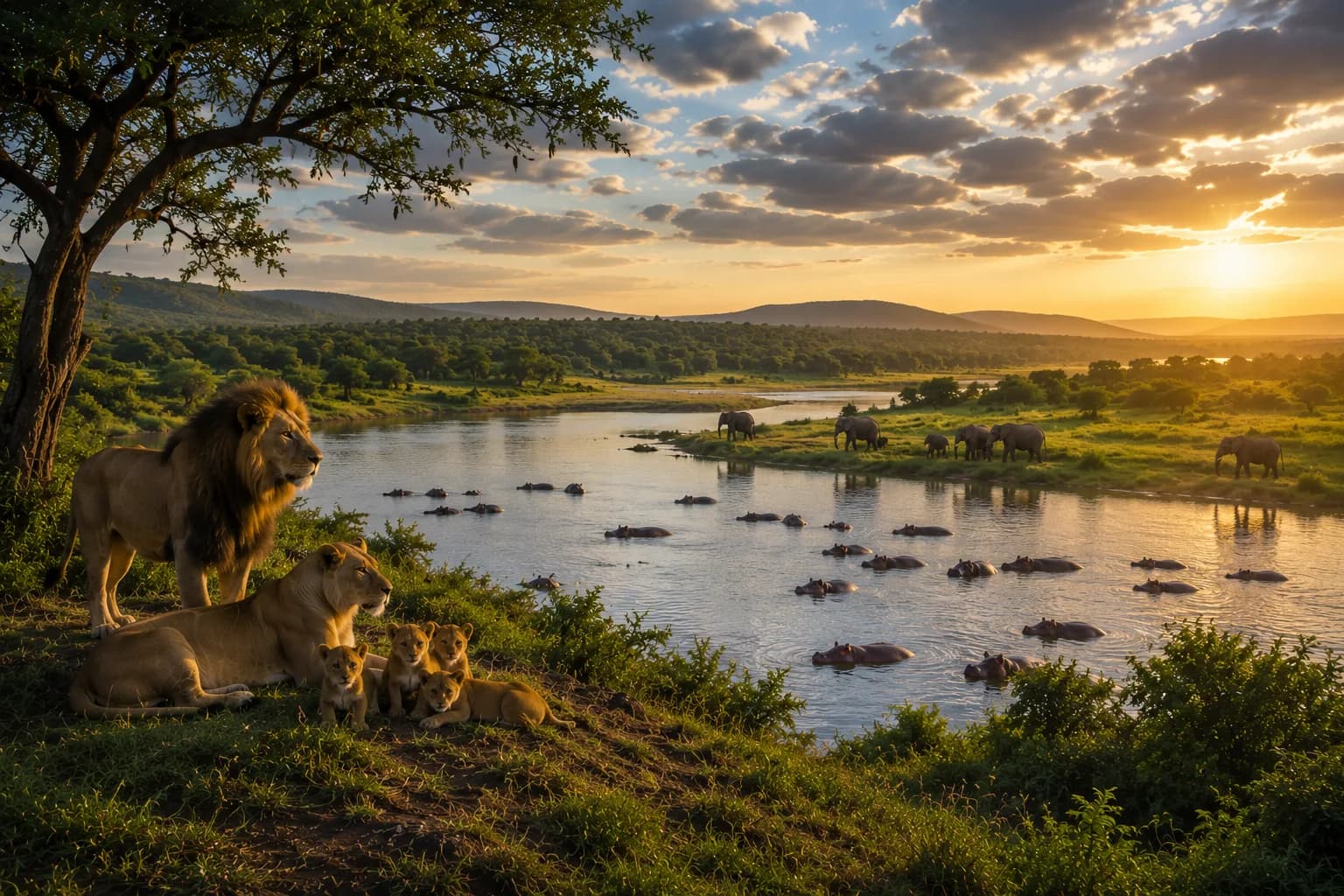
Queen Elizabeth National Park
Straddling the Equator, Famous for Lions That Climb Trees
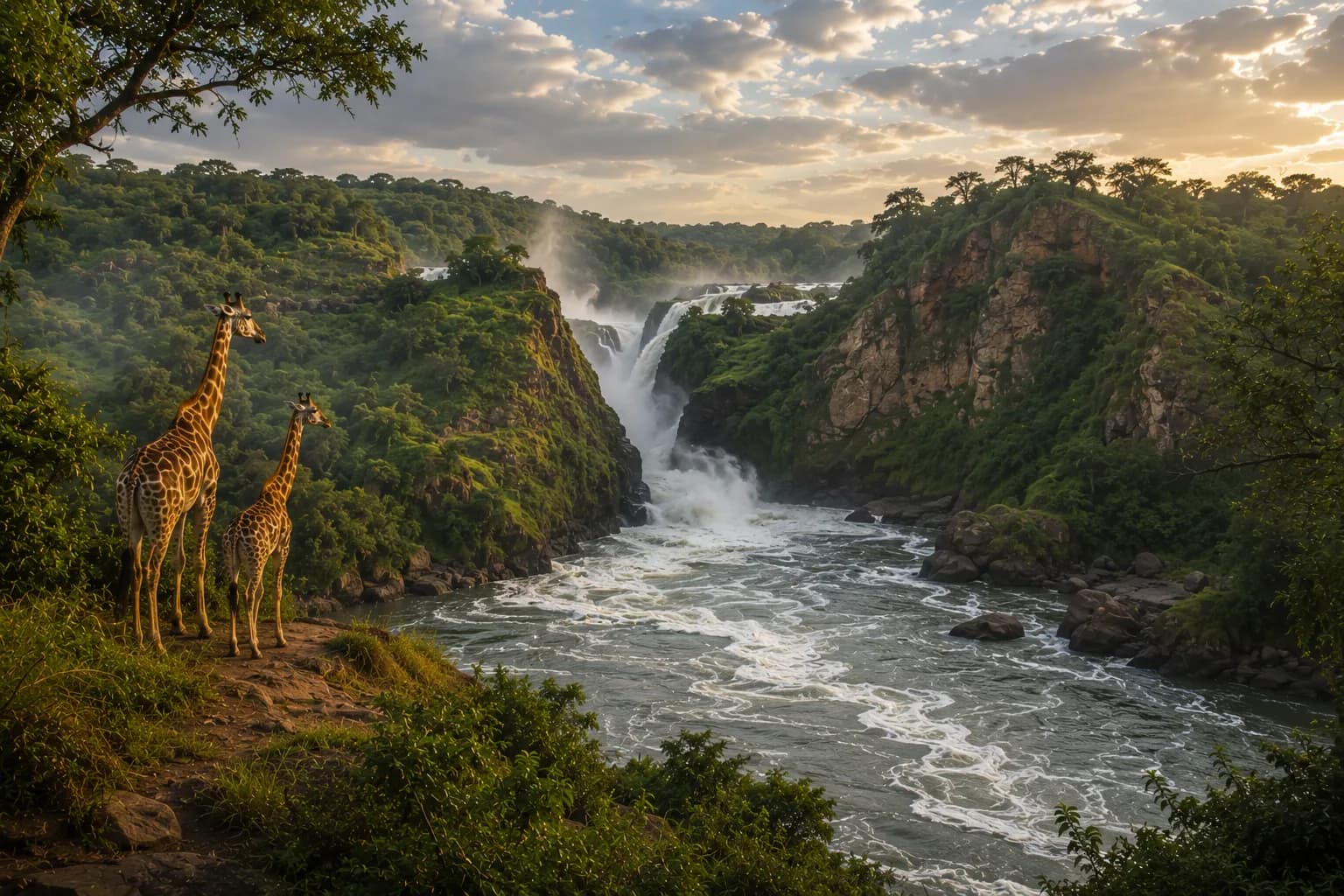
Murchison Falls National Park
Where the Nile Forces Itself Through a Seven-Metre Gap
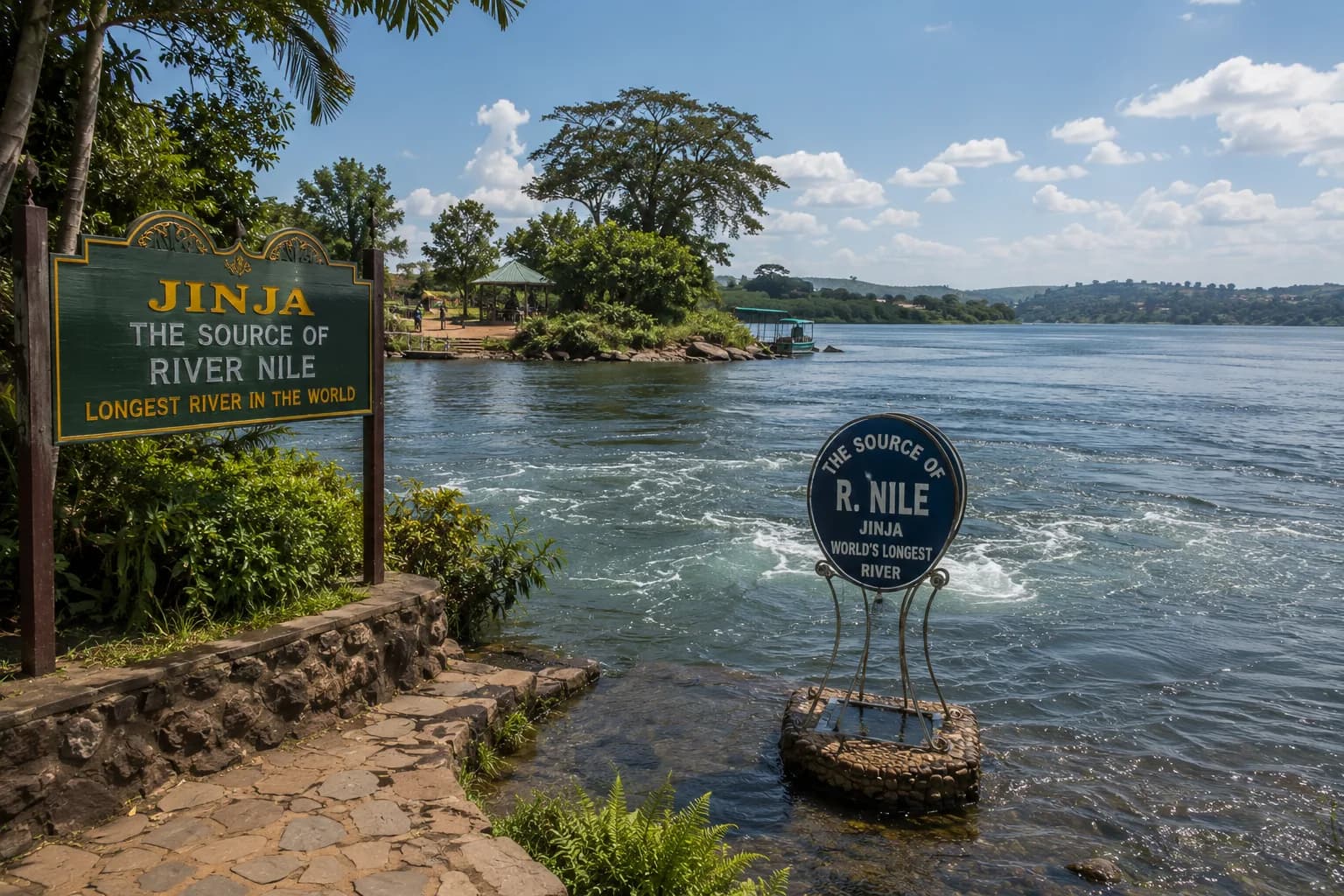
Jinja & the Source of the Nile
East Africa's Adventure Capital, at the Point Where the Nile Begins