Okavango Delta
The Okavango Delta is one of the great wonders of Africa: a vast inland delta where the Okavango River, rising in the highlands of Angola, spreads into the sands of the Kalahari and never reaches the sea. Its permanent swamps cover some 6,000 km² and swell to two or three times that size at peak flood, and in 2014 it became the 1,000th site on UNESCO's World Heritage List.
The flood is the delta's great paradox. Rain falls in Angola in the southern summer, but the water takes about four months to travel down the river, so the delta is fullest from about June to August — in the middle of Botswana's dry winter, just when animals from the surrounding drylands need it most. Elephants, buffalo, red lechwe and hippos gather on the islands and floodplains, followed by lions, leopards and wild dogs.
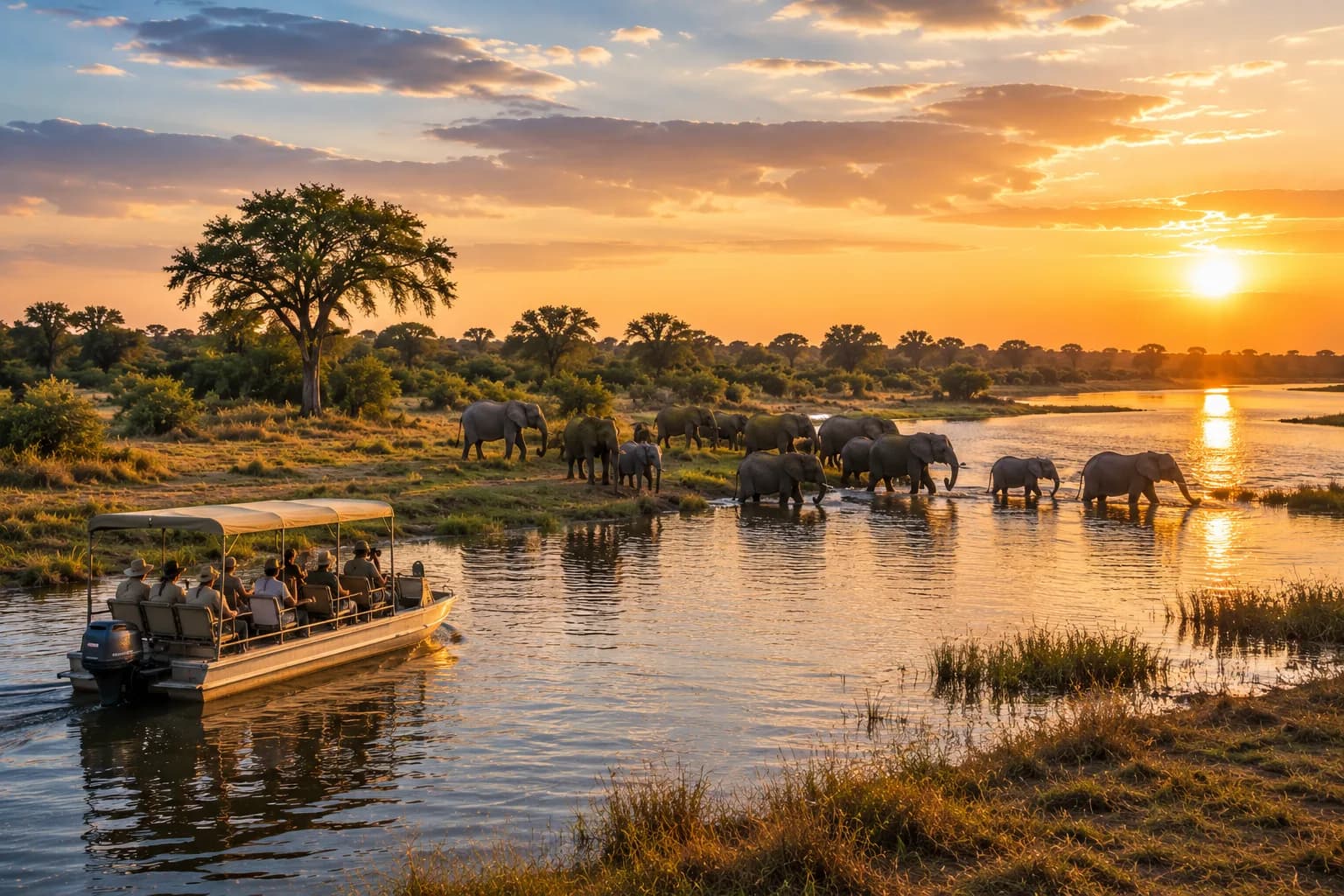
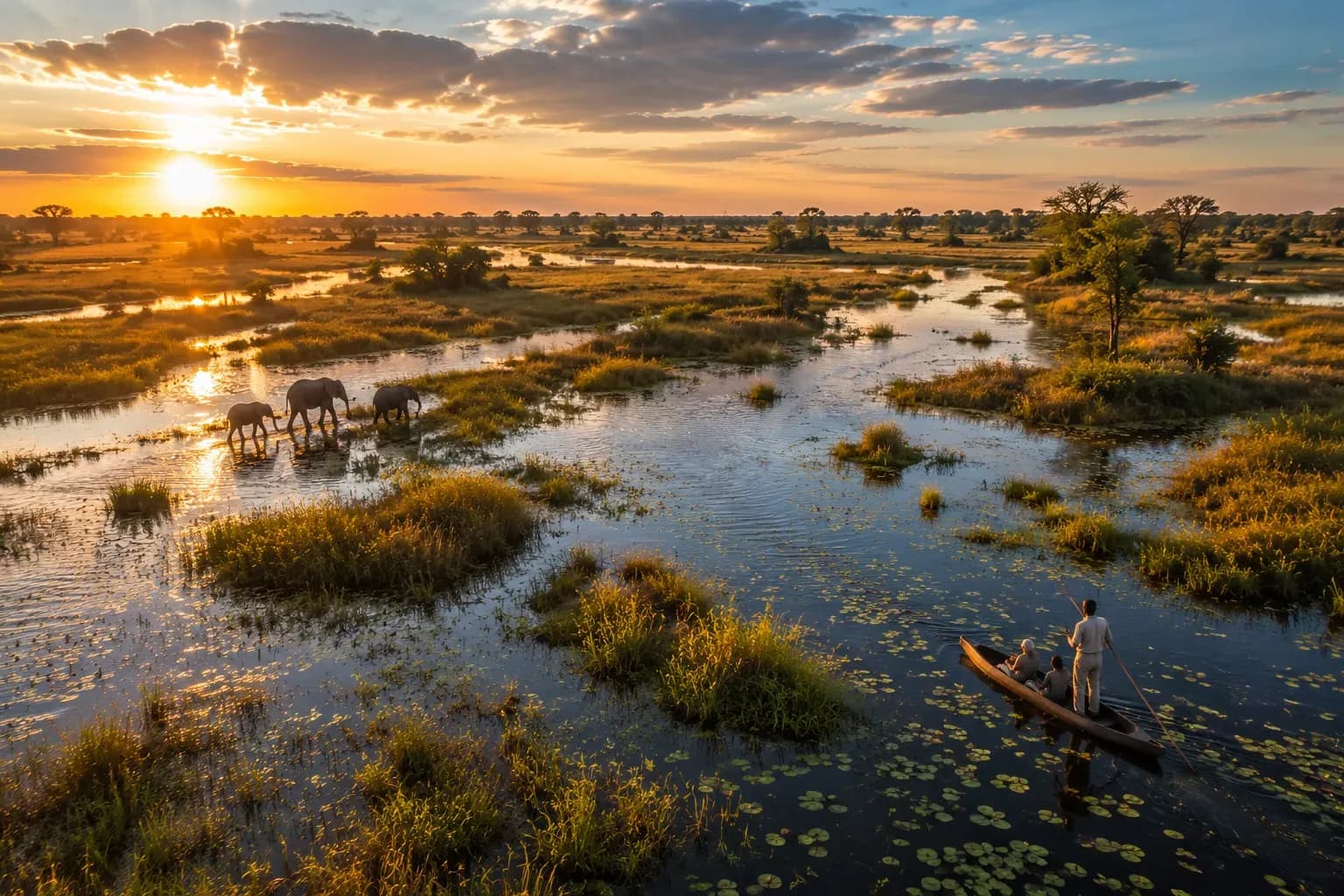
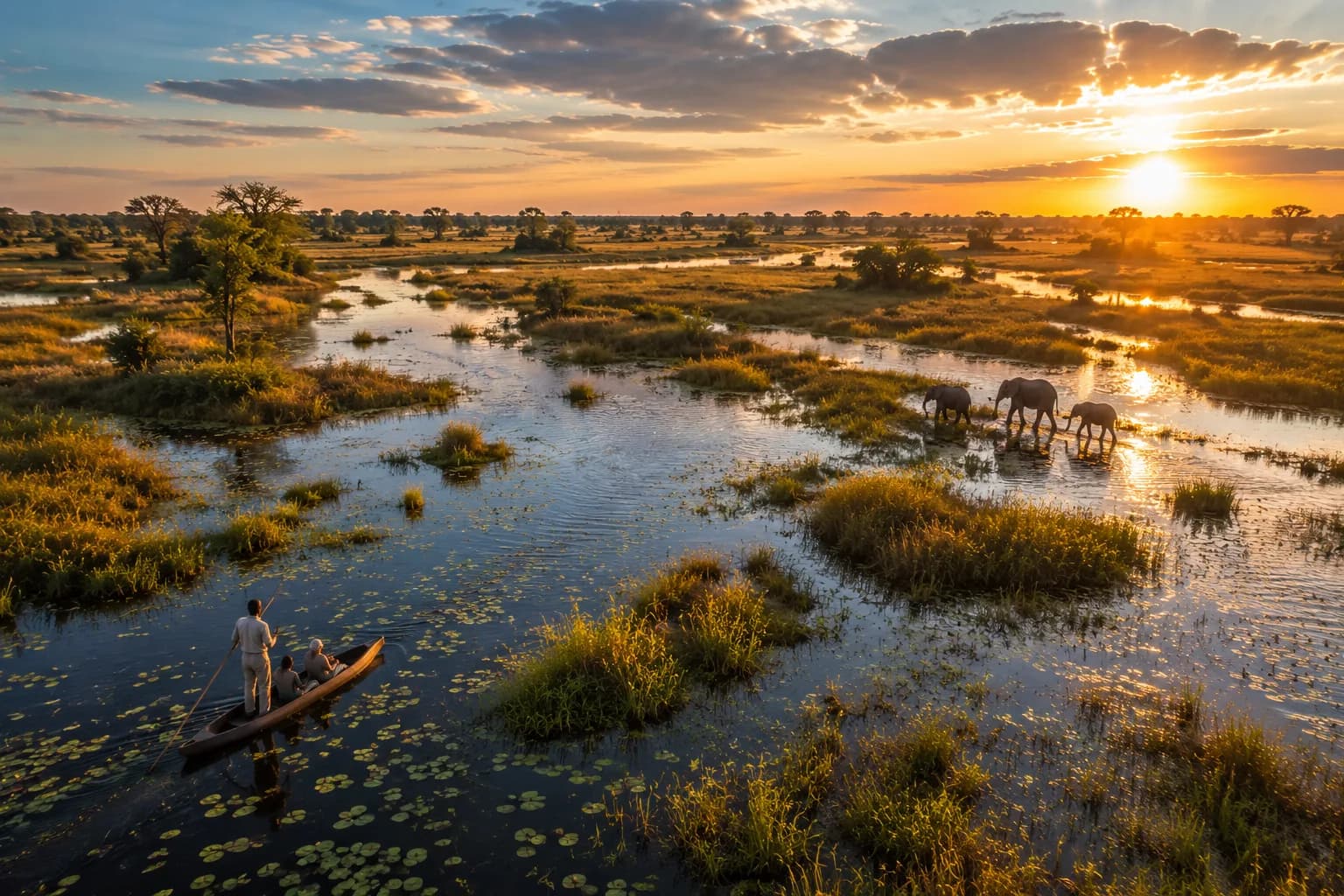
Exploring the water is the signature experience. In a mokoro — a canoe once carved from a single trunk and now usually made of fibreglass, poled by a guide standing at the back — you glide silently through papyrus and water lilies, past reed frogs and kingfishers; motorboats take you down the deeper channels, and walks on the islands with an armed guide bring you close to tracks and birds. Camps are known as water camps, where mokoro and boat trips rule, land camps for game drives, and mixed camps that offer both, depending on the flood.
Most of the delta is divided into large private concessions, each with a handful of small, exclusive camps reached by light aircraft from Maun or Kasane — the 'high-value, low-volume' tourism that keeps visitor numbers low and prices high. Moremi Game Reserve, on the eastern side, is the only part of the delta open to self-drivers and mobile camping safaris.
Things to do in the Okavango Delta
- A mokoro trip through the papyrus channels, poled by a local guide.
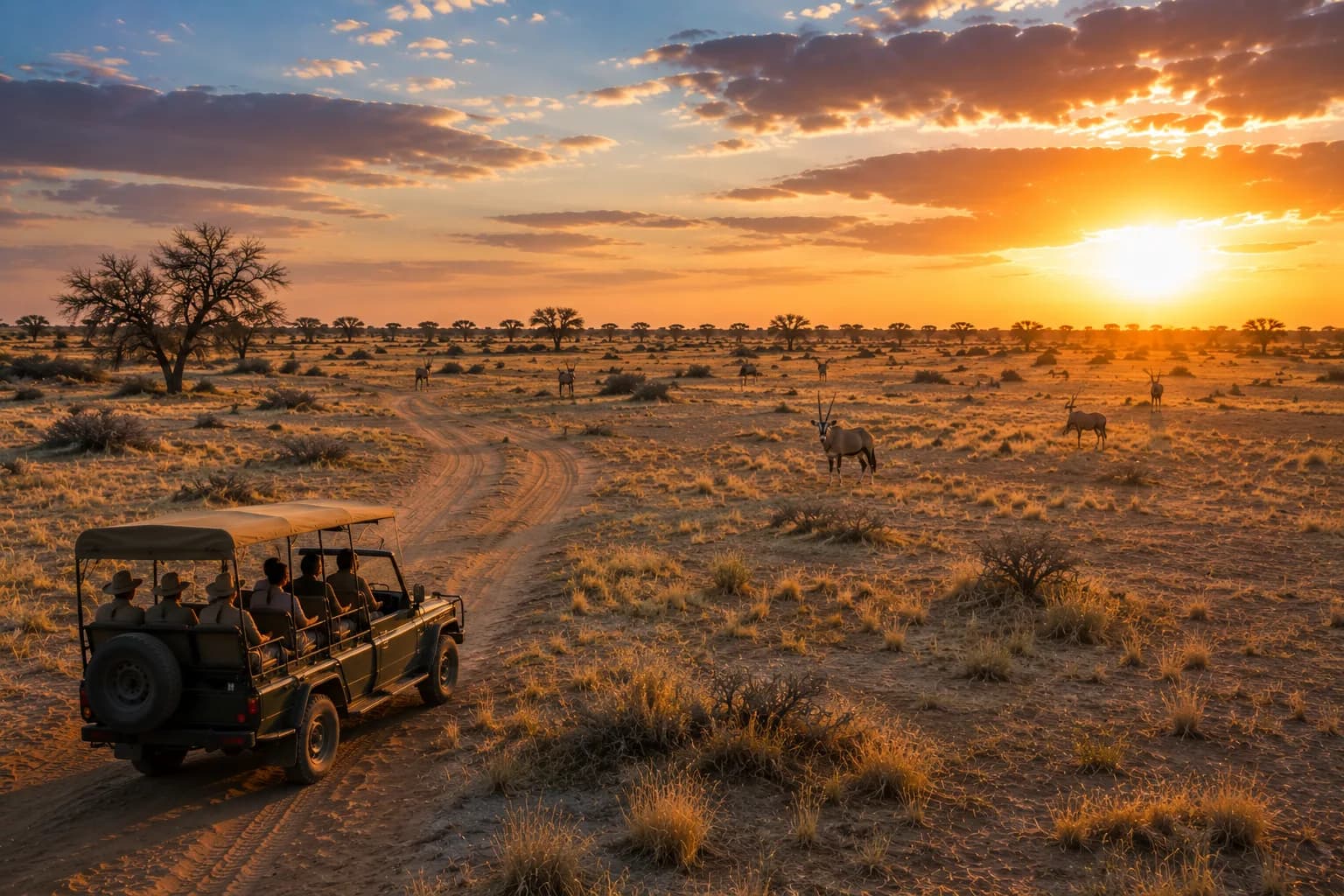
- Game drives on the larger islands and floodplains for lions, leopards, elephants and wild dogs.
- Guided walks on the islands, for tracks, birds and the smaller things.
- Motorboat trips down the deeper channels, and fishing in season.
- A scenic flight or helicopter flip over the delta, to see the channels and islands from above.
- Birdwatching: more than 400 species, from African fish eagles to the rare Pel’s fishing owl.
Water camps, land camps and how long to stay
Choose a water camp for mokoro and boat trips, a land camp for game drives, or split your stay between the two: the classic delta safari is two or three nights in each of two or three camps, linked by short flights. Light aircraft allow about 20 kg per person, including hand luggage, in soft bags without frames. The water level varies from year to year, so ask your camp which activities to expect in the month you travel. The delta lies in a malaria area, so talk to a doctor about prophylaxis.
Highlights
- ◆One of the world’s largest inland deltas, and UNESCO’s 1,000th World Heritage site
- ◆A flood that peaks in the dry season, from about June to August
- ◆Mokoro trips through papyrus and water lilies
- ◆Elephants, buffalo, red lechwe, lions, leopards and wild dogs
- ◆Small, exclusive fly-in camps on private concessions
- ◆More than 400 bird species, including Pel’s fishing owl
Where to Stay
Fly-In Concession Camps
Small, exclusive tented camps on private concessions, reached by light aircraft, with guided drives, mokoro trips and walks.
Water & Mixed Camps
Camps on islands deep in the permanent swamp, where mokoro and boat trips are the main activities all year.
Mobile & Moremi Camping
Guided mobile camping safaris and self-drive campsites in Moremi Game Reserve — the most affordable way to see the delta.
Frequently Asked Questions
When is the best time to visit the Okavango Delta?
+
From about June to October, when the flood is high and the surrounding land is dry, so wildlife gathers in the delta. The green season, from November to April, is cheaper and lush, with newborn animals and migrant birds, but the water drops and it is hot.
What is a mokoro?
+
A traditional canoe, once carved from a single tree trunk and now usually made of fibreglass, poled through the shallow channels by a guide standing at the back. It is silent, slow and close to the water — the best way to see the delta’s smaller life.
How do you get to the Okavango Delta?
+
Fly to Maun, about an hour and three-quarters from Johannesburg, then take a light aircraft to your camp; most camps have their own airstrip. Moremi Game Reserve, on the eastern side, can also be reached by 4x4.
Why is the Okavango Delta so expensive?
+
Botswana follows a high-value, low-volume model: most of the delta is divided into large private concessions with a few small camps, reached only by air. That keeps the wilderness quiet but prices high; mobile camping safaris and Moremi campsites are the cheaper alternatives.
Is there malaria in the Okavango Delta?
+
Yes — the delta lies in a malaria area, with the highest risk in the rainy season, from about November to April. Talk to a doctor about prophylaxis, and use repellent and nets.