Central Kalahari Game Reserve
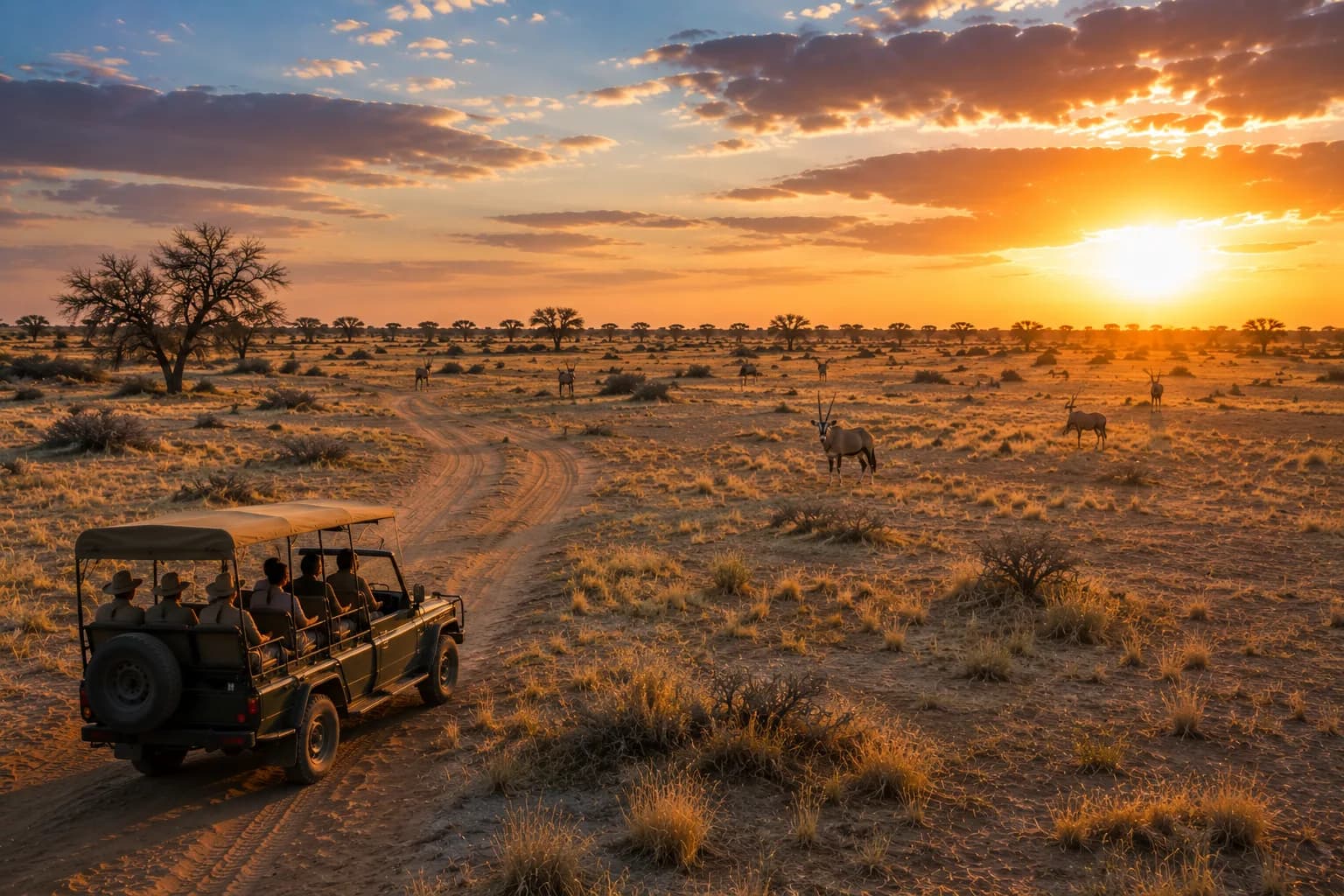
The Central Kalahari Game Reserve is one of the largest game reserves in the world: 52,800 km² of grassland, scrub and fossil river valleys in the middle of Botswana, with no permanent rivers and almost no fences. It feels empty and endless — and after the rains it fills with springbok, gemsbok and wildebeest, followed by the black-maned Kalahari lions that made Deception Valley famous.
The best time is the green season, from about December to April, when the rains turn the pans and valleys of the north — Deception Valley, Passarge Valley and Sunday Pan — green and the antelope gather to graze, with lions, cheetahs, brown hyenas and jackals following them. In the dry season the herds scatter and the landscape turns gold, but the silence, the night skies and the chance of meeting a brown hyena or a bat-eared fox stay all year.
The Kalahari is also the ancestral land of the San, among the oldest peoples of southern Africa. They were moved out of the reserve in 2002, and in 2006 Botswana's High Court ruled that the eviction had been unlawful; some families have returned, though most still live outside. Several lodges near the reserve offer walks with San guides, who share their knowledge of tracking and desert plants.
This is a remote place. The reserve has no shops, fuel or water, so self-drivers need a fully equipped 4x4 — ideally travelling with a second vehicle — and booked campsites. Most visitors fly in from Maun to one of the few lodges inside the reserve or on its northern edge, such as those near Deception Valley, about 30 minutes away by light aircraft.
Things to do in the Central Kalahari
- Game drives in Deception Valley, Passarge Valley and Sunday Pan for lions, cheetahs and the green-season herds.
- Springbok, gemsbok, wildebeest and giraffes on the grasslands after the rains.
- Walks with San guides near the reserve, learning about tracking and desert plants.
- Night skies with almost no light pollution.
- Looking for brown hyenas, bat-eared foxes and honey badgers.
- A self-drive expedition, for experienced and fully equipped 4x4 travellers.
Getting there, and how long to stay
Light aircraft from Maun reach the lodges in or beside the northern part of the reserve in about 30 minutes; by road, the northern gate is several hours from Maun on sandy tracks. Self-drivers must carry fuel, water, food and recovery gear and book their campsites in advance, and after heavy rain some tracks become impassable. Two or three nights are enough for most travellers, often combined with the Okavango Delta and the Makgadikgadi Pans.
Highlights
- ◆One of the largest game reserves in the world, 52,800 km²
- ◆Black-maned Kalahari lions in Deception Valley
- ◆Green-season herds of springbok, gemsbok and wildebeest
- ◆Brown hyenas, cheetahs and bat-eared foxes
- ◆The ancestral land of the San
- ◆Silence, space and some of Africa’s darkest night skies
Where to Stay
Fly-In Lodges
A handful of lodges inside the reserve or on its northern edge, with guided drives, San walks and their own airstrips.
Mobile Safaris
Guided camping safaris from Maun, with a vehicle, guide and camp crew — the easiest way to explore the reserve’s remote corners.
Wilderness Campsites
Simple, unfenced campsites with no water or facilities, for self-sufficient 4x4 travellers who book in advance.
Frequently Asked Questions
When is the best time to visit the Central Kalahari?
+
In the green season, from about December to April, when the rains bring fresh grass to Deception Valley and the pans, and herds of springbok, gemsbok and wildebeest gather, with lions and cheetahs following. Heavy rain can make some tracks impassable.
How big is the Central Kalahari Game Reserve?
+
About 52,800 km² — larger than Switzerland and one of the largest game reserves in the world. With the neighbouring Khutse Game Reserve, the protected area covers about 55,000 km².
Can you self-drive in the Central Kalahari?
+
Yes, but only if you are experienced and fully self-sufficient: there is no fuel, water or shops in the reserve, campsites must be booked in advance and travelling with a second vehicle is wise. Most visitors fly in to a lodge instead.
Do San people still live in the Central Kalahari?
+
Some do. The San were moved out of the reserve in 2002; in 2006 Botswana’s High Court ruled the eviction unlawful, and some families returned, though most still live outside. Lodges near the reserve offer walks with San guides.
How do you get to the Central Kalahari?
+
By light aircraft from Maun to a lodge airstrip in about 30 minutes, or by 4x4 on sandy tracks, several hours from Maun to the northern gate.