Seychelles Travel Guide 2026: Which Island, When to Go, Beaches and Costs
How to plan the Seychelles: which islands to choose, when to go, island hopping by ferry and plane, the best beaches and things to do, a ten-day route, entry rules and what it costs.
Quick Answer: The Seychelles is an archipelago of 115 islands in the western Indian Ocean, about three and a quarter hours by air from Nairobi. Most visitors split seven to ten nights between the three main granite islands — Mahé, Praslin and La Digue — linked by ferry. The calmest seas come in April–May and October–November, between the monsoons, and the water is warm all year, at about 26–30 °C. Every visitor needs an online Travel Authorisation, about EUR 10, before flying, and medium and large hotels add a nightly levy.
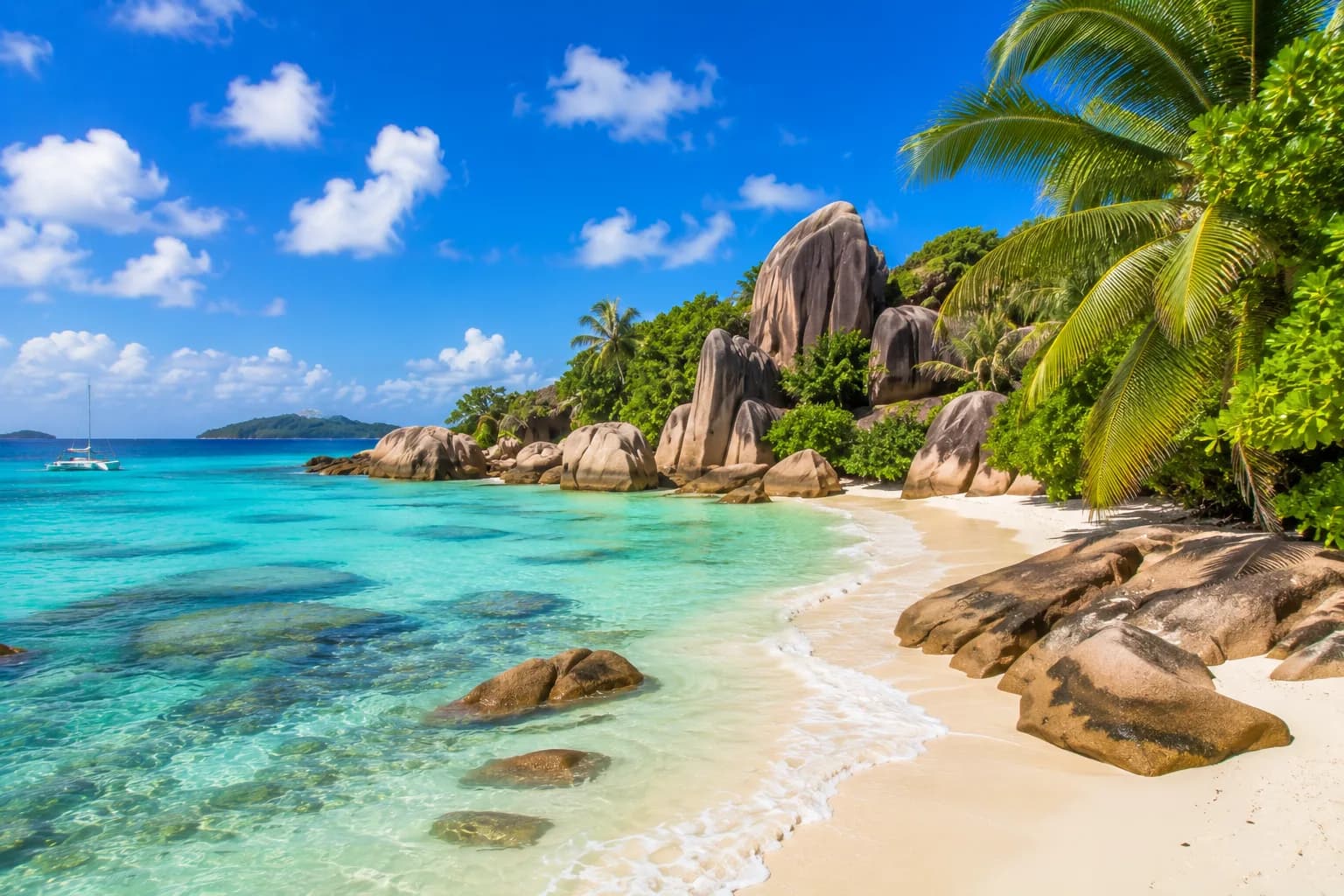
The Seychelles is famous for its beaches — white sand and turquoise water framed by smooth granite boulders, rare for islands in the middle of an ocean — but its nature is just as remarkable: the coco de mer palm and the black parrot of the Vallée de Mai, giant tortoises on Curieuse and Aldabra, and the seabird colonies of Cousin. It is a country of only about 100,000 people, with a Creole culture shaped by Africa, France, Britain and India. This guide explains how to choose your islands, when to go, how to get around and what it costs; for an overview of the islands and their hotels, see our Seychelles destination page.
Where are the Seychelles?
The Seychelles lies in the western Indian Ocean, just south of the equator. Its 115 islands fall into two groups: the mountainous inner islands of granite — Mahé, Praslin, La Digue, Silhouette and their neighbours — where almost everyone lives and stays, and the low outer islands of coral far to the south-west, such as Alphonse and the Aldabra atoll. The capital, Victoria, is on Mahé, a short drive north of the international airport.
Mahé, Praslin or La Digue? Choosing your islands
| Island | Best for | Beaches | Getting there |
|---|---|---|---|
| Mahé | Variety, hiking in Morne Seychellois National Park, restaurants and Victoria | Beau Vallon, Anse Intendance, Anse Takamaka, Anse Major | International airport |
| Praslin | The Vallée de Mai, boat days to Curieuse and Cousin, long beaches | Anse Lazio, Anse Georgette, Côte d'Or | About 1¼ hours by ferry or 20 minutes by air from Mahé |
| La Digue | Cycling, village life and Anse Source d'Argent | Anse Source d'Argent, Anse Cocos, Petite Anse | 15–20 minutes by ferry from Praslin |
| Private islands | Complete seclusion, with one resort per island | Your own | By helicopter, light aircraft or boat |
Most first-timers split their stay between two or three islands — for example three nights on Mahé, three on Praslin and two on La Digue — or go straight to Praslin and La Digue and visit the rest on day trips.
When to go to the Seychelles
The Seychelles is warm all year, with days of about 28–31 °C, and the inner islands lie outside the usual path of Indian Ocean cyclones. What changes through the year is the wind, and with it the sea.
| Months | Wind and weather | Sea | Best for |
|---|---|---|---|
| April–May and October–November | The calm between the monsoons: light winds, sunny, warm and humid | Calmest and clearest, about 28–30 °C | Snorkelling, diving and every beach — the best time overall |
| June–September | The south-east trade winds: drier, breezier and a little cooler | Choppy on south- and east-facing coasts, about 26–27 °C; seaweed on some south-east beaches | Hiking, sailing and the sheltered north-west coasts |
| December–March | The north-west monsoon: hotter and more humid, with heavy tropical showers, wettest in December and January | Calm on most coasts, about 28–29 °C; rougher in the north-west | Warm water and the greenest islands |
Christmas, New Year and Easter are the busiest and most expensive weeks, and the European summer holidays fill the best hotels in July and August.
Getting there, and island hopping
- FROM EUROPE: in the winter season, roughly September to May, Condor and Discover Airlines fly direct from Germany and Edelweiss from Zurich; at other times, and from the rest of Europe, connect via Dubai, Doha or Addis Ababa.
- FROM AFRICA AND THE GULF: about three and a quarter hours from Nairobi with Kenya Airways, and about four and a half hours from Dubai with Emirates.
- BETWEEN THE ISLANDS: the Cat Cocos ferry takes about an hour and a quarter from Mahé to Praslin, and a smaller ferry 15 to 20 minutes on to La Digue; small planes fly from Mahé to Praslin in about 20 minutes, which helps when the sea is rough.
- ON THE ISLANDS: hire a car on Mahé or Praslin — the Seychelles drives on the left, on narrow, winding roads — or take the buses; on La Digue, almost everyone cycles.
The best beaches in the Seychelles
- ANSE SOURCE D'ARGENT (La Digue): sculpted granite boulders and a shallow, glassy lagoon, entered through L'Union Estate (SCR 150); go at high tide, as it is very shallow at low water — see our La Digue guide.
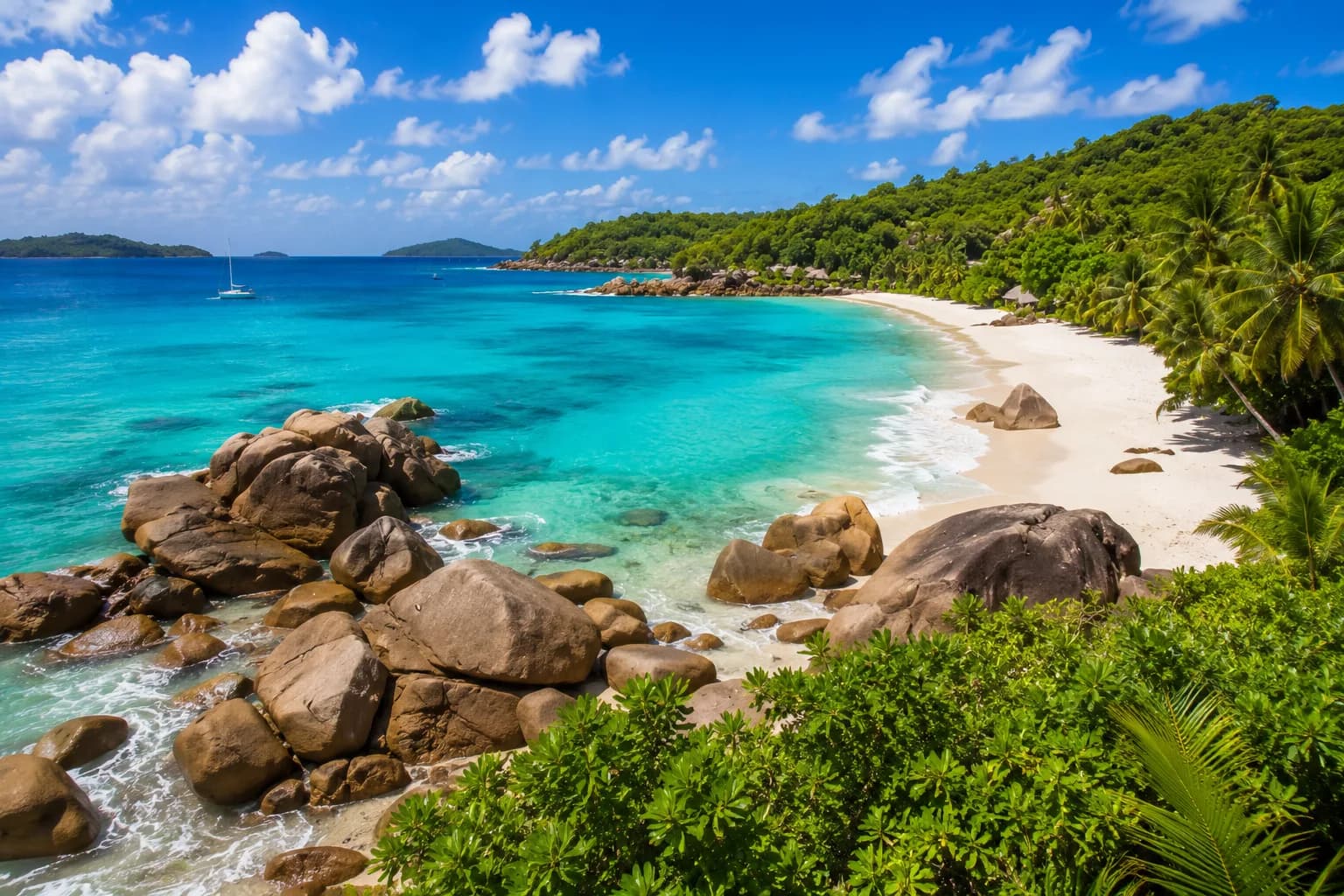
- ANSE LAZIO (Praslin): a wide bay of white sand at the north-west tip of the island, with calm water for most of the year.
- ANSE GEORGETTE (Praslin): a small, perfect cove reached through the grounds of the Constance Lémuria resort, which admits a limited number of non-guests — ask ahead — or by boat.
- CÔTE D'OR (Praslin): a long, gently shelving beach at Anse Volbert, with hotels, restaurants and water sports.
- BEAU VALLON (Mahé): the island's liveliest beach, on the north-west coast, with restaurants, water sports and calm water in the trade-wind months, from May to October.
- ANSE INTENDANCE (Mahé): a wild, palm-backed beach in the south, beautiful but often with big waves — better for walking than swimming in the trade-wind months.
- ANSE COCOS AND PETITE ANSE (La Digue): wild east-coast coves reached by a footpath from Grand Anse, which itself has dangerous currents — swim with care.
- ANSE MAJOR (Mahé): a hidden beach at the end of a coastal trail in Morne Seychellois National Park, about three hours there and back.
Things to do in the Seychelles
- VALLÉE DE MAI (Praslin): a UNESCO World Heritage Site of primeval palm forest, home of the coco de mer — the largest seed in the plant kingdom — and the rare Seychelles black parrot; open 08:30–16:30, about SCR 450 for adults — see our Praslin guide.
- CURIEUSE AND ST PIERRE: a boat day from Praslin to meet the more than 100 giant tortoises of Curieuse, walk through its mangroves and snorkel off the granite islet of St Pierre.
- COUSIN ISLAND: a nature reserve run for its seabirds, with guided walks only and no swimming.
- MORNE SEYCHELLOIS NATIONAL PARK (Mahé): more than a fifth of Mahé, rising to just over 900 metres, with trails such as Copolia (SCR 100) and the walk to Anse Major — see our Mahé guide.
- VICTORIA: one of the smallest capitals in the world, with the Sir Selwyn Selwyn-Clarke Market, the little clock tower and a colourful Hindu temple.
- SNORKELLING AND DIVING: the reefs of Ste Anne Marine National Park off Victoria, the granite reefs around the inner islands and, from about August to November, the chance of whale sharks off Mahé.
- LA DIGUE BY BICYCLE: the Veuve Reserve for the endangered black paradise flycatcher, the Nid d'Aigle viewpoint at 333 metres and the east-coast coves.
- ALDABRA AND THE OUTER ISLANDS: Aldabra, a UNESCO site with around 150,000 giant tortoises — the largest population in the world — can be visited only with permission, mostly on expedition cruises; Alphonse and Desroches offer fly-fishing and diving from island resorts — see our Aldabra guide.
A ten-day Seychelles itinerary
| Days | Plan |
|---|---|
| 1–3 | Mahé: Victoria and a Morne Seychellois trail, a beach day at Beau Vallon or Anse Takamaka, and a boat trip in Ste Anne Marine National Park. |
| 4–7 | Praslin: the Vallée de Mai, Anse Lazio and Anse Georgette, and a boat day to Curieuse, St Pierre and Cousin. |
| 8–9 | La Digue: cycle to Anse Source d'Argent at high tide, walk to Anse Cocos and climb to the Nid d'Aigle. |
| 10 | The ferry back to Mahé for your flight home. |
With a week, spend just one night on Mahé, or none, and give the time to Praslin and La Digue; with longer, add a private island or a few nights on Silhouette, the wildest of the inner islands.
Practical information
- ENTRY: the Seychelles is visa-free, but every visitor needs a Travel Authorisation, applied for online before the flight, for about EUR 10; have your return flight and hotel booking to hand.
- HOTEL LEVY: medium and large hotels add the Tourism Environmental Sustainability Levy of SCR 75 to 100 per person per night, with children aged 12 and under exempt; small guesthouses have been exempt since January 2026.
- MONEY: the Seychellois rupee (SCR); cards are accepted at hotels and most restaurants, and euros and US dollars are widely taken in tourist areas.
- LANGUAGE: Seychellois Creole, English and French are all official, and English is widely spoken.
- PLUGS: type G, the British three-pin plug, at 240 V.
- HEALTH: there is no malaria, but dengue occurs, so use insect repellent; if you arrive from a country with a risk of yellow fever, such as Kenya or Uganda, carry your yellow fever vaccination certificate — passengers only changing planes in Nairobi do not need one.
- IN THE SEA: currents can be strong on unprotected beaches such as Grand Anse on La Digue, and on east- and south-facing coasts in the trade-wind months; swim where the locals do, and never alone.
- SOUVENIRS: a coco de mer nut needs an official export permit, so buy only from licensed sellers.
What a Seychelles holiday costs
The Seychelles is one of the more expensive island destinations in the Indian Ocean: many resorts are high-end, most food and drink is imported, and the transport between islands adds up. Guesthouses and self-catering apartments, especially on La Digue and Praslin, bring the cost down considerably, and takeaways and local restaurants are far cheaper than hotel dining. The calm shoulder months of April–May and October–November are good value outside the holidays. Add the Travel Authorisation and the nightly levy, and ask us for a quote for the islands and hotels that suit your budget.
The Seychelles after a safari, and for a honeymoon
Mahé is about three and a quarter hours from Nairobi, so the Seychelles pairs naturally with a safari in Kenya, or in Tanzania via Nairobi. A classic plan is a week in the Masai Mara or the Serengeti, then three nights on Praslin and two on La Digue; for honeymooners, a private-island resort or a villa on Praslin is the classic finish. See our honeymoon ideas and our bush and beach safaris, or start from our 5-day Masai Mara and Lake Nakuru safari.
The Seychelles, Mauritius or Zanzibar?
Choose the Seychelles for the most spectacular beaches and island hopping; Mauritius for sheltered lagoons, a wide choice of hotels and plenty to do for families; and Zanzibar for culture, value and the shortest hop from Tanzania. Our comparison of the three sets them side by side, month by month.
Frequently Asked Questions
Where are the Seychelles?
+
In the western Indian Ocean, just south of the equator and about three and a quarter hours by air from Nairobi. The archipelago has 115 islands: the granite inner islands, including Mahé, Praslin and La Digue, and the coral outer islands, including Aldabra.
What is the best time to visit the Seychelles?
+
April–May and October–November, between the monsoons, bring the calmest seas and the clearest water. From June to September the south-east trade winds make the south- and east-facing coasts choppy, and December to March is hotter and wetter, but the sea is warm all year.
Which Seychelles island is best?
+
For a first visit, Praslin and La Digue: Praslin for the Vallée de Mai and Anse Lazio, La Digue for cycling and Anse Source d'Argent. Mahé has the most variety and the best hiking, and a private island offers complete seclusion. Most travellers combine two or three.
How do you island hop in the Seychelles?
+
By ferry: the Cat Cocos takes about an hour and a quarter from Mahé to Praslin, and a smaller ferry 15 to 20 minutes from Praslin to La Digue. Small planes also fly from Mahé to Praslin in about 20 minutes. Book ahead in the busy weeks.
Do you need a visa for the Seychelles?
+
No — the Seychelles is visa-free — but every visitor needs a Travel Authorisation, applied for online before the flight, for about EUR 10. Medium and large hotels also add a levy of SCR 75 to 100 per person per night.
Is the Seychelles expensive?
+
Yes, compared with most beach destinations, mainly because of its high-end resorts and imported food. Guesthouses, self-catering and local restaurants keep the cost down, especially on La Digue and Praslin, and the shoulder months are better value.
Is there malaria in the Seychelles?
+
No. There is no malaria in the Seychelles, but dengue occurs, so use insect repellent. If you arrive from a country with a risk of yellow fever, such as Kenya, carry your vaccination certificate; passengers only changing planes in Nairobi do not need one.
More Expert Guides