Mauritius Travel Guide 2026: When to Go, Beaches, Things to Do and Costs
Everything you need to plan Mauritius: where it is, the best time to go, which coast to stay on, the best beaches and things to do, a seven-day route, flights from Europe and Africa, and the practical details.
Quick Answer: Mauritius is a volcanic island in the south-west Indian Ocean, about 2,000 km off the coast of Africa and east of Madagascar. The best time to go is May to November, when it is drier and less humid, with October and November the sweet spot; plan seven to ten nights. In the southern winter, from May to October, the north and west coasts are the calmest, while the east has the longest beaches. Direct flights leave Paris, London, Frankfurt and Zurich, and Mauritius is about four hours from Nairobi or Johannesburg — an easy beach finish after a safari.
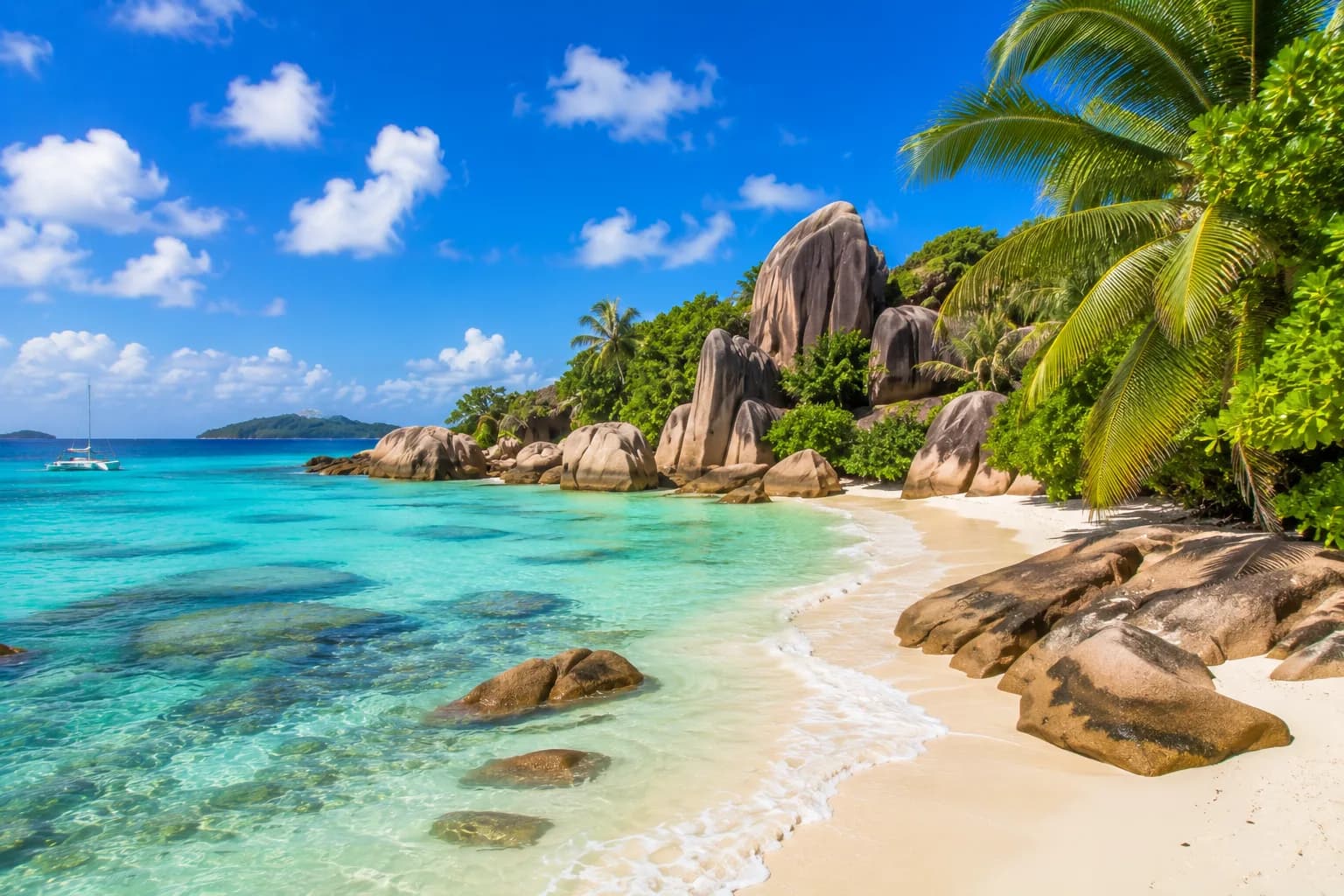
Mauritius packs a great deal into a small island — about 65 km from north to south — almost entirely ringed by a coral reef that keeps its lagoons calm and clear. Inland are green mountains, waterfalls and the forests of the Black River Gorges; on the coast, five-star resorts, fishing villages and long public beaches. Its people trace their roots to India, Africa, France and China, and its history to Dutch, French and British rule, so the food, festivals and temples are as varied as the landscape. This guide covers when to go, where to stay, the best beaches and things to do, a seven-day route and the practical details; for an overview of the island and its hotels, see our Mauritius destination page.
Where is Mauritius?
Mauritius lies in the south-west Indian Ocean, about 2,000 km from the African coast and east of Madagascar. With the French island of Réunion, under an hour away by air, and its own outer island of Rodrigues, it forms the Mascarene Islands. Independent since 1968 and a republic since 1992, it has its capital at Port Louis, on the north-west coast; the international airport is in the south-east, near Mahébourg.
When to go to Mauritius
Mauritius has two seasons and no bad time to go — it depends what you want from the trip.
| Season | Weather | Sea | Best for |
|---|---|---|---|
| May–October (winter) | Dry and sunny, warm days in the mid-20s °C and cool evenings; steady trade winds on the east and south coasts | About 23–24 °C | Sightseeing and hiking, kitesurfing and whale watching from July; the north and west coasts are calmest |
| November–April (summer) | Hot and humid, with days around 30 °C and short tropical downpours; the cyclone season, with the highest risk from January to March | About 27–28 °C | Swimming, snorkelling and diving in the warmest water |
| October–November and April–May | The shoulder months: warm, mostly settled and less crowded | About 24–27 °C | The best balance of weather, sea and value |
Christmas, New Year and Easter are the busiest and most expensive weeks, so book early for them. Cyclones do not strike every year, but take travel insurance for a summer trip and leave a spare day at the end in case flights are disrupted.
Which coast to stay on
The island is small enough to explore from one base, but each coast has its own character, and the season matters.
| Coast | Character | Beaches | In winter (May–October) |
|---|---|---|---|
| North: Grand Baie, Trou aux Biches, Pereybère | Lively, with restaurants, shops and catamaran trips to the northern islets | Trou aux Biches, Mont Choisy, Pereybère | Sheltered and sunny |
| East: Belle Mare, Trou d'Eau Douce | Long white beaches and many of the grandest resorts | Belle Mare, Palmar, Île aux Cerfs | Breezier, with the trade wind |
| South-west: Le Morne, Tamarin, Black River | Mountains, kitesurfing, hiking and whale and dolphin trips | Le Morne, Tamarin | Sunny, but windy on the Le Morne peninsula |
| West: Flic en Flac | A long public beach, sunsets over the sea and good-value hotels | Flic en Flac, Wolmar | Calm and sunny |
| South-east: Blue Bay, Mahébourg | Quieter and close to the airport, with the best snorkelling | Blue Bay, Pointe d'Esny | Breezy |
The best beaches in Mauritius
- BELLE MARE (east): a long white beach and calm lagoon lined with some of the island's grandest resorts.
- TROU AUX BICHES AND MONT CHOISY (north-west): shallow, sheltered lagoons, casuarina shade and sunsets — ideal for families.
- PEREYBÈRE (north): a small, lively public beach near Grand Baie, with good snorkelling close to shore.
- FLIC EN FLAC (west): a long public beach with sunsets over the sea, restaurants and dive centres.
- LE MORNE (south-west): a lagoon beach below Le Morne Brabant and the island's kitesurfing centre — see our Le Morne guide.
- BLUE BAY (south-east): a sheltered bay in the marine park, with coral a few strokes from the beach — see our Blue Bay guide.
- ÎLE AUX CERFS (east): lagoon beaches on an island 10 to 15 minutes by boat from Trou d'Eau Douce; go early, as it is busiest at midday — see our Île aux Cerfs guide.
- GRIS GRIS (south): a wild cliff-top viewpoint over crashing waves, with no reef to calm the sea — beautiful, but not for swimming.
Things to do in Mauritius
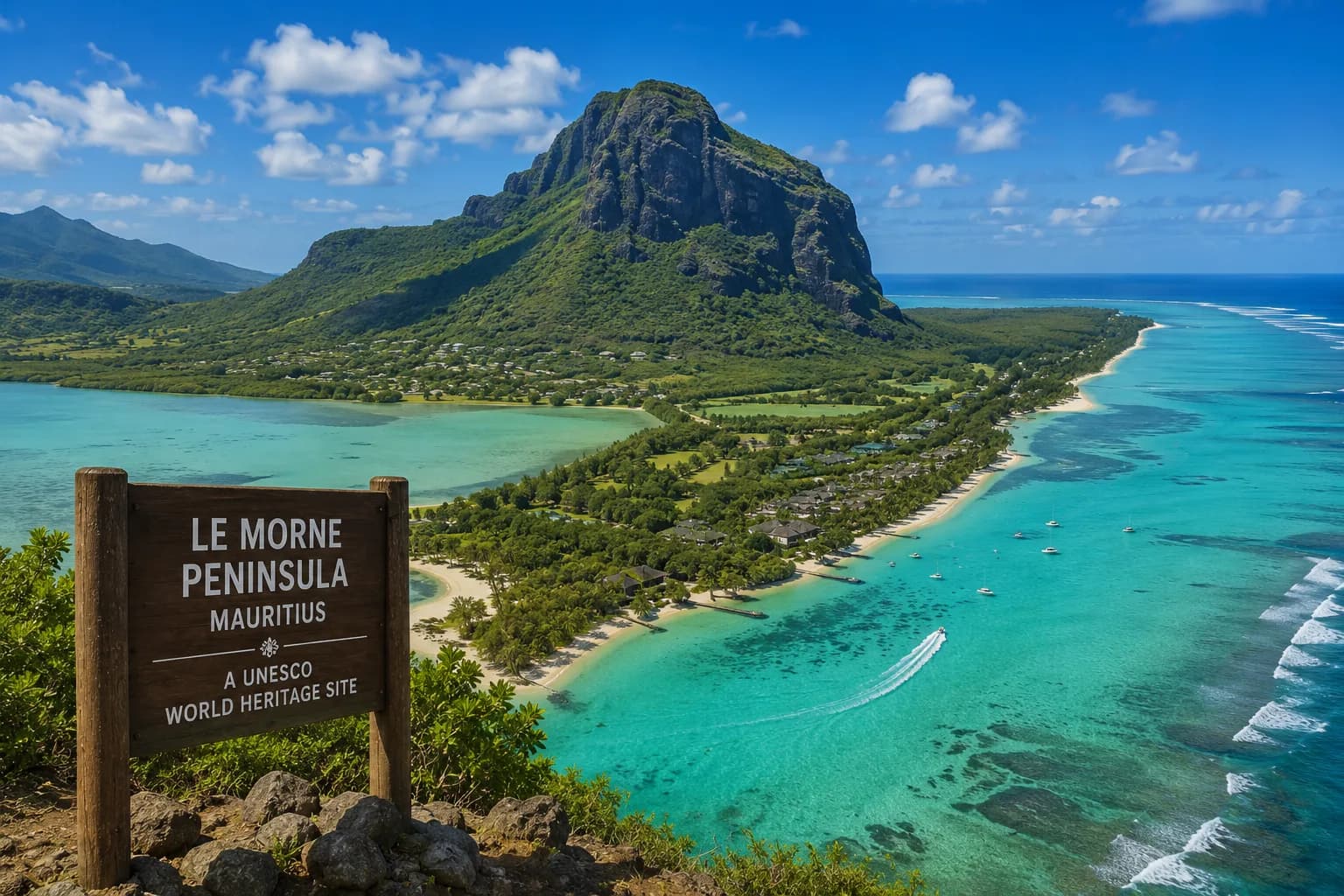
- LE MORNE BRABANT: a UNESCO World Heritage Site since 2008 and a symbol of resistance to slavery. Walk to the lower viewpoint on your own, or to the 556-metre summit with an authorised guide — about three to five hours there and back.
- BLACK RIVER GORGES NATIONAL PARK: about 60 km of trails through most of the island's remaining native forest, home to the pink pigeon and the Mauritius kestrel, once down to four wild birds, and to Black River Peak, at 828 metres the highest point on the island — see our Black River Gorges guide.
- CHAMAREL: the Seven Coloured Earth, dunes of red, brown, violet and yellow volcanic soil, and the Chamarel waterfall, about 100 metres high, nearby.
- GRAND BASSIN: a crater lake sacred to Mauritian Hindus, guarded by the 33-metre Mangal Mahadev statue of Shiva; thousands of pilgrims walk here each year for the Maha Shivaratri festival in February or March.
- PAMPLEMOUSSES: the Sir Seewoosagur Ramgoolam Botanic Garden in the north, one of the oldest in the southern hemisphere, famous for its giant Victoria water lilies.
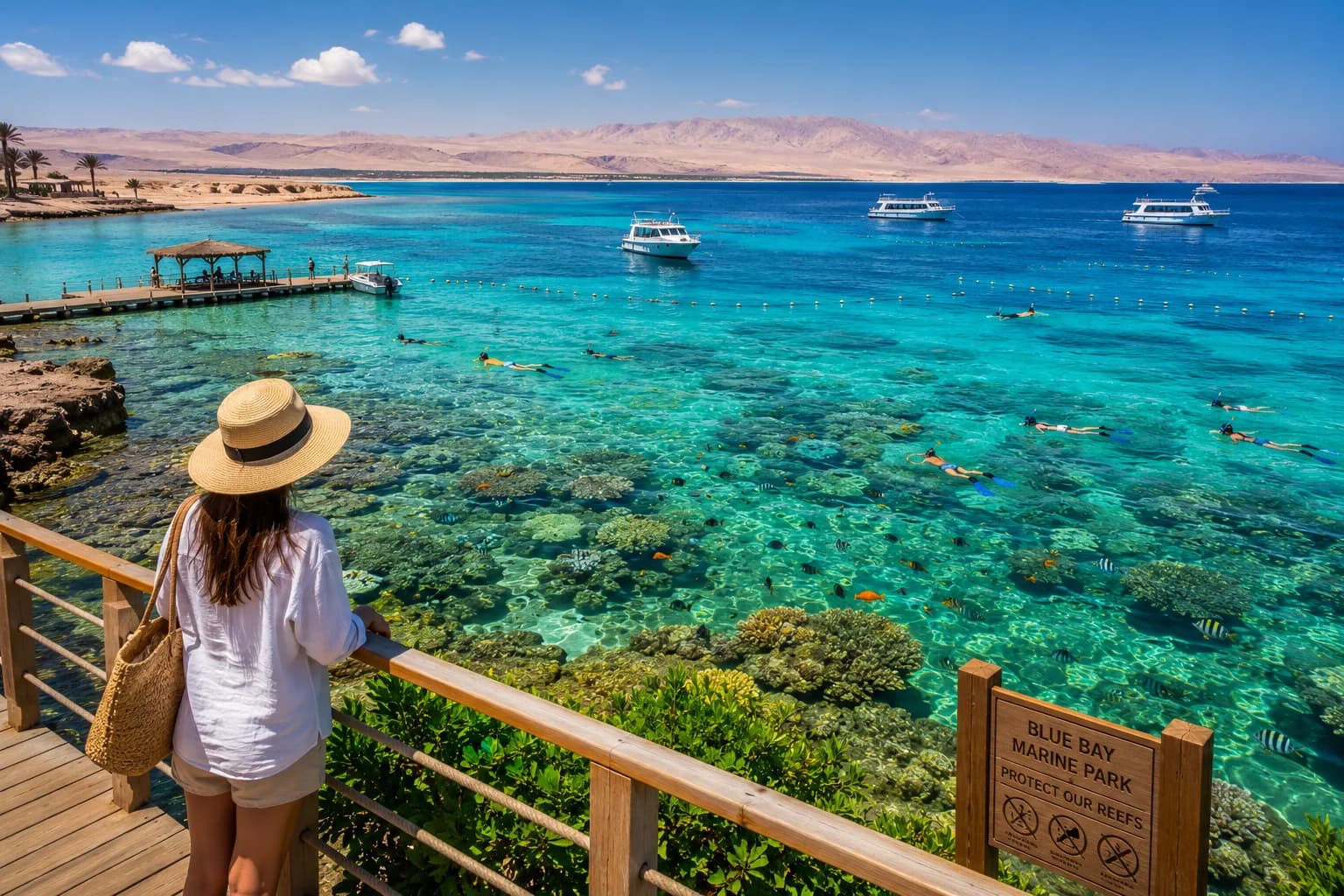
- BLUE BAY MARINE PARK AND ÎLE AUX AIGRETTES: snorkelling over 38 species of coral, then a guided walk on a nature-reserve island among Aldabra giant tortoises and pink pigeons.
- THE NORTHERN ISLETS: catamaran days from Grand Baie to Île Gabriel and Flat Island, with snorkelling and a beach barbecue.
- WHALES AND DOLPHINS: humpback whales pass the west coast from July to October, and sperm whales live offshore all year. Swimming with whales has been banned since 2023 and boats must keep 100 metres away; for dolphin trips from Tamarin, choose a licensed operator that keeps its distance.
- PORT LOUIS: the Central Market, the waterfront and the Aapravasi Ghat, the UNESCO-listed depot where indentured labourers, most of them from India, first landed.
- THE "UNDERWATER WATERFALL": an optical illusion of sand and silt flowing down the seabed off Le Morne, best seen from a seaplane or helicopter.
A seven-day Mauritius itinerary
| Day | Plan |
|---|---|
| 1 | Arrive and settle in; a first afternoon on the beach. |
| 2 | A catamaran day to the northern islets, or Grand Baie and the beaches of the north-west. |
| 3 | Pamplemousses botanic garden and Port Louis: the Central Market, the waterfront and the Aapravasi Ghat. |
| 4 | The south-west by car: Grand Bassin, the Black River Gorges viewpoint, Chamarel's Seven Coloured Earth and waterfall, and sunset at Le Morne. |
| 5 | Hike Le Morne Brabant in the cool of the morning, then an afternoon on the lagoon — or a whale and dolphin trip from Tamarin. |
| 6 | The east: a boat to Île aux Cerfs, or snorkelling at Blue Bay and a guided walk on Île aux Aigrettes in the south-east. |
| 7 | A last swim and the transfer to the airport. |
With ten nights, split the stay between two coasts — the north or west for sunsets, then the east for its beaches — and add a day of hiking in the Black River Gorges or a dive trip.
Getting to Mauritius, and getting around
- FROM FRANCE: Air Mauritius and Air France fly direct from Paris Charles de Gaulle, up to twice a day between them, in about 11 to 12 hours.
- FROM THE UK: Air Mauritius flies direct from London, in about 12 hours.
- FROM GERMANY, SWITZERLAND AND AUSTRIA: Condor and Discover Airlines fly direct from Frankfurt, Edelweiss from Zurich and, in the main season, Austrian Airlines from Vienna.
- FROM SPAIN AND ITALY: ITA Airways flies direct from Rome; from Spain, most travellers connect in Paris, Dubai or Istanbul.
- FROM AFRICA AND THE GULF: about four hours from Nairobi or Johannesburg, under an hour from Réunion and about six and a half hours from Dubai.
Most hotels are 45 minutes to an hour and a quarter from the airport, and nowhere on the island is more than a couple of hours away by road. Taxis and hotel transfers are easy to arrange; to explore, hire a car — Mauritius drives on the left — or book a driver-guide for the day.
Practical information
- ENTRY: many nationalities, including citizens of the EU, the UK and the US, need no visa for a holiday of up to 90 days, but everyone completes the online All-in-One Travel Form before arrival.
- TOURIST FEE: since 1 October 2025, hotels and other tourist accommodation charge €3 per person per night for guests aged 12 and over.
- MONEY: the Mauritian rupee (MUR); cards are widely accepted in hotels and restaurants, and there are ATMs in every town.
- LANGUAGE: English is the official language, but French and Mauritian Creole are what you will hear every day.
- PLUGS: types C and G, at 230 V — bring an adapter.
- TIPPING: restaurant bills often include service; otherwise about 10% is appreciated.
- HEALTH: there is no malaria, but dengue occurs in some summers, so use insect repellent; if you arrive from a country with a risk of yellow fever, such as Kenya or Uganda, carry your yellow fever vaccination certificate.
- IN THE SEA: the lagoons are calm, but currents run strong in the passes through the reef; wear water shoes over coral and sea urchins.
What a Mauritius holiday costs
Mauritius suits most budgets. Guesthouses and self-catering apartments in Grand Baie, Flic en Flac and Mahébourg cost far less than the big resorts of the east and north, while the island's top hotels are among the most luxurious in the Indian Ocean. Many resorts are sold half board or all-inclusive, which keeps the bill predictable, and eating in village restaurants and at the Port Louis market is inexpensive. Prices peak at Christmas, New Year and Easter, while May, June and September are good value. Add the tourist fee, and ask us for a quote for a stay matched to your budget.
Mauritius for a honeymoon, and after a safari
Mauritius is one of the Indian Ocean's classic honeymoon islands, with private villas, sunset catamarans and spa resorts — see our honeymoon ideas. It is also the easiest beach finish after a safari: Nairobi and Johannesburg are each about four hours away, so five to seven nights on the island follow naturally from the Masai Mara or the Kruger. Our bush and beach safaris and our 10-day South Africa itinerary are easy to extend this way.
Mauritius, the Seychelles or Zanzibar?
Choose Mauritius for sheltered lagoons, a wide choice of hotels at every price, and plenty to do for families; the Seychelles for the most spectacular beaches; and Zanzibar for culture, value and the shortest hop from a safari in Tanzania. Our comparison of Zanzibar, Mauritius and the Seychelles sets them side by side, month by month.
Frequently Asked Questions
Where is Mauritius?
+
In the south-west Indian Ocean, about 2,000 km off the coast of Africa and east of Madagascar. With Réunion and Rodrigues it forms the Mascarene Islands, and its capital is Port Louis.
What is the best month to go to Mauritius?
+
October and November, closely followed by April and May: warm, mostly settled and less crowded. May to October is the dry, cooler winter, best for hiking and sightseeing; December to April is hot and humid, with the warmest sea and a risk of cyclones, highest from January to March.
Is there a tourist tax in Mauritius?
+
Yes. Since 1 October 2025, hotels and other tourist accommodation collect a tourist fee of €3 per person per night from guests aged 12 and over, on top of the room rate.
Do you need a visa for Mauritius?
+
Many nationalities, including EU, UK and US citizens, can visit without a visa for up to 90 days, but everyone must complete the online All-in-One Travel Form before arrival. Check the rules for your passport before you book.
What currency and language are used in Mauritius?
+
The currency is the Mauritian rupee (MUR). English is the official language, while French and Mauritian Creole are spoken every day, so you can get by easily in English or French.
How do you get around Mauritius?
+
By hotel transfer, taxi or hire car — Mauritius drives on the left — or with a driver-guide for day trips. Most hotels are 45 minutes to an hour and a quarter from the airport, and nowhere on the island is more than a couple of hours away by road.
Can you combine Mauritius with a safari?
+
Yes — it is one of the most popular combinations. Flights from Nairobi and Johannesburg take about four hours, so five to seven nights on the island are easy to add after a safari in Kenya or South Africa. If you arrive from a country with a risk of yellow fever, such as Kenya, carry your vaccination certificate.
More Expert Guides