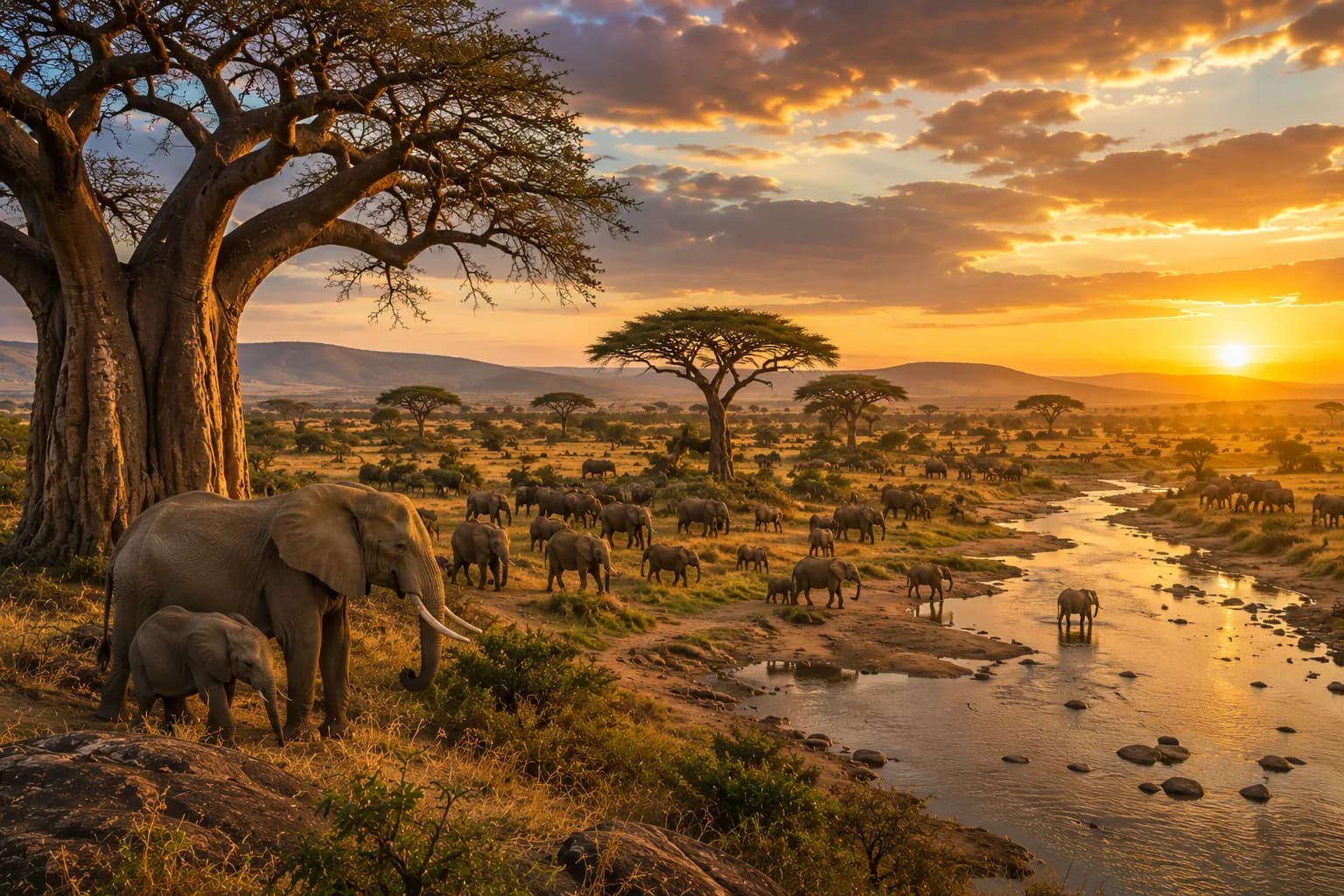
Tarangire Day Trip from Arusha — Elephants and Baobabs
The easiest full safari day from Arusha: about two hours' drive to Tarangire National Park, where big herds of elephants gather along the Tarangire River beneath ancient baobabs, then a day of game drives among lions, buffalo, zebra, giraffes and some of the richest birdlife in Tanzania, with lunch at a lodge above the river. Back in Arusha for dinner.
Tarangire is at its best in the dry season from June to October, when the river is the only water for miles and the herds come in from the surrounding plains — elephants in their hundreds, wildebeest, zebra and buffalo. It is good all year for elephants and baobabs, and far quieter than the parks further west. It works well on the first or last day of a northern circuit, or as a single safari day before or after Kilimanjaro or Zanzibar.
Highlights
- 01Elephant herds along the Tarangire River, at their biggest from June to October
- 02The ancient baobabs that give the park its look
- 03Lions, buffalo, zebra, giraffes and, with luck, leopard
- 04Over 550 bird species, among them the yellow-collared lovebird
- 05Lunch at a lodge above the river
- 06About two hours from Arusha, and far quieter than the western parks
The Day, Stop by Stop
- 01Stop 1
07:00 — Arusha to Tarangire
Pick-up from your hotel and the drive south-west from Arusha across the Maasai steppe, reaching the park gate in about two hours.
- 02Stop 2
Morning game drive along the river
Into the park and down to the Tarangire River, where elephant families come to drink and dig for water in the sandy bed, with buffalo, zebra, wildebeest and giraffes among the baobabs and lions resting in the shade.
- 03Stop 3
Lunch above the river
Lunch at a lodge on the ridge above the river, or a picnic at a site in the park, with time to watch the herds below during the heat of the day.
- 04Stop 4
Afternoon among the baobabs
An afternoon drive through the baobab country and the termite-mound grassland, looking for lions, leopards in the sausage trees, dwarf mongooses and the park's huge variety of birds, from ground hornbills to lilac-breasted rollers.
- 05Stop 5
Late afternoon — Back to Arusha
Leave the park in the late afternoon and drive back to Arusha, arriving in the early evening.
What’s Included
- ✓4x4 safari vehicle with a pop-up roof and a professional driver-guide
- ✓Pick-up and drop-off at your hotel in Arusha
- ✓Tarangire National Park entry
- ✓Lunch at a lodge or a picnic in the park
- ✓Bottled water
Not Included
- –Drinks with lunch
- –Tips
- –Personal expenses
Tanzania — Serengeti, Ngorongoro & Zanzibar
Tanzania is home to the legendary Serengeti, the Ngorongoro Crater, Mount Kilimanjaro, and the pristine beaches of Zanzibar. The Serengeti's endless plains host the Great Wildebeest Migration, one of the largest land migrations on Earth; the Ngorongoro Crater is a UNESCO World Heritage Site sheltering the densest Big Five population on the continent.
Explore Tanzania in full →Frequently Asked Questions
Is Tarangire worth a day trip from Arusha?
+
Yes — it is about two hours away, so you get six hours or more in the park, and its elephant herds and baobabs make it one of the best single safari days in Tanzania. It is at its best from June to October.
Tarangire or Lake Manyara for a day trip?
+
Tarangire for elephants, open views and a classic safari feel, especially in the dry season; Lake Manyara for a compact park with forest, the lake and the treetop walkway. With two days you can do both.
Will we see lions in Tarangire?
+
Often — Tarangire has healthy lion prides, and leopards are seen too, though less often. Elephants are almost certain, especially from June to October.
What is the best time to visit Tarangire?
+
The dry season from June to October, when the river draws the herds in from the plains. In the rains from November to May the animals spread out, but the park is green, the birdlife is at its best and you will have it nearly to yourself.
Are there tsetse flies in Tarangire?
+
Yes, in some wooded areas, especially in the hotter months. Wear light-coloured clothing — tsetse are drawn to dark blue and black — and keep insect repellent to hand.