Kigali City Tour — the Genocide Memorial, Markets and Art Studios
A day with a local guide in Rwanda's capital, a city of green hills, clean streets and fast change: the Kigali Genocide Memorial, the place to begin understanding the country; Kimironko Market, where tailors will make you an outfit from kitenge cloth in a day; Nyamirambo, the city's oldest and liveliest quarter; the Inema Arts Center; and the landmarks of the new city, with lunch at a local restaurant.
Most gorilla trips start or end in Kigali, so the tour fits the day you arrive or the day before your flight home. The memorial is open daily from 09:00 to 17:00, with last entry at 16:00, and entry is free; on the last Saturday of the month, Umuganda, the national day of community work, it opens at 13:00 and the city is quiet until midday, so we plan the day around it. Plastic bags are banned in Rwanda, so leave them out of your luggage.
Highlights
- 01The Kigali Genocide Memorial, where more than 250,000 victims are buried
- 02Kimironko Market, with its fabric stalls and tailors
- 03Nyamirambo, the oldest and liveliest quarter of the city
- 04Contemporary Rwandan painting at the Inema Arts Center
- 05The Hôtel des Mille Collines, the Convention Centre and the city hills
- 06Hotel pick-up and lunch at a local restaurant
The Day, Stop by Stop
- 01Stop 1
09:00 — The Kigali Genocide Memorial
Begin at the memorial on Gisozi hill, the burial place of more than 250,000 victims of the 1994 genocide against the Tutsi, where the exhibitions tell the story of what happened, how it was allowed to happen and how the country has rebuilt since. Allow at least an hour and a half; it is a moving, quiet visit.
- 02Stop 2
Kimironko Market
Kigali's biggest market, a maze of fruit, vegetables, baskets and bolts of colourful kitenge cloth, where the tailors upstairs can make a shirt or a dress to your measurements, often by the end of the day.
- 03Stop 3
Lunch and Nyamirambo
Lunch at a local restaurant, then Nyamirambo, the city's oldest quarter, with its Green Mosque, its tailors and barbers, its street life and its views over the valleys.
- 04Stop 4
The Inema Arts Center
An afternoon at the Inema Arts Center, a studio and gallery founded by two artist brothers, where you can meet painters and sculptors at work and buy directly from them.
- 05Stop 5
The new city at dusk
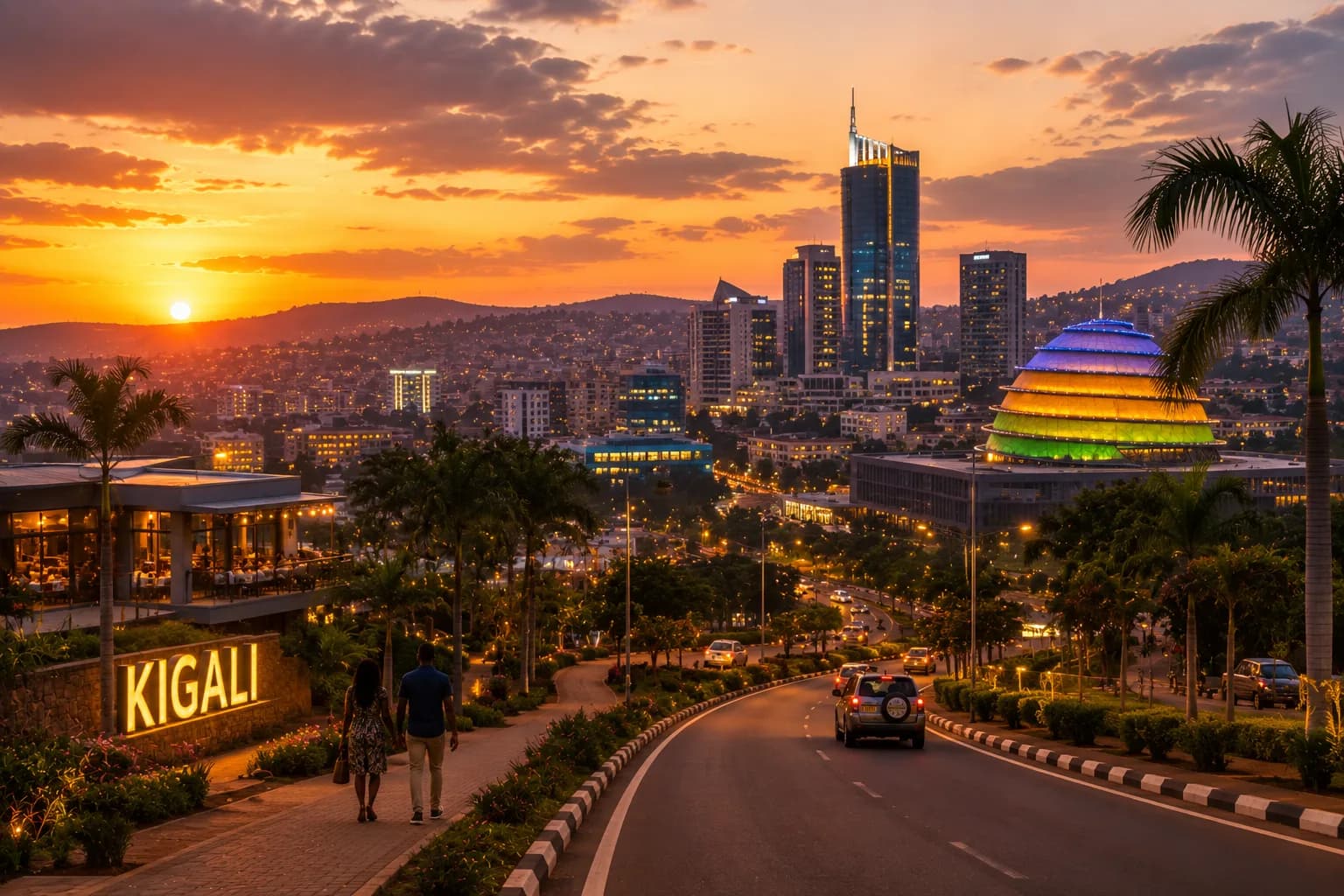
A drive past the landmarks of modern Kigali — the Hôtel des Mille Collines, which sheltered more than a thousand people in 1994, the Car-Free Zone and the Convention Centre, whose dome lights up at night — before drop-off at your hotel.
What’s Included
- ✓A private car and a local guide for the day
- ✓Pick-up and drop-off at your Kigali hotel or the airport
- ✓Lunch at a local restaurant
- ✓Bottled water
Not Included
- –The memorial audio guide (optional, paid on site)
- –Purchases at the market and art studios
- –Drinks and tips
- –Entry to other museums (optional)
Rwanda — Land of a Thousand Hills
Rwanda has transformed into one of Africa's most compelling luxury destinations — clean, safe, efficiently run, and extraordinarily beautiful. Volcanoes National Park in the northwest shelters some of the most habituated mountain gorilla families in the world.
Explore Rwanda in full →Frequently Asked Questions
How long do you need in Kigali?
+
One full day covers the main sights — the Genocide Memorial, a market, Nyamirambo and an art centre. Most travellers spend it on the day they arrive or the day before they fly home, either side of a gorilla trek.
Is the Kigali Genocide Memorial free?
+
Yes — entry is free, and donations are welcome; an audio guide is available for a fee. It is open daily from 09:00 to 17:00, with last entry at 16:00, and from 13:00 on the last Saturday of the month. It closes on 25 December and 1 January.
What is Umuganda?
+
The national day of community work, on the last Saturday morning of each month, when most shops and services close and traffic stops while people work on local projects. We plan the tour for the afternoon that day.
Is Kigali safe for visitors?
+
Kigali is widely regarded as one of Africa's safest and cleanest capitals, and walking around the centre is easy. Take the usual care with valuables, as in any city.
Can I take photos at the memorial?
+
Photography is not allowed inside the exhibitions, out of respect for the victims; ask your guide where photos are permitted in the gardens.